Expanding Clinical Trial Access for Women Living With HIV

Written by: Jan Nissen, BSN, MBA, MS Pop Health, VP Patient Innovation & Engagement, Merck & Co., Inc

For over 30 years, Merck has been committed to improving the lives of people living with HIV. In those three decades, there have been remarkable advances in therapies to treat and monitor the disease. Today, however, the people who are infected with HIV is changing; there is a silent epidemic of women living with HIV, requiring new ways of understanding the needs of people living with HIV and developing more effective options for treatment and care.

Globally, there are 18.8 million women and girls living with HIV and approximately 870,000 new cases annually. That means every 80 seconds, a young woman becomes infected. Designing clinical trials for these women presents challenges given their unique barriers. From a cultural, social, and economic perspective, many women with HIV are not aware of or willing to participate in clinical trials. We want to change that.

Connecting through the community
Merck is working with community outreach groups and women living with HIV to understand the burden of the disease and what solutions might help. Partnering with female patient advocates (patients who publicly support or make recommendations for a disease) has helped us to listen and learn about known barriers to clinical trial engagement and to develop a female-focused recruitment strategy for our clinical trials. A community advisory board also helps generate solutions that address patients’ questions and helps them overcome challenges to participating in a clinical trial such as transportation or even child care.

Kathleen Squires, M.D., Merck Scientific Affairs, reiterates the importance of evolving our approach to better meet the needs of women with HIV. “Less than 20 percent of HIV clinical trial participants are women. Women may be at higher risk for complications, and we need to understand these risks and address their concerns and needs if we want to design effective trials and medicines.” Bringing meaningful input from women living with HIV into the design of clinical trials helps us partner with patients to make trials more women-friendly.

Article from 2019 Clinical Trials Supplement, USA Today. View Supplement Here >
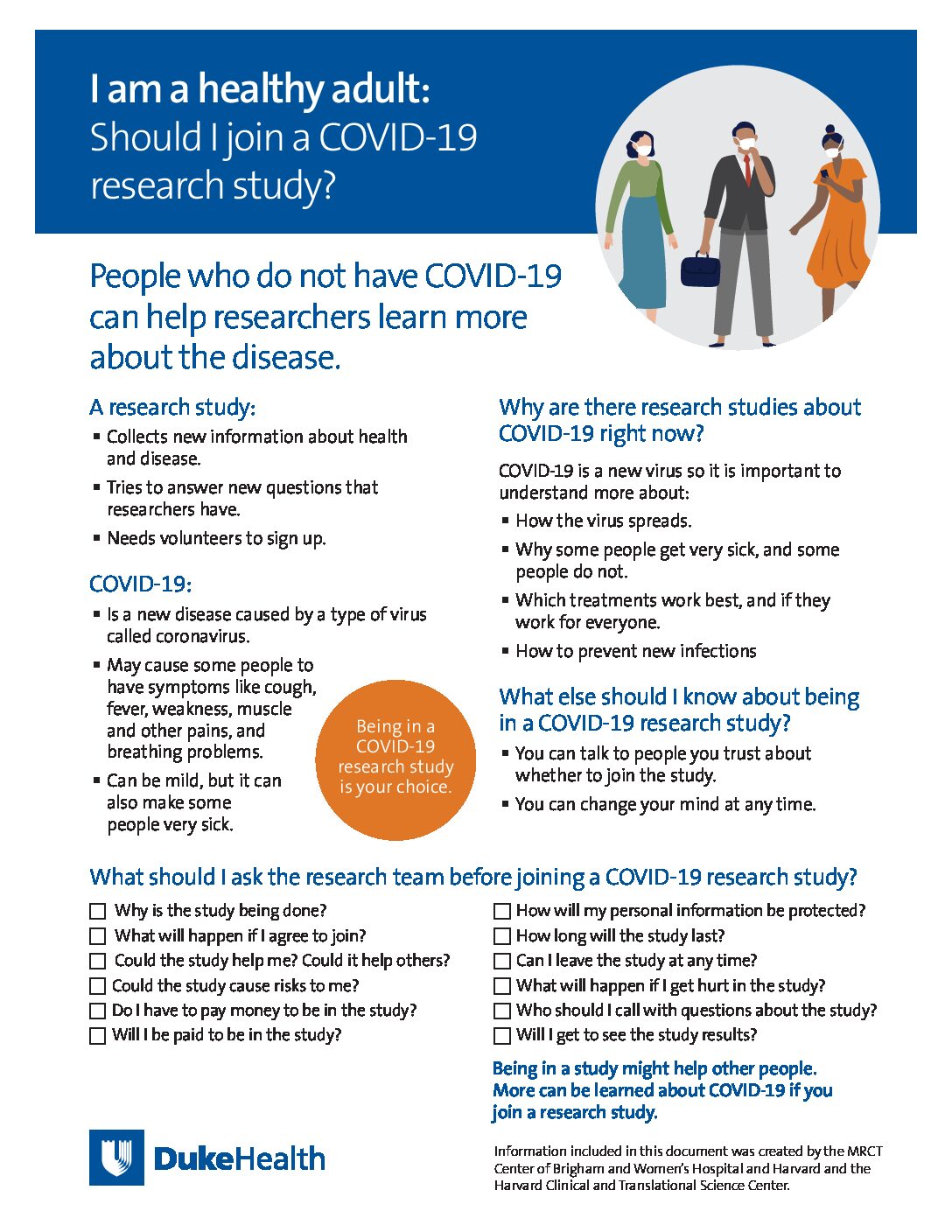
Clinical Research Participation Basics: What Should I Ask of, and Know About, the Study Staff?

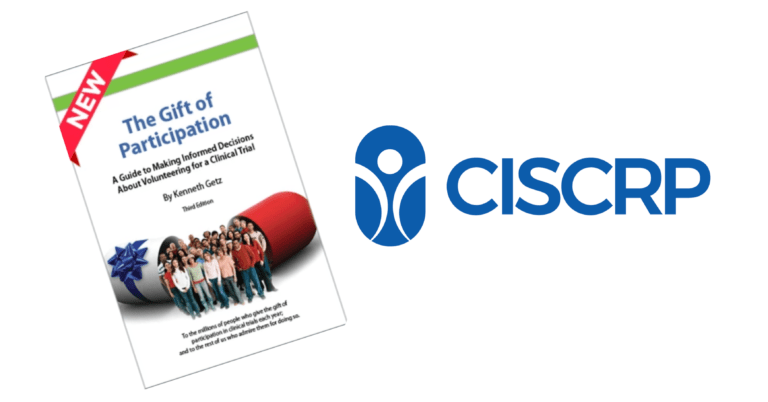
From "The Gift of Participation" by Ken Getz, Founder & Board Chair, CISCRP

Principal investigators, the people who supervise clinical trials, may only meet with you briefly to do a physical exam and required medical procedures. With the exception of dental studies, principal investigators are usually medical doctors. Research visits with physicians can seem like a routine doctor visit with added paperwork. But principal investigators do a great deal of behind-the-scenes work that study participants rarely see, including trial design and monitoring of results. Protocols that pharmaceutical companies and research consultants develop can be hard to qualify for and grueling to be in. Some principal investigators spend a significant amount of time reworking these trials to be more patient-friendly. Sub-investigators, including other doctors, graduate students, residents, and lab staff, may conduct study-related procedures under the supervision of the principal investigator.

With few exceptions, the professional with whom you will interact directly and frequently is the research nurse—called a study coordinator. Study coordinators are frequently registered nurses. They essentially run the clinical trial. Among their long list of duties are recruiting and screening patients, obtaining your written consent to participate in a study, monitoring your progress at home, and reporting any adverse drug reactions. Study coordinators are the individuals with whom you likely will first meet to discuss what you can expect during a clinical trial and the potential risks and benefits of the investigational therapy. Coordinators can, in many ways, make or break the clinical trial experience for you.

Both study investigators and coordinators usually make themselves available 24 hours a day to answer questions about the study and any unexpected reaction—or non-reaction– to the investigational medication. This also allows them to respond quickly to any adverse event that occurs. Many research centers will go to great lengths to assist you in feeling comfortable and well-cared-for. A number of studies have shown that the vast majority of study volunteers highly rate the level of professionalism and the quality of care that they received during their participation. The center may provide transportation services, onsite day care, after-hour appointment times, waiting rooms stocked with refreshments, friendly administrative staff, special dinners, and birthday cards. Some research centers even offer valet parking. Patients who repeatedly volunteer for drug trials targeting their particular illness are sometimes even supplied with free medications and treatments between studies.

For more information on clinical trials and making informed decisions about volunteering for clinical research, read “The Gift of Participation” by Ken Getz, Founder and Board Chair, CISCRP.

You can find the book here.

To search for medical conditions in a specific location, visit our Search Clinical Trials page.

To stay informed about clinical trials, visit our Resources page.

Clinical Trial Participants Are Changing Lives

Study volunteers in clinical trials are essential to advances in medicine yet their own medical condition may not benefit by their participation.

Every year, millions of people take part in clinical trials and become partners in the process of developing new medical treatments. We call these individuals medical heroes.

Participation in a clinical trial is a brave and selfless act because it always carries some risk. The trial may bring some hope for a treatment and even a cure; but it is unlikely to personally benefit a participant. Through their participation, medical heroes contribute valuable knowledge about the nature of a disease, its progression, and how and how not to treat it. Ultimately, future generations benefit from medical advances gained through clinical trials.

One last hope
For most people, clinical trials are an abstract concept with no personal relevance. They take a hard look at clinical trials for the first time when facing the prospect of a serious and debilitating illness for which no medication is available or adequate. 

Patients, their families, friends, and healthcare providers must gather information quickly to understand how the clinical trial process works, the requirements of participation as defined by the study protocol, and whether participation is appropriate. This rush to navigate and master the unfamiliar terrain of clinical trials invariably feels overwhelming and confusing.

Learning the ropes
In 2003, the Center for Information and Study on Clinical Research Participation (CISCRP) was founded to provide outreach and education to those individuals and their support network considering participation in clinical trials. Based in the Boston area, this nonprofit organization focuses its energy and resources on educating patients and the public about the clinical trial process and on enhancing study volunteer experiences during and after participation. Many events and services are designed to improve public and patient literacy, to engender feelings of empowerment and control, to ensure more informed decision-making, and to recognize and appreciate the medical heroes that inspire us.

Today, nearly 4,000 experimental drugs and therapies are in active clinical trials and that number continues to grow as improvements are made in detecting dis-ease, in discovering new medical innovations, and in understanding and addressing the root cause of acute and chronic illnesses. At the very heart of all of this promising, life-saving and life-altering activity are medical heroes to whom we owe our deepest appreciation for their profound gift of participation. n

Article from 2020 Clinical Trials Supplement, USA Today. View Supplement Here >
Findings from the CISCRP 2021 Perceptions & Insights Study

Learn about the latest trends in clinical research awareness and perceptions, including shifts from past studies, patient engagement preferences, overall receptivity to decentralized trials and the evolving role of technology. Panelists also review perceptions among diverse communities and the impact of COVID-19 on clinical research.

About the Panelists

ken 300

Ken Getz
Founder & Board Chair

Annick Anderson

Annick de Bruin
Senior Director
Research Services

Jessica Cronin

Jessica Cronin
Project Manager
Research Services

Gina-Pryciak resized

Gina Pryciak
Research Associate
Research Services

Kim Harper

Kim Harper
Site Director

Benchmark Research

Krystal Doucet
Associate Site Director

Benchmark Research

stephanie aleite

Stephanie Aleite
Patient Advocate
The Young Face of Arthritis

Clinical Trials: Every Person Can Play A Powerful Role

The global race to combat the current pandemic has put medicine development
in the spotlight and made clinical trials front page news. To go beyond the headlines, we spoke with
Marie-Pierre Hellio La Graverand, M.D., Ph.D, a leader in drug development for Pfizer, and asked her for
three takeaways she’d want people to have about clinical trials, what they are and why they matter.

We all need clinical trials to develop new medicines. And clinical trials need us too.

Marie-Pierre’s training as both a physician and scientist has provided her with a unique perspective on what it takes to translate insights from the laboratory into life-changing new medicines.

It’s a perspective that makes her especially grateful to the thousands of people who volunteer each year to participate in clinical trials.

“One of the big reasons I chose to devote my career to drug development was that it’s an opportunity to bring new medicines and vaccines to help people across the world,” she says. “New medicines have the potential to change and save lives. And those new medicines would not be possible without the thousands of people who participate in clinical trials.”

As Marie-Pierre explains, every prescription medicine we depend upon today was first tested in a clinical trial. And every medicine we hope to develop for tomorrow depends on the people that continue to participate in these clinical trials.

Clinical trials are always safety-first.
Advancing science and helping develop new medicines is the goal of each clinical trial.

But as Marie-Pierre explains, it’s the people who join clinical trials who are always the priority.

“It starts with careful safety planning, long before a single person joins,” she says. Potential participants are carefully evaluated to be sure it’s the right trial for them, and each trial site is run by a specialized team of doctors and medical staff, with oversight provided through continuous monitoring. “The focus is always on the participants, keeping people’s safety top of mind,” Marie-Pierre says. “Their health and well-being is always our top priority.“

We all have a part to play.
Medicines being studied to help one patient population or age group require volunteers from that specific population. “But most new medicines and vaccines also depend on the participation of healthy volunteers,” Marie-Pierre says.

“The medicines we rely on today benefited from the help of thousands of healthy people, representing all our global diversity.

“In order to ensure that new medicines and vaccines can help everybody, everybody has to be represented in these studies,” she explains. “We all have something we can contribute to making the world a healthier place.” 

Article from 2020 Clinical Trials Supplement, USA Today. View Supplement Here >

Advocating for Yourself or Your Child in a Clinical Trial

Dr. Mark Sorrentino, MD, MS, Vice President, Center for Pediatric Development, ICON, and Dr. Joanna L. Perkins, MD, MS, Director of Medical Affairs, Hematology-Oncology, Americas, ICON, discuss how to advocate for yourself or your child in a clinical trial. Dr. Sorrentino brings his perspective as a clinical study participant and Dr. Perkins  expands on her experience from an investigator’s lens.

You can read an article brief based on the webinar here.

About the Panelists

Dr. Mark Sorrentino, MD, MS, Vice President
Center for Pediatric Development, ICON

 Click on image for biography.

Dr. Joanna L. Perkins, MD, MS, Director of Medical Affairs, Hematology-Oncology, Americas, ICON

Click on image for biography.

The Priceless Gift of Clinical Trial Participation

Written by: Ken Getz
Founder and Board Chair, CISCRP
Professor, Tufts University School of Medicine

Many clinical trial participants don’t directly benefit from the study. However,
their participation is an invaluable gift to future generations.

New medical discoveries made during the past decade — fueled by improvements in detecting disease, and new understanding about the root causes of diseases and how to treat them — have moved more than 4,000 experimental drugs and interventions into active clinical trials globally.
In the past several months alone, the world has seen the public and private sectors collaborate at unprecedented levels and speed to develop several hundred new vaccines and treatments in response to the COVID-19 pandemic.
But the ultimate success of all of these innovations depends entirely on the millions of people who volunteer to participate in clinical trials.

These are everyday people who choose to give the extraordinary gift of participation in clinical research.
Their decision to participate is a selfless act — an altruistic gift — because it always carries risk and is unlikely to bring any direct personal benefit. Through their participation and partnership with clinical research professionals, study volunteers profoundly contribute to society’s collective knowledge about the nature of disease, its progression, and how to treat it. Ultimately, future generations are the direct recipients of the gift of each clinical trial volunteer’s participation.

Unfamiliar territory
Although there has been a lot of news coverage about treatments and vaccines in clinical testing for COVID-19, the vast majority of people know very little about actually participating in clinical trials. Most people stumble upon clinical trials when faced with the sudden and often unexpected prospect of a serious and debilitating illness for which no medication is available or adequate.
Typically patients, their families, their friends, and their healthcare providers must gather information quickly to identify an appropriate clinical trial, and to determine whether to participate. This rush to navigate the unfamiliar terrain of clinical trials can be over-whelming and confusing.

A valuable resource
In 2003, the Center for Information and Study on Clinical Research Participation (CISCRP) was founded to provide outreach and education to people considering participating in clinical trials. Based in Boston, but with global reach, our nonprofit organization focuses its energy and resources on raising awareness, educating patients and the public, and enhancing study volunteer experiences during and after clinical trial participation.
This special supplement is part of CISCRP’s ongoing effort to raise public awareness about the importance of clinical research, and to increase public recognition of the millions of study volunteers and clinical research professionals who, together, help advance medical knowledge. We hope you find this campaign informative and inspiring.
At the very heart of successfully developing new life-saving and life-changing treatments and vaccines lies the clinical trial volunteers to whom we owe our deepest appreciation for the profound gift of their participation. 

Article from 2020 Clinical Trials Supplement, USA Today. View Supplement Here >

Why Clinical Trial Participants Are Medical Heroes

Written by: Ken Getz
Founder and Board Chair, CISCRP
Professor, Tufts University School of Medicine

During this pandemic, we hear news every day about the many promising therapies and vaccines in development for COVID-19. Wide coverage in the media has made us all more aware of the important role that clinical trials play in protecting and advancing public health.

The success of these medical innovations and the availability of the thousands of drugs and interventions for all types of diseases depends entirely on people who participate in clinical trials. We call these brave participants medical heroes, and they can be found everywhere.

True heroes

Medical heroes are people like you and me who have chosen to give the extraordinary gift of their participation in research studies to find new treatments and cures for diseases. Their decision to be a clinical trial volunteer is a selfless act because it always carries risk, but it may not result in any direct personal benefit.

Even with higher media attention on clinical trials, the majority of people know very little about what it means to be a study volunteer. Most people only look at clinical trials in earnest when they are faced with the sudden and often unexpected prospect of a serious and debilitating illness for which no medication is available or adequate.

Raising awareness

At that moment, patients, their families, friends, and their healthcare providers must gather information quickly to make decisions about whether to participate in a clinical trial. This rush to navigate the unfamiliar terrain of clinical trials feels overwhelming and confusing. Seventeen years ago, the Center for Information and Study on Clinical Research Participation (CISCRP) was founded to provide outreach and education to all people and their support networks considering participation in clinical trials.

It is true that participation may bring hope to clinical trial volunteers and their loved ones. But ultimately, future generations are the direct recipients of the gift of participation. Medical heroes, in partnership with clinical research professionals, contribute profoundly to our collective knowledge about the nature of disease, its progression, and how and how not to treat it. 

Article from 2020 Clinical Trials Supplement, USA Today. View Supplement Here >

Adolescents in Clinical Trials & the RACE for Children Act

Missy Hansen, MSN, APRN, CPNP, CPHON, Pediatric Strategy Liaison, Center for Pediatric Clinical Development, ICON a former nurse practitioner now working in pediatric clinical development, and Lori Ranney, DNP, APRN, CPNP, CPHON, Children’s Minnesota, a nurse practitioner, discuss the future of pediatric oncology development and treatment options and their experiences treating the adolescent and young adult populations in light of the passage of the RACE (Research to Accelerate Cures & Equity) for Children Act. 

About the Panelists

Missy Hansen MSN, APRN, CPNP, CPHON
Click Photo to Read Bio

Lori Ranney DNP, APRN, CPNP, CPHON
Click Photo to Read Bio