Are Scientists On the Verge of an Alzheimer’s Cure?

Written by: Cindy Riley

As the number of people struggling with Alzheimer’s continues to rise, researchers are working overtime in hopes of finding a cure — but they can’t do it alone.

An exciting development
“There are approximately 100 drugs currently being tested,” explains Jeffrey Cummings, M.D., the director of the Cleveland Clinic Lou Ruvo Center for Brain Health. “About a third are in the advanced phases of testing. Some are promising enough that we believe a preliminary treatment would be available within five years.”

The potential new drug aducanumab has been shown to remove the build-up of the Alzheimer’s protein amyloid in the brain and slow the decline in memory and thinking skills in patients. Additionally, the Global Alzheimer’s Platform Foundation (GAP) is working to reduce the time and cost of trials. GAP president John Dwyer explains, “The key to shortening clinical trials is recruiting people. We’re in a chronic shortage.

”Understanding the cost
By 2050, the cost of Alzheimer’s disease in the United States will be $1 trillion dollars, annually.

“No government can absorb those kinds of costs,” says Cummings. “Although research is expensive, it’s hugely less expensive than the cost of caring for all these patients.”

Malack-Ragona notes, “A person with dementia or Alzheimer’s usually costs the system three times more than any other disease process.”

Support and prevention
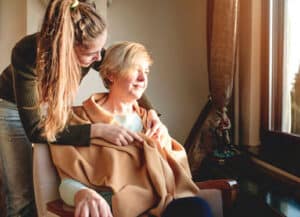
Caregivers, usually women, bear the major impact of Alzheimer’s. “It affects them at home, in their relationships, and at work,” says Dwyer. “The caregiver’s burden is uncharacteristically heavy and long in duration.” Alzheimer’s support groups, however, can ease the stress. Malack-Ragona reminds caregivers to “never stand alone” during the journey.

While Alzheimer’s can’t be prevented, reading, working puzzles, volunteering, and learning new things can lower risks. Proper nutrition and regular exercise are also encouraged, along with avoiding cigarettes and getting enough sleep.

A change in awareness
Cummings acknowledges, “There’s the idea that having a loved one who’s confused is a shameful thing. Many families feel the need to hide it. That’s a stigma we’d like to remove.” Adds Dwyer, “We should embrace the fact the disease exists, learn how to reduce risks, and get involved in finding a cure.”

Roughly 5.5 million Americans are battling Alzheimer’s. The number could rise to 16 million by mid-century. A first-of-its-kind smartphone app will provide information about research trials, starting in June. The first person cured of Alzheimer’s will likely be a clinical trial participant. 

Article from 2021 Clinical Trials Supplement, USA Today. View Supplement Here >

Medical Hero Spotlight: Dr. Tracy Dixon-Salazar and LGS (Lennox Gastaut Syndrome)

Dr. Tracy Dixon-Salazar Lennox Gastaut Syndrome

Written by Melissa E. Daley, CISCRP

“The best way to describe Savannah is that she lives in the now. She doesn’t really fret about the future, and she doesn’t dwell on the past. But she does have memories that come up from time to time. You can pull out pictures and she can remember those times and what was happening,” says Dr. Tracy Dixon Salazar, of her daughter, Savannah. “She recalls having to wear a helmet in school all the time and having a seizure response dog. I don’t think she globally understands the journey she’s been on.” Now in her late twenties, at age five Savannah was diagnosed with Lennox-Gastaut syndrome (LGS), a development brain disorder that frequently evolves from early-life-onset epilepsy and usually emerges between ages of three to five years old. (1) Tracy’s role in Savannah’s life is a triumvirate of mother, patient advocate and scientific researcher.

“Savannah started having seizures out of the blue and nobody could tell us why,” says Tracy. When Tracy and her husband, Ruben, sought treatment for Savannah, they were told that knowing the origin of the seizures was not necessary to stop them. However, none of the prescribed medications worked. They were advised that Savannah’s seizures would not damage her brain. “I would see the seizures taking a huge toll on her cognitive ability and her ability to learn. We were told that you can’t die from seizures, and yet we had to resuscitate Savannah a number of times,” says Tracy.

Tracy decided to address the disconnect between how medical professionals were assessing her daughter’s illness and Savannah’s lived experience by enrolling in college, ultimately attaining her PhD in Neurobiology and Neurosciences. It took twelve years, with Tracy and Ruben tag-teaming work, school, child care and health care responsibilities. Despite the grueling demands, Tracy was determined. “I wanted to understand what could cause early life seizures,” says Tracy. “What was this LGS and where did it come from?”

LGS patients can have hundreds of seizures a day that dramatically impact their physical and cognitive development. “You never knew what you were going to get,” says Tracy. “It could be a five-seizure day, or it could be a 500-seizure day.”

Tracy describes a 500-seizure day as “…absolute chaos. You’re not going anywhere. They’re not going anywhere. You’re probably not going to make it to work. She’s not going to make it to school. You’re on watch to make sure that these seizures stop on their own. You have to be counting them,” says Tracy. A cluster of seizures together over a prolonged period of time can cause brain damage. A single cluster that does not end on its own (called status epilepticus) can also become a fatal emergency.

Savannah, Tracy and friend.

“At its worst, Savannah was going into cluster seizures or status epilepticus, two to four times a week.” Tracy or Ruben had to prevent Savannah from injuring herself during a seizure, administer rescue medications, and attend to Savannah’s post-episode physical needs, which may include caring for uncontrollable bouts of urination, defecation and vomiting.

Seizures are brutal. Over the years, Savannah has endured a fractured skull, broken teeth, broken arms, injury to her eye and a severed nose bridge. With her parents searching for a way to provide relief and healing, Savannah tried 26 different treatments between the ages of two and eighteen, including medications, diets, devices and alternative therapies. Some of these were through participation in clinical trials. None of them worked.

As a post-doctoral candidate, Tracy worked in a lab, sequencing exomes, the coding part of the genome that contains information for protein synthesis (2), in children with pediatric brain disease and epilepsy. “For me, science was going to be the thing that answered these questions,” says Tracy.

Savannah was a participant in clinical research conducted by Tracy and her colleagues on the research team. In addition to sequencing Savannah’s genes, they also sequenced Tracy’s and her husband’s, as part of Tracy’s research for a precision or genomic therapy to treat LGS.

“When we sequenced Savannah’s exome, we found a group of calcium channel genes, that were telling us that she had too much calcium going into her brain cells, so we started to look at existing medications that targeted calcium channels,” says Tracy. They found medications targeting calcium that were used for high blood pressure and arrythmias, not epilepsy. After a risk/benefit analysis of the data and in coordination with Savannah’s physician, Savannah began treatment with a calcium blocking drug. Her seizure numbers dropped by 95% and her episodes of non-stop seizures completely stopped. (3)

“Unfortunately, we didn’t find it until she was 18 years old, so a lot of brain damage had already happened. But she really turned a corner after that,” says Tracy. Savannah was able to safely discontinue a number of medications she had been taking. “She started talking. She could walk. Savannah is funny and sassy. I feel like I got to meet her again when she was 18 years old.”

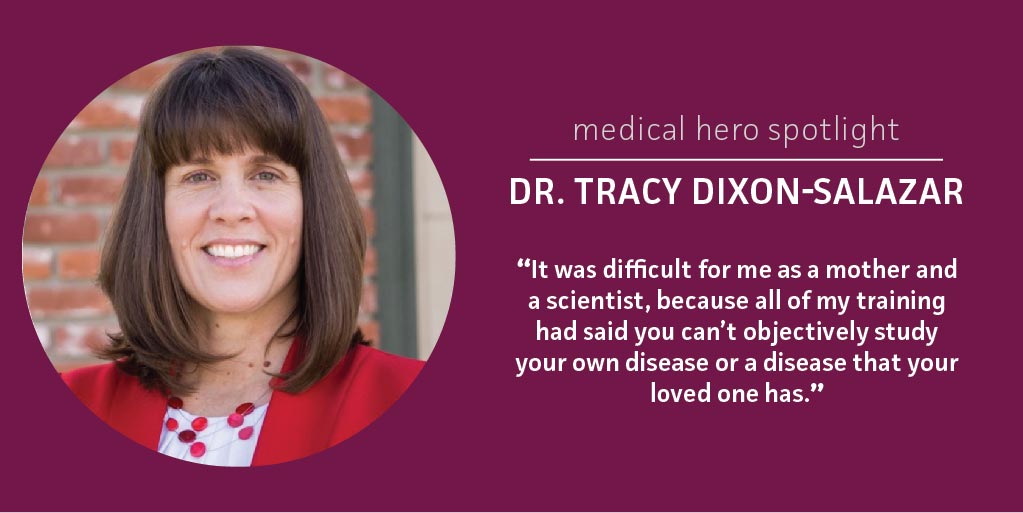
While the outcome of the research was positive, Tracy faced internal challenges about her role as a parent and a researcher during the process. “It was difficult for me as a mother and a scientist, because all of my training had said ‘you can’t objectively study your own disease or a disease that your loved one has’. Yet if you go into scientific literature, there are TONS of people who have studied their own disease or a disease of a loved one,” says Tracy. “It’s made them a better scientist, in many ways. But there’s so much more at stake if I get it wrong, with my own child. I was so conflicted during this time.”

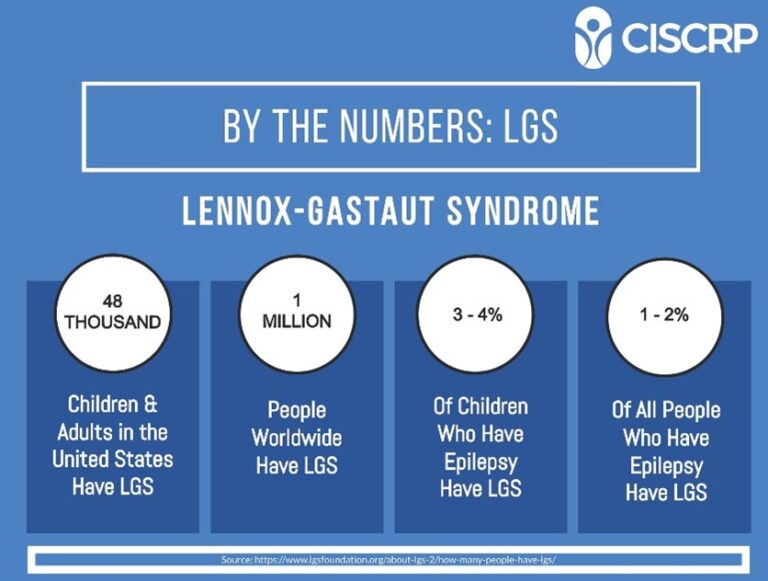
Participation in clinical research has been a big part of their lives, even before Savannah’s participation in the study conducted by her mother and the team. “It was always important for us to be part of research studies, to be a part of clinical trials, to be thinking about not only how we are going to help ourselves, but how we are going to help the next generation as well,” says Tracy. “LGS is a rare disease, but we have a community of six thousand (active in the LGS Foundation). There is a predicted forty-eight thousand thousand people with LGS in the United States and a predicted million people worldwide.”

Tracy shares there are several things to consider before participating in clinical research. “Being in a clinical trial is not without risk – but so is not being in a clinical trial. If you have exhausted every anti-seizure medication and there is an open clinical trial, and you choose not to be in that, there will be consequences for that as well. As a parent, you just make the best possible decision that you can make. There is risk on both sides. Become as informed as you possibly can to make that decision.”

Tracy is committed to providing information and resources to the LGS community by serving as Executive Director of the LGS Foundation, founded in 2008 by Christina Sanlnocencio, whose brother Michael was an adult living with LGS. Tracy says “Advocacy organizations like the LGS Foundation, or wherever your community is, are there for you so you don’t have to walk this alone. Talk with them. They have a lot of great information to share on how to navigate and understand clinical trials.  How to think about the pros and cons of participating in clinical research. Find somebody who has walked there before you and hear their story. It can help you make decisions about whether or not you or your loved one should go into a clinical trial, or how you are going to support your loved one who is in a clinical trial.”

To search for medical conditions in a specific location, visit our Search Clinical Trials page.

To stay informed about clinical trials, visit our Resources page.

Sources:

(1)  https://www.lgsfoundation.org/about-lgs-2/what-is-lennox-gastaut-syndrome/

(2)  https://www.broadinstitute.org/blog/what-exome-sequencing

(3)  https://www.lgsfoundation.org/fighting-for-a-cure-for-lgs/

Tools of the Trade for Patient-Centric Clinical Development

ICON’s Center for Rare Diseases industry experts and clinical research panelists discuss how the Patient-Centric Trial Development Toolkit for rare diseases can incorporate and elevate the patient voice in a company’s drug development program.

About the Panelists

Click on each photo to read biography.

Amy Raymond
PhD, PMP
ICON

Laura Iliescu
ICON

Kelli Wright
Patient Advocacy Professional

Kendall Davis
Spark Therapeutics

How African American Men Can Beat the Odds Against Prostate Cancer

While prostate cancer is a concern for every middle aged man, African-American men should be more concerned than most.

“The incidence of prostate cancer is over 60 percent higher in African-American men compared to white men, and in terms of mortality, it’s 150 percent higher,” says Thomas Farrington, founder and president of the Prostate Health Education Network (PHEN). “For African-American men, there are issues with treatment, access to treatment and quality of treatment.”.

A voice of reason
Farrington was diagnosed with prostate cancer in 2000 and, while now cancer-free, he has dedicated himself to making sure black men learn more about this deadly disease.

“I’m a 17-year survivor, and I know that the knowledge of these factors is one of the most crucial things in reducing mortality,” says Farrington, who wrote the book “Battling the Killer Within” about his experiences.

How we test
While the prostate-specific antigen test is a non-invasive blood test, not every doctor or insurance carrier makes the test a required part of annual check-ups.

“There’s debate about when men should be tested and who should be screened, and that debate causes a lot of confusion.” Farrington notes that African-American men tend to be diagnosed earlier in life, but men between age 55 and 70 “are very much at risk.”

Volunteers needed
One factor in the high mortality rate for African-American men is likely their lack of inclusion in clinical trials. “There are a lot of trials in which African-American men are not included, or not included in numbers that would be significant,” says Farrington.“ There are two pieces,” he adds, regarding the oversight. “African-American men aren’t educated about clinical trials and their potential benefits as a treatment option, and the scientific community hasn’t approached this group as aggressively as they could.”

Looking into clinical trials after a cancer diagnosis can be overwhelming, which is one issue Farrington addresses through the PHEN website. “Many men haven’t been asked to join a clinical trial, and it
hasn’t been discussed by their doctors,” Farrington says. “We need to get the African-American medical community up to speed and engaged with clinical trials, and make sure the entire African-American community understands the need to engage.”

While the incidence of prostate cancer in African-American men is still disturbingly high, Farrington is optimistic. “The mortality rates are declining faster for black men than white men at this point,” he mentions, “and given how much higher they are, that’s a good thing.” 

Written by: Liane Bonin Starr

Article from 2021 Clinical Trials Supplement, USA Today. View Supplement Here >
Health Literacy: Making content clear, engaging, and appropriate for patients and the public

Health literacy has always been an important part of CISCRP’s work. From general educational content about clinical research to sharing information and results for specific trials, we take pride in making content that is easy-to-understand, non-biased, non-promotional, culturally sensitive, and relevant for the communities we connect with.

In late 2021, CISCRP formed our Health Literacy team to further this part of our mission. We are excited to share some insights on what our team has been up to!

In this blog, you will learn how we are expanding our library of educational content and applying principles of health communication to new and engaging types of content. Most importantly, you will also hear about how we are working more closely with individuals from the communities we hope to inform and empower.

What is health literacy?

Many people know that health literacy, on a personal level, is the degree to which individuals can find, understand, and use information and services to make health-related decisions. A common example is following instructions for using medicine. A more complex example is understanding how clinical trials work, how they might impact your life if you participate, deciding whether to participate based on that information, then actually finding and determining whether to enroll in any particular trial.

Many people might not know that there is an equal and crucially important other half to health literacy – the organizational level. This is the degree to which organizations equitably enable personal health literacy.

At CISCRP, our focus and dedication to health literacy supports both individuals and organizations, including our own. We aim to achieve a high standard for health literacy to help patients, study participants, and members of the public.

What is the Health Literacy team doing?

Our team of editors, project managers, graphic designers, and community engagement specialists have been busy! Our favorite projects have focused on the topics of diversity, equity and inclusivity, Pediatric Research, and raising awareness on the key role of health literacy among researchers involved in medicinal product development.

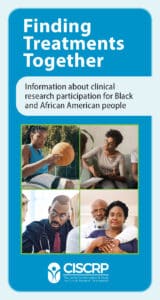
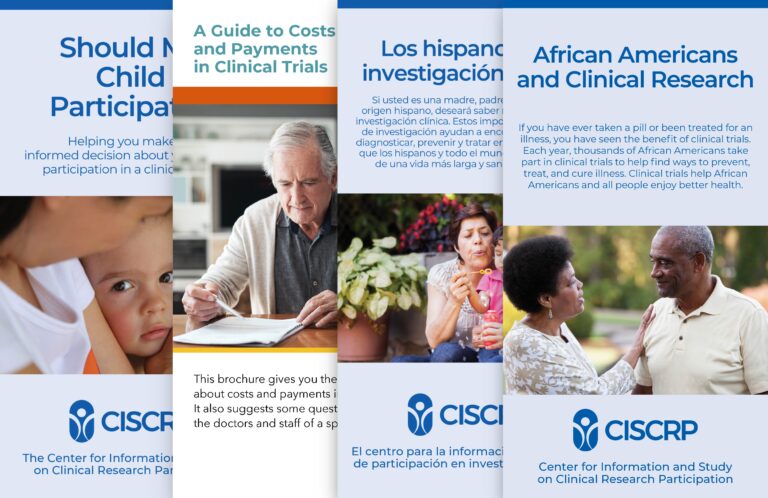
Our newly redeveloped educational brochure about clinical research for Black and African American communities was created by working together with members of these communities, as well as subject matter experts who have experience working with them. This included receiving feedback from 500 members of Black and African American communities through an anonymous survey.

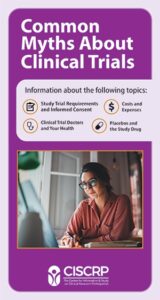
We also redeveloped our Common Myths About Clinical Trials educational brochure. The brochure, which is for all audiences, provides a fair and balanced view to addresses some challenging issues and misconceptions about clinical research.

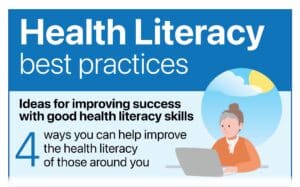
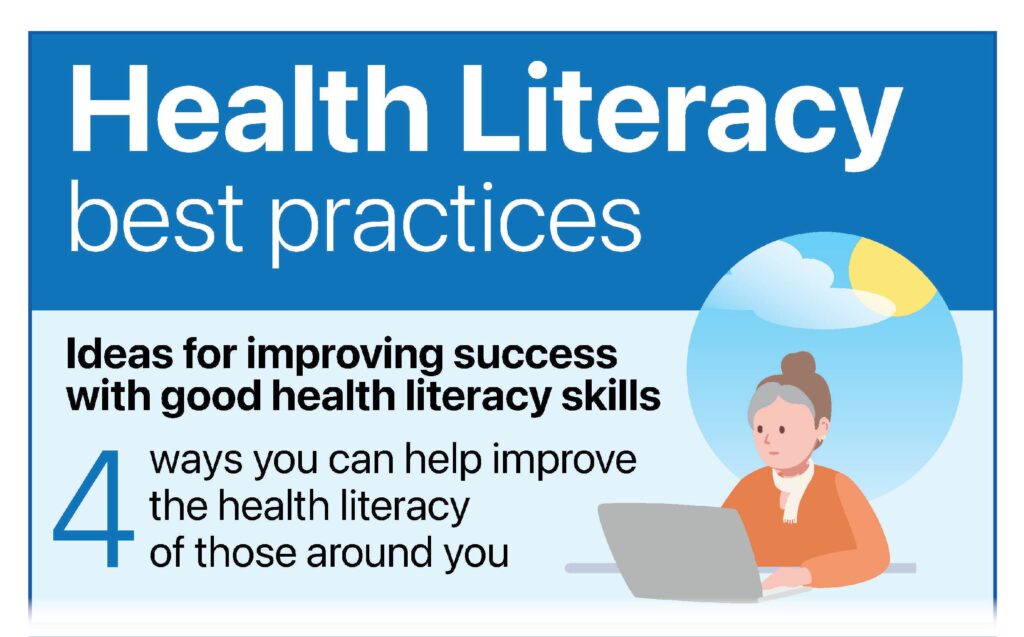
One pharmaceutical company showed a big commitment to health literacy by asking us to deliver a series of health literacy trainings for their staff. We also developed other awareness content including a crossword puzzle and an infographic about simple ways to apply health literacy in everyday life.


Community Engagement and Insights

To ensure the materials we create meet the health literacy needs of the people we hope to inform and empower, we ensure members of the target audience are involved in the development process. Most often, this means our content is reviewed by a “Review Panel” of volunteers that includes patients, health professionals, patient advocates, and members of the public.

For some projects, we hold “Feedback Forums,” which are like focus groups, user-test through interviews, or even survey 500 or more members of the target audience. This helps us make sure we really understand what the community wants to know and what they think about new materials we create. We also make sure some materials, such as brochures and videos, are reviewed by an Institutional Review Board.

Stay tuned for more blog posts about the work we do to learn how you can apply health literacy best practices in your daily life and work!

For a sneak peek, check out our 4-part Pediatric Education video series which combines live actors and animation to help kids learn about clinical research!

Written by: Behtash Bahador, Scott Finger, and Holly Arthur

CISCRP Releases Results of the 2021 Perceptions and Insights Study

Captures impact of COVID-19 and evolving participant needs and preferences in clinical research

Boston, MA | January 27, 2022: CISCRP announces that it has published the results of the 2021 Perceptions & Insights Study in complimentary reports available on the CISCRP website. The study involved nearly 12,000 people from around the world and captures trends in attitudes, preferences and experiences associated with clinical research.

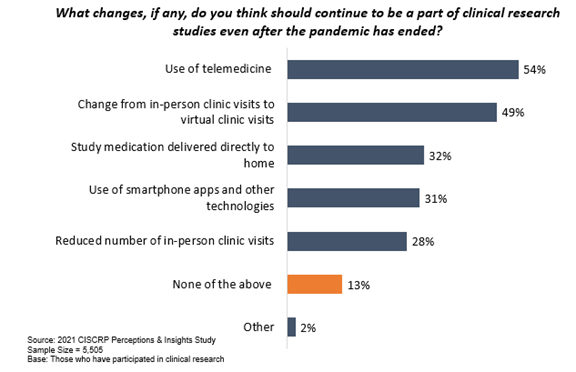
Results show mixed receptivity to changes in clinical trial execution during COVID-19: Fifty-four percent of clinical research volunteers, for example, think the use of telemedicine should continue after the pandemic has ended. 

A similar percentage, however, prefer having in-person clinic visits and direct interactions with research center staff. The study found that COVID-19 has not affected public and patient willingness to participate in clinical trials. The results also show an increase in public trust in research centers, government, and regulatory agencies.

The importance of diversity and inclusion in clinical research was another highlight of the 2021 study. Over 60% indicated the importance of knowing that research staff conducting a clinical trial are representative of the diverse patient communities enrolled.  

Year-round coordinated outreach efforts are essential to increase representation of diverse populations in clinical studies, not just when the need arises. Krystal Doucet, Associate Site Director, Benchmark Research.  “In clinical research, we tend to advertise when we have studies going on. You don’t see a lot of advertisements throughout the year just explaining the great things that come from clinical research,” she said.

Travel required to participate in clinical trials remains one of several major challenges for study volunteers. More than six-out-of-ten respondents indicated that traveling at least 30-minutes or more one-way for an in-person clinic visit was onerous. Growing use of virtual and at home clinical trial visits offer participants convenience with less disruption in their daily lives.

Stephanie Aleite, Patient Advocate, The Young Face of Arthritis, shares “The P&I study results very much reflect the thoughts of the patient community. One of the things I found interesting was the traveling to study clinics being burdensome; that’s especially true for patients with Musculo-skeletal diseases.  The desire to continue with virtual visits and shipping study medications, those are things I have heard from the community.”

“The recently conducted 2021 Perceptions & Insights study holds a lot of informative and surprising results and insights,” said Ken Getz, CISCRP Founder and Board Chair.  “We’re delighted to make the study results available to all clinical research stakeholders free of charge, and we encourage ongoing use and discussion of the findings and their implications.”

The 2021 Perceptions & Insights executive summary reports are available on the CISCRP website under Research Services (www.ciscrp.org).

For further information on the 2021 Perceptions & Insights study, please contact Annick de Bruin, Senior Director, at adebruin@ciscrp.org or 617-725-2750 ext. 400.

Participating in a Clinical Trial: Building A Support Network

From "The Gift of Participation" by Ken Getz, Founder & Board Chair, CISCRP

Another important part of the human side of clinical trials is the support network that you create. Study volunteers are not alone in their clinical trial participation. Your decision to participate in a clinical trial is best made with input from the people you know and trust. Your network should include your family physician or specialist who has previously been treating your disease or condition. Your primary-care and specialty nurses may be very helpful in sorting out your identification of a clinical trial and the risks and benefits of participating in one.

Perhaps no one has a greater interest in your well-being as a potential study subject than your family and friends. They will want to be actively involved in the decision-making process. Young children rely on their parents or guardians for support and guidance. Parents in their later years may well depend on their adult children. Whatever your support network, you need to draw comfort, assistance, and resolve from your family, friends, and advocates in order to determine if a clinical trial is right for you. And once you’ve enrolled in a trial, you may need to tap that support network for aid, all the way from ongoing encouragement and advice
down to transportation to and from the research center.

Many medical conditions have special support groups and communities that can help assist in evaluating clinical trials as treatment options. You can find information about local and national patient advocacy and support groups online, in primary care centers, hospitals and in public libraries. There are also a growing number of online self-help groups that provide up-to-the-minute information on new drugs and treatments, as well as electronic bulletin boards and chat rooms where patients can share their personal stories and experiences with both standard and investigational therapies.

For more information on clinical trials and making informed decisions about volunteering for clinical research, read “The Gift of Participation” by Ken Getz, Founder and Board Chair, CISCRP.

You can find the book here.


To search for medical conditions in a specific location, visit our Search Clinical Trials page.


To stay informed about clinical trials, visit our Resources page.

What Does a Caregiver Need?

Sponsored by: Bristol-Myers Squibb

Dealing with significant health challenges requires expert medical care and the support of committed caregivers who always have the needs of the patient in mind. But what do caregivers need to do this effectively? When Don Selmon’s wife, Carla, was diagnosed with cancer, he found his sudden role as her caregiver overwhelming. “There is so much information to process and keep track of,” he says. “There is simply too much data to try and remember not to use some sort of system. I personally created Excel spreadsheets so I could keep track of drugs she was taking for side effects, daily vitals, upcoming scans and appointments, question sets when meeting with our trial doc, etc.”

Selmon’s experience as his wife’s caregiver quickly showed him how vital that role is. “We can’t sit still with an enemy like cancer,” he says, noting that as a caregiver his roles included “cheerleader, confidant, shoulder to vent on — always doing my best to have her back in meetings and in treatment.”

Another crucial role caregivers play is often overlooked: helping patients discover clinical trials that can offer hope, relief, and, possibly, the greatest gift of all: more time.

Finding clinical trials
“Caregivers play a critical role in helping patients process the information that they are hearing from their treatment team and help them weigh the options,” says Sharon Hanlon, head of clinical trial engagement and enrollment at Bristol-Myers Squibb (BMS). “They may play a role in the decision to participate in a clinical trial, doing some home-work on behalf of the patient to help with their decision.”

Caregivers often start with a simple online search to find out about clinical trials. Web resources like clinicaltrials.gov can be easy to find, but trying to use because the trial descriptions can be difficult to read, and often assume a medical background that many caregivers lack. To help caregivers more easily access this crucial information, many pharmaceutical companies have created patient-focused websites that make it easier to identify appropriate trials.
“Ours is BMS Study Connect,” says Hanlon, “which utilizes patient-friendly language to help simplify the process and help make the journey easier. We also provide informational resources such as patient stories, such as the one here of the experience of a patient and caregiver during their clinical trial.”

At Study Connect, patients or their caregivers can use straight-forward tools to find potential clinical trials they can participate in. Even though the site is run by BMS, Study Connect searches all possible trials, even those not sponsored by BMS, something similar websites don’t offer.

Supporting caregivers
Despite their vital importance, the tremendous — and sometimes exhausting — efforts caregivers contribute is not always visible. “I often say that caregivers are the forgotten member of the patient experience,” Hanlon says, noting that they often experience feelings of powerlessness and stress around the experience. Caregivers are just as much in need of emotional and practical support as the patients they’re looking out for, and companies like BMS have also set up online resources where caregivers can exchange information and support each other.

“Web communities present an outlet for caregivers,” Hanlon says, “providing access to information.” For example, BMS participates in the Inspire Community making it available for patients, caregivers, and healthcare professionals. Members of the forum can support each other emotionally, compare notes, and discuss trials they have learned about or are participating in. 

Inspire surveyed patient and caregiver members about clinical trial perceptions in late 2018, and found that almost a third — 31 percent — of all respondents had tried to sign up for a clinical trial, and 21 percent agreed with the statement “clinical trial information is too confusing.” As a result of this information, now many Inspire communities have sections that are devoted specifically to clinical trial discussions to provide support and further information.

However, different people use Inspire in different ways. For Don Selmon, it was a vital connection to shared experience. “I utilized Inspire to learn more about the reported impacts of various treatments,” he says. “It was of great benefit to me as it helped me pre-pare as a caregiver for what might come from my wife’s treatment and how best to help her.”

Sometimes that connection is the best help a caregiver can receive. As Hanlon notes, “Sometimes the simplest connection is often the most impactful!”

Article from 2019 Clinical Trials Supplement, USA Today. View Supplement Here >
Autumn 2021

October 2021 Campaign

Expanded versions below.

View & Download Our Latest Campaign here.

Spanish Version: View & Download here.

View Content by Clicking on each Newspaper Title

Value Add Digital News Editions

  • Chicago Defender
  • News Pittsburgh Courier
  • Atlanta Daily World
  • Atlanta Tribune

A Very Special 'Thank You' to the Supporting Organizations

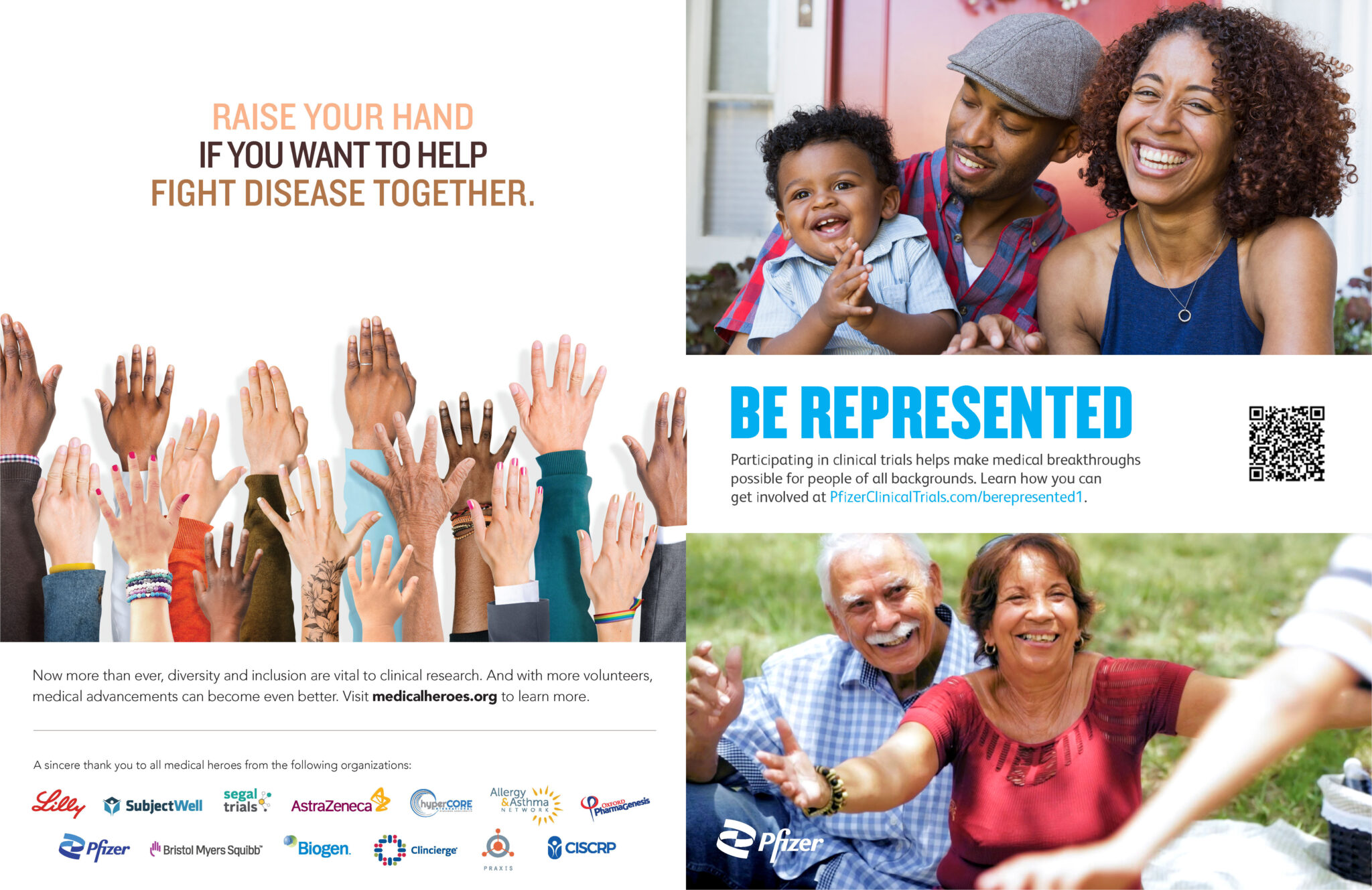
Thank You to Praxis

CISCRP would like to recognize and extend a 'Thank You' to Praxis for donating their pro-bono graphic design services to create the full page advertisement. View the advertisement here by clicking on the star.

To participate in this or another upcoming media campaign to continue to build education and awareness about clinical research, please contact Matt Steele at msteele@ciscrp.org.