Clinical Research Participation Basics: What Should I Ask of, and Know About, the Study Staff?

From "The Gift of Participation" by Ken Getz, Founder & Board Chair, CISCRP

Principal investigators, the people who supervise clinical trials, may only meet with you briefly to do a physical exam and required medical procedures. With the exception of dental studies, principal investigators are usually medical doctors. Research visits with physicians can seem like a routine doctor visit with added paperwork. But principal investigators do a great deal of behind-the-scenes work that study participants rarely see, including trial design and monitoring of results. Protocols that pharmaceutical companies and research consultants develop can be hard to qualify for and grueling to be in. Some principal investigators spend a significant amount of time reworking these trials to be more patient-friendly. Sub-investigators, including other doctors, graduate students, residents, and lab staff, may conduct study-related procedures under the supervision of the principal investigator.

With few exceptions, the professional with whom you will interact directly and frequently is the research nurse—called a study coordinator. Study coordinators are frequently registered nurses. They essentially run the clinical trial. Among their long list of duties are recruiting and screening patients, obtaining your written consent to participate in a study, monitoring your progress at home, and reporting any adverse drug reactions. Study coordinators are the individuals with whom you likely will first meet to discuss what you can expect during a clinical trial and the potential risks and benefits of the investigational therapy. Coordinators can, in many ways, make or break the clinical trial experience for you.

Both study investigators and coordinators usually make themselves available 24 hours a day to answer questions about the study and any unexpected reaction—or non-reaction– to the investigational medication. This also allows them to respond quickly to any adverse event that occurs. Many research centers will go to great lengths to assist you in feeling comfortable and well-cared-for. A number of studies have shown that the vast majority of study volunteers highly rate the level of professionalism and the quality of care that they received during their participation. The center may provide transportation services, onsite day care, after-hour appointment times, waiting rooms stocked with refreshments, friendly administrative staff, special dinners, and birthday cards. Some research centers even offer valet parking. Patients who repeatedly volunteer for drug trials targeting their particular illness are sometimes even supplied with free medications and treatments between studies.

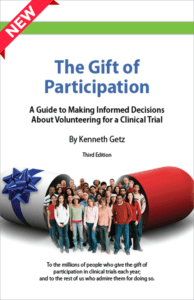
For more information on clinical trials and making informed decisions about volunteering for clinical research, read “The Gift of Participation” by Ken Getz, Founder and Board Chair, CISCRP.

You can find the book here.

To search for medical conditions in a specific location, visit our Search Clinical Trials page.

To stay informed about clinical trials, visit our Resources page.
Clinical Trial Participants Are Changing Lives

Study volunteers in clinical trials are essential to advances in medicine yet their own medical condition may not benefit by their participation.

Every year, millions of people take part in clinical trials and become partners in the process of developing new medical treatments. We call these individuals medical heroes.

Participation in a clinical trial is a brave and selfless act because it always carries some risk. The trial may bring some hope for a treatment and even a cure; but it is unlikely to personally benefit a participant. Through their participation, medical heroes contribute valuable knowledge about the nature of a disease, its progression, and how and how not to treat it. Ultimately, future generations benefit from medical advances gained through clinical trials.

One last hope
For most people, clinical trials are an abstract concept with no personal relevance. They take a hard look at clinical trials for the first time when facing the prospect of a serious and debilitating illness for which no medication is available or adequate. 

Patients, their families, friends, and healthcare providers must gather information quickly to understand how the clinical trial process works, the requirements of participation as defined by the study protocol, and whether participation is appropriate. This rush to navigate and master the unfamiliar terrain of clinical trials invariably feels overwhelming and confusing.

Learning the ropes
In 2003, the Center for Information and Study on Clinical Research Participation (CISCRP) was founded to provide outreach and education to those individuals and their support network considering participation in clinical trials. Based in the Boston area, this nonprofit organization focuses its energy and resources on educating patients and the public about the clinical trial process and on enhancing study volunteer experiences during and after participation. Many events and services are designed to improve public and patient literacy, to engender feelings of empowerment and control, to ensure more informed decision-making, and to recognize and appreciate the medical heroes that inspire us.

Today, nearly 4,000 experimental drugs and therapies are in active clinical trials and that number continues to grow as improvements are made in detecting dis-ease, in discovering new medical innovations, and in understanding and addressing the root cause of acute and chronic illnesses. At the very heart of all of this promising, life-saving and life-altering activity are medical heroes to whom we owe our deepest appreciation for their profound gift of participation. n

Article from 2020 Clinical Trials Supplement, USA Today. View Supplement Here >

Clinical Trials: Every Person Can Play A Powerful Role

The global race to combat the current pandemic has put medicine development
in the spotlight and made clinical trials front page news. To go beyond the headlines, we spoke with
Marie-Pierre Hellio La Graverand, M.D., Ph.D, a leader in drug development for Pfizer, and asked her for
three takeaways she’d want people to have about clinical trials, what they are and why they matter.

We all need clinical trials to develop new medicines. And clinical trials need us too.

Marie-Pierre’s training as both a physician and scientist has provided her with a unique perspective on what it takes to translate insights from the laboratory into life-changing new medicines.

It’s a perspective that makes her especially grateful to the thousands of people who volunteer each year to participate in clinical trials.

“One of the big reasons I chose to devote my career to drug development was that it’s an opportunity to bring new medicines and vaccines to help people across the world,” she says. “New medicines have the potential to change and save lives. And those new medicines would not be possible without the thousands of people who participate in clinical trials.”

As Marie-Pierre explains, every prescription medicine we depend upon today was first tested in a clinical trial. And every medicine we hope to develop for tomorrow depends on the people that continue to participate in these clinical trials.

Clinical trials are always safety-first.
Advancing science and helping develop new medicines is the goal of each clinical trial.

But as Marie-Pierre explains, it’s the people who join clinical trials who are always the priority.

“It starts with careful safety planning, long before a single person joins,” she says. Potential participants are carefully evaluated to be sure it’s the right trial for them, and each trial site is run by a specialized team of doctors and medical staff, with oversight provided through continuous monitoring. “The focus is always on the participants, keeping people’s safety top of mind,” Marie-Pierre says. “Their health and well-being is always our top priority.“

We all have a part to play.
Medicines being studied to help one patient population or age group require volunteers from that specific population. “But most new medicines and vaccines also depend on the participation of healthy volunteers,” Marie-Pierre says.

“The medicines we rely on today benefited from the help of thousands of healthy people, representing all our global diversity.

“In order to ensure that new medicines and vaccines can help everybody, everybody has to be represented in these studies,” she explains. “We all have something we can contribute to making the world a healthier place.” 

Article from 2020 Clinical Trials Supplement, USA Today. View Supplement Here >

The Priceless Gift of Clinical Trial Participation

Written by: Ken Getz
Founder and Board Chair, CISCRP
Professor, Tufts University School of Medicine

Many clinical trial participants don’t directly benefit from the study. However,
their participation is an invaluable gift to future generations.

New medical discoveries made during the past decade — fueled by improvements in detecting disease, and new understanding about the root causes of diseases and how to treat them — have moved more than 4,000 experimental drugs and interventions into active clinical trials globally.
In the past several months alone, the world has seen the public and private sectors collaborate at unprecedented levels and speed to develop several hundred new vaccines and treatments in response to the COVID-19 pandemic.
But the ultimate success of all of these innovations depends entirely on the millions of people who volunteer to participate in clinical trials.

These are everyday people who choose to give the extraordinary gift of participation in clinical research.
Their decision to participate is a selfless act — an altruistic gift — because it always carries risk and is unlikely to bring any direct personal benefit. Through their participation and partnership with clinical research professionals, study volunteers profoundly contribute to society’s collective knowledge about the nature of disease, its progression, and how to treat it. Ultimately, future generations are the direct recipients of the gift of each clinical trial volunteer’s participation.

Unfamiliar territory
Although there has been a lot of news coverage about treatments and vaccines in clinical testing for COVID-19, the vast majority of people know very little about actually participating in clinical trials. Most people stumble upon clinical trials when faced with the sudden and often unexpected prospect of a serious and debilitating illness for which no medication is available or adequate.
Typically patients, their families, their friends, and their healthcare providers must gather information quickly to identify an appropriate clinical trial, and to determine whether to participate. This rush to navigate the unfamiliar terrain of clinical trials can be over-whelming and confusing.

A valuable resource
In 2003, the Center for Information and Study on Clinical Research Participation (CISCRP) was founded to provide outreach and education to people considering participating in clinical trials. Based in Boston, but with global reach, our nonprofit organization focuses its energy and resources on raising awareness, educating patients and the public, and enhancing study volunteer experiences during and after clinical trial participation.
This special supplement is part of CISCRP’s ongoing effort to raise public awareness about the importance of clinical research, and to increase public recognition of the millions of study volunteers and clinical research professionals who, together, help advance medical knowledge. We hope you find this campaign informative and inspiring.
At the very heart of successfully developing new life-saving and life-changing treatments and vaccines lies the clinical trial volunteers to whom we owe our deepest appreciation for the profound gift of their participation. 

Article from 2020 Clinical Trials Supplement, USA Today. View Supplement Here >

Key Insights Into Clinical Research Perceptions Among Parents and Children

Written by: Shalome Sine
Project Manager
CISCRP Research Services

The findings of a recent pediatric survey illustrate perceptions and insights on what matters most to patients and their parents. It also offers ways to best support and inform prospective pediatric volunteers and their guardians before, during, and after the clinical research process.

During the month of April 2020, the Center for Information and Study on Clinical Research Participation (CISCRP) conducted an online United States-based survey among 500 parents and their children. The goal of this survey was to gain insight into general perceptions of pediatric trials, preferred channels of communication, key information parents and their children would want about pediatric clinical trials, as well as past or current experiences participating in pediatric clinical trials.

Awareness & Understanding
Parents generally self-report high levels of understanding about clinical research, and generally high willingness to have their child participate in a clinical research study. Awareness, understanding, and willingness to have their child participate was greatest among parents whose children have previously participated in clinical research.

Among children, levels of awareness of clinical research vary by a child’s age, as older children were more likely to have heard of clinical research compared to younger children. Overall, few reported that they understood clinical research “very well.” Though many were not sure whether they would want to participate, 50 percent reported that they would be willing. The top motivation to participate was altruistic, as children wanted to advance science through their participation.

Participation Experiences
During participation, parents reported highly burdensome experiences and high levels of disruption to their daily routine. Top burdens included traveling to the study clinic and having their child complete lab work like blood draws and urine tests. However, the majority of parents said that they received updates or study results once their child finished participation.

Results also indicate that children generally received adequate information about their participation. Ninety-two percent remembered getting information about the clinical trial before they joined, and 85 percent found this information “kind of” or “very easy” to understand. Despite these expectation-set-ting measures, children reported some study requirements as difficult to complete, most notably taking the study medication and undergoing blood draws. However, though children report burdensome study experiences, most indicate that the study exceeded their expectations, and that they would be willing to participate again.
Doctors are Key

A consistent theme throughout the survey findings was the critically important role that healthcare professionals play along the journey toward participation. For example, parents discuss clinical research with their child’s doctors often and cite their child’s doctors as the top way they learn about participation opportunities. Children would also most prefer to learn about clinical research through their doctor. Doctor recommendations were ultimately the top reason that parents decided to have their child participate. 

Article from 2020 Clinical Trials Supplement, USA Today. View Supplement Here >

Why Clinical Trial Participants Are Medical Heroes

Written by: Ken Getz
Founder and Board Chair, CISCRP
Professor, Tufts University School of Medicine

During this pandemic, we hear news every day about the many promising therapies and vaccines in development for COVID-19. Wide coverage in the media has made us all more aware of the important role that clinical trials play in protecting and advancing public health.

The success of these medical innovations and the availability of the thousands of drugs and interventions for all types of diseases depends entirely on people who participate in clinical trials. We call these brave participants medical heroes, and they can be found everywhere.

True heroes

Medical heroes are people like you and me who have chosen to give the extraordinary gift of their participation in research studies to find new treatments and cures for diseases. Their decision to be a clinical trial volunteer is a selfless act because it always carries risk, but it may not result in any direct personal benefit.

Even with higher media attention on clinical trials, the majority of people know very little about what it means to be a study volunteer. Most people only look at clinical trials in earnest when they are faced with the sudden and often unexpected prospect of a serious and debilitating illness for which no medication is available or adequate.

Raising awareness

At that moment, patients, their families, friends, and their healthcare providers must gather information quickly to make decisions about whether to participate in a clinical trial. This rush to navigate the unfamiliar terrain of clinical trials feels overwhelming and confusing. Seventeen years ago, the Center for Information and Study on Clinical Research Participation (CISCRP) was founded to provide outreach and education to all people and their support networks considering participation in clinical trials.

It is true that participation may bring hope to clinical trial volunteers and their loved ones. But ultimately, future generations are the direct recipients of the gift of participation. Medical heroes, in partnership with clinical research professionals, contribute profoundly to our collective knowledge about the nature of disease, its progression, and how and how not to treat it. 

Article from 2020 Clinical Trials Supplement, USA Today. View Supplement Here >

Press Release – AWARE for All – Southwest

CISCRP Announces - AWARE For All - Southwest- A Free Health Education Forum On Clinical Research This October

Healthcare Consortium Steps Up Efforts to Reduce Health Disparities in Clinical Trials and Increase Demographic Diversity to Aid Research, Treatments in the Wake of COVID-19.

BOSTON, MA, September 27, 2021 – The Center for Information and Study on Clinical Research Participation (CISCRP), a nonprofit organization dedicated to engaging the public and patients as partners in the clinical research process, announced today its AWARE for All – Southwest Forum. This is a free virtual event that is open to the public and will be held Thursday, October 21st from 6-7pm MDT. The forum is tailored for the Southwest region, including Arizona, California, Colorado, Nevada, and Texas via a secure online platform.

In an effort to reduce health disparities and increase demographic diversity in clinical trials, the forum brings together a unique consortium of health educators, health experts, and trial participants who will share the benefits, research and  urgent need in the development of treatments in healthcare. To register for the October 21st Southwest event visit: https://www.ciscrp.org/event/aware-for-all-southwest-virtual-event/. 

The COVID-19 pandemic and the disproportionate impacts to communities of racial and ethnic minorities, combined with decades of distrust and misinformation about clinical research and its role in the development of treatments and healthcare, has raised the urgency to broaden outreach to reach more participants in clinical trials. The AWARE for All forum aims to increase participation by historically marginalized communities that have long been absent from research on treatments, vaccines, devices, and therapeutic drugs.

“Today, participation by Hispanic communities in clinical trials is less than one percent nationally. Our goal is to increase the participation of patients of Hispanic heritage nationally in clinical trials to find new cures and innovative strategies in treatment. That’s why collaboration, outreach, and participation in the October event to learn more is so vitally important,” said Lisa Treviño, PhD, Vice President, DHR Health Institute for Research and Development.

AWARE for All – Southwest is supported by local research teams, advocacy groups, and a consortium of biopharmaceutical and service provider companies. The program will answer key questions about the clinical trials process, what to expect as a study volunteer, and the benefits and risks of participation. The panel discussion will be moderated by Ken Getz, founder and board chair at CISCRP and includes perspectives from clinical trial participants and healthcare professionals featuring:

  •  Charlene Upshaw, Breast Cancer clinical trial participant, La Porte, Texas
  •  Carmen White, Director, Multi-Cultural Participant Experience Lead, Pfizer
  • Lisa Treviño, PhD, Vice President, DHR Health Institute for Research and Development
  •  Al-Malik Edwards, Recruitment Specialist, Excell Research
  •  Becky Johnson, Director, Global Diversity & Inclusion in Clinical Trials, IQVIA

The AWARE for All event series has been crucial in driving attention to clinical research via locally common conditions and therapeutic areas, with a goal of reaching a diverse population to advance research and quality of care. It is the fourth of five AWARE for All programs running nationally in 2021.

“We believe that clinical trials are extremely important for moving science and medicine forward, and that they cannot be done without the dedication and commitment of the research participants. This is why it is so important that people interested in participating in a trial know that they have rights as participants and that clinical trials are always voluntary, because we could not do our work without their help,” said Michelle Stocker, Clinical Trial Research and Communications Professional, University of Colorado Alzheimer’s and Cognition Center.

As part of the virtual event, an informational exhibit will feature over 30 organizations sharing resources, a Health & Wellness pavilion, and a theater with short educational videos about clinical trials. Exhibitors include: Pfizer, Biogen, Janssen, Otsuka, IQVIA, CSL Behring, EMD Serono, WCG, Novartis, and Genentech. Visitors can connect with Southwestern and national advocacy organizations such as Alzheimer’s LA, The Chrysalis Initiative, National Ovarian Cancer Coalition, Candlelighters Childhood Cancer Foundation, BreastCancerTrials.org, and many more.

“Without clinical trials, we continue to lag behind in solutions for rare diseases like sickle cell and other diseases. We are grateful to CISCRP for hosting free programs like this to educate our community about clinical studies and their importance. Clinical studies are vital to advance research and quality of care, and we are excited to be a part of the Southwest program,” said Gina Glass, Executive Director Dreamsickle Kids Foundation, SCDAA Nevada Chapter.

To access recorded webinars and Informational Exhibit Centers, including AWARE for All events in 2021 visit www.awareforall.org.


About CISCRP

The Center for Information and Study on Clinical Research Participation (CISCRP) is a 501(c)(3) non-profit organization dedicated to engaging the public and patients as partners in the clinical research process. CISCRP provides free education and outreach to the general public and patient communities. Visit www.CISCRP.org for more information or to participate in CISCRP’s educational initiatives. For additional questions about AWARE for All, contact awareforall@ciscrp.org or call 877-633-4376.

AWARE for All – Midwest Event Overview

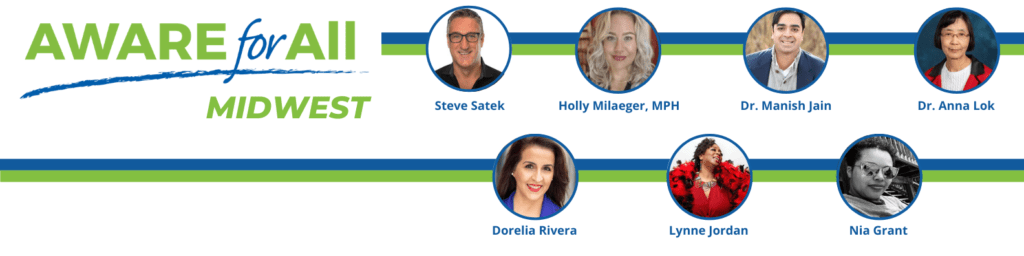
On July 22nd, attendees logged on to view the AWARE for All – Midwest virtual event. The third event in a sequence of five running throughout 2021, AWARE for All – Midwest aimed to break down the clinical trial process, share a variety of perspectives from trial participants and healthcare professionals, and answer common questions and misconceptions many have about clinical trials.

The event started with an overview presentation about how clinical trials work and the important role trial participants play in the process. The presentation was led by Steve Satek, Founder & President at Great Lakes Clinical Trials, who explained the importance of informed consent, how to decide if a clinical trial is right for you, and why clinical research is so important to the advancement of medicine.

As Steve noted, “It could have been five, ten, or even twenty years ago that people chose to participate in clinical trials that paved the way for the medication you take today.”

The next segment of the webinar featured a panel discussion, led by a group of clinical trial participants and healthcare professionals who shared their stories and perspectives. Among the clinical trial participants were Nia Grant, a Type 1 Diabetes trial participant, Lynne Jordan, a talented performer and COVID-19 vaccine trial participant, and Dorie Rivera, a mother, caregiver, and rare disease advocate.

There are many different reasons someone might choose to join a clinical trial. For Nia, participating in clinical research gave her a chance to represent her community and ensure diverse populations were included. Nia said, “Representation in research is important. If there are no trial participants who look like me, how can a doctor be sure a treatment is effective?”

For Lynne, joining a clinical trial gave her the chance to be a part of the effort to tackle the COVID-19 public health crisis, making a difference for her community and around the world. As Lynne recalled, “As a member of a community disproportionately affected by COVID-19, I wanted to be a part of the solution to this crisis.”

For Dorie, enrolling her daughter in a clinical trial gave her access to new treatments and gave her family the hope they needed. After being referred by other parents, Dorie decided to give the trial a try, stating “It was either joining a trial or facing complete hopelessness.”

The AWARE – Midwest panel discussion also featured several healthcare professionals who shared their experiences, including Dr. Anna Lok, Holly Milaeger, MPH, and Dr. Manish Jain. Together, the panelists tackled issues related to clinical trials such as the importance of diversity, how barriers to participation can be overcome, and the best ways to educate and inform about clinical trials, starting at a community level.

After the webinar concluded, viewers were able to navigate to the Informational Exhibit Center, a virtual exhibit hall that offers resources and information from over 40 health and wellness organizations in the Midwest region and across the country. A quick ‘click’ connects visitors with local advocacy organizations like Latino Union of Chicago, Indigenous Peoples Task Force, and The Chrysalis Initiative. The Informational Exhibit Center also features a Health and Wellness Pavilion where visitors can watch health exercises and tips, and a theater with short educational videos about clinical trials.

If you missed the AWARE for All – Midwest event or would like to tune in again, the recorded webinar and Informational Exhibit Center remain accessible here.

View more 2021 AWARE for All events here.

Women in Clinical Trials

From “The Gift of Participation” by Ken Getz, Founder & Board Chair, CISCRP

Gender mix in clinical trials, overall, appears to be relatively balanced. Research conducted by the Center for the Study of Drug Development at the Tufts University School of Medicine found that, in clinical trials conducted in support of drugs submitted to the FDA, 52% of all patients who participated were men and 48% were women.

There is no question, however, that protocol designs have historically addressed disease as it manifests in adult males. Beginning in the early 1990s, public pressures fueled stricter government requirements for the presentation of data by gender in market applications to the FDA and valid analysis by gender at the NIH. In 2000, the FDA further specified that a clinical trial excluding persons having reproductive potential could be placed “on hold,” preventing further product development. This requirement helped ensure that women of childbearing potential were included in studies.

Pharmaceutical and biotechnology companies have also sought ways to increase the market potential for new and existing drugs by gathering clinical data to make specific claims about drug safety and effectiveness among women. As a result, clinical trials are increasingly being designed to assess the safety and efficacy of gender-specific medical treatment, and medical treatments are being “personalized” for gender differences in response.

Many diseases behave differently in women than in men. Risk factors, symptoms, the clinical course, and response to treatment can all be gender-specific. Among a long list of differences, men and women vary by:

  • body size, composition, and metabolism
  • the ways their bodies change during the aging process, e.g., puberty and midlife
  • endogenous hormones
  • exogenous hormones

Due to these differences and to other factors researchers have discovered that:

  • Lung cancer kills more women than any other cancer.
  • Alzheimer’s disease is twice as prevalent in women.
  • Men and women experience pain differently.
  • Women are two to three times more likely to experience depression, due to less serotonin uptake in the brain.
  • About 75% of autoimmune diseases occur in women, most frequently during childbearing years.
  • Urinary incontinence and dysfunction are more common in women and often have an entirely different cause than the same conditions in men.
  • Cardiovascular disease kills approximately 250,000 more women each year than all forms of cancer combined, accounting for 58% of all deaths. Within a year of the first myocardial infarction, 44% of women die, compared to 27% of men. Hormone-replacement therapy does not prevent heart disease, as was previously assumed.
  • The initial HIV viral load may be significantly lower in women, who represent an estimated 30% of new infections, but both sexes develop AIDS at the same rate

Although the FDA recommended in 1993 that clinical studies include enough women to understand the unique ways in which their bodies respond to drugs, women are still underrepresented in small, phase I trials. And when eligibility is restricted by age, older women are disproportionately excluded from studies of diseases that are more common in women at older ages. Although regulations prohibit the explicit exclusion of women of childbearing potential, the possibility of becoming pregnant can result in women in their childbearing years not being included in studies.

Generally, a woman capable of conceiving a child won’t be considered for a clinical trial unless she’s not pregnant and agrees to use birth control. Some studies require that women of childbearing age use two forms of contraception to participate in a study. Pharmaceutical companies don’t want their drugs tested among women who are—or might get—pregnant, mostly because the risk of exposure or a lawsuit by the mother is too high. Even in normal pregnancies, 1% to 2% end with an abnormal birth. Many parents are quick to blame poor birth outcomes on drugs. Some doctors erroneously believe that certain drugs cause fetal abnormalities. But genes and chromosomes are the primary culprits, according to Marilynn C. Frederiksen, M.D., associate professor of obstetrics and gynecology at Northwestern University Medical School.

“All of this presents a major barrier to clinical trial participation by women who don’t want, can’t afford, or are religiously opposed to contraception,” says Frederiksen.

Things aren’t bound to change unless the NIH comes up with the funds to conduct special dosing studies in pregnant women. And that probably won’t happen quickly or easily.

The NIH has an Office of Research on Women’s Health to help strengthen policies requiring inclusion of women in clinical research and to help translate new knowledge into clinical practice, but it doesn’t have any institutes that devote research dollars specifically to female health issues. As a direct result of the 1993 NIH Revitalization Act, NIH-sponsored clinical research now routinely includes sufficient numbers of non-pregnant women. In 2001, additional protections were given to pregnant women (as well as human fetuses and neonates) that spell out the conditions under which they can be involved in federally funded research— if earlier studies provide data on the potential risks, for example, and the risk to the fetus is caused solely by interventions that could directly benefit either the women or the fetus. Participation of women in NIH-funded studies, overall, is proportional to the percentage of women in the general population when sex-specific studies are excluded.

The participation of women in clinical trials is essential. The exclusion of women from early-phase studies, in particular, delays the discovery of sex-specific dosing requirements and the identification of gender-specific side effects, limiting the identification of drugs that are useful just for women. The problem is compounded by the fact that animal studies, when scientists learn about many of a drug’s potential adverse reactions, also tend to exclude females. Limiting studies to a single gender requires fewer study subjects (animal or human) and, thus, shorter and less costly studies.

There are many hopeful signs of change. Pharmaceutical companies are devoting a tremendous amount of money to trials focusing on diseases and conditions that only affect women.

For more information on clinical trials and making informed decisions about volunteering for clinical research, read “The Gift of Participation” by Ken Getz, Founder and Board Chair, CISCRP.

You can find the book here.

To search for medical conditions in a specific location, visit our Search Clinical Trials page.

To stay informed about clinical trials, visit our Resources page.

Clinical Trials: Improving Patient & Physician Education

CISCRP Perceptions & Insight Study Data Cited in Clinical Leader

A large and diverse pool of clinical trial participants scales the successful development of medications, therapies and treatments. Making trustworthy information about clinical research readily available to the public and physicians can serve to reduce mistrust of clinical studies. Clinical Leader addresses this topic in an article titled “3 Key Ways to Improve Patient & Physician Education on Clinical Trials”, citing data from CISCRP’s Perceptions & Insights Study. You can learn more about clinical research here.