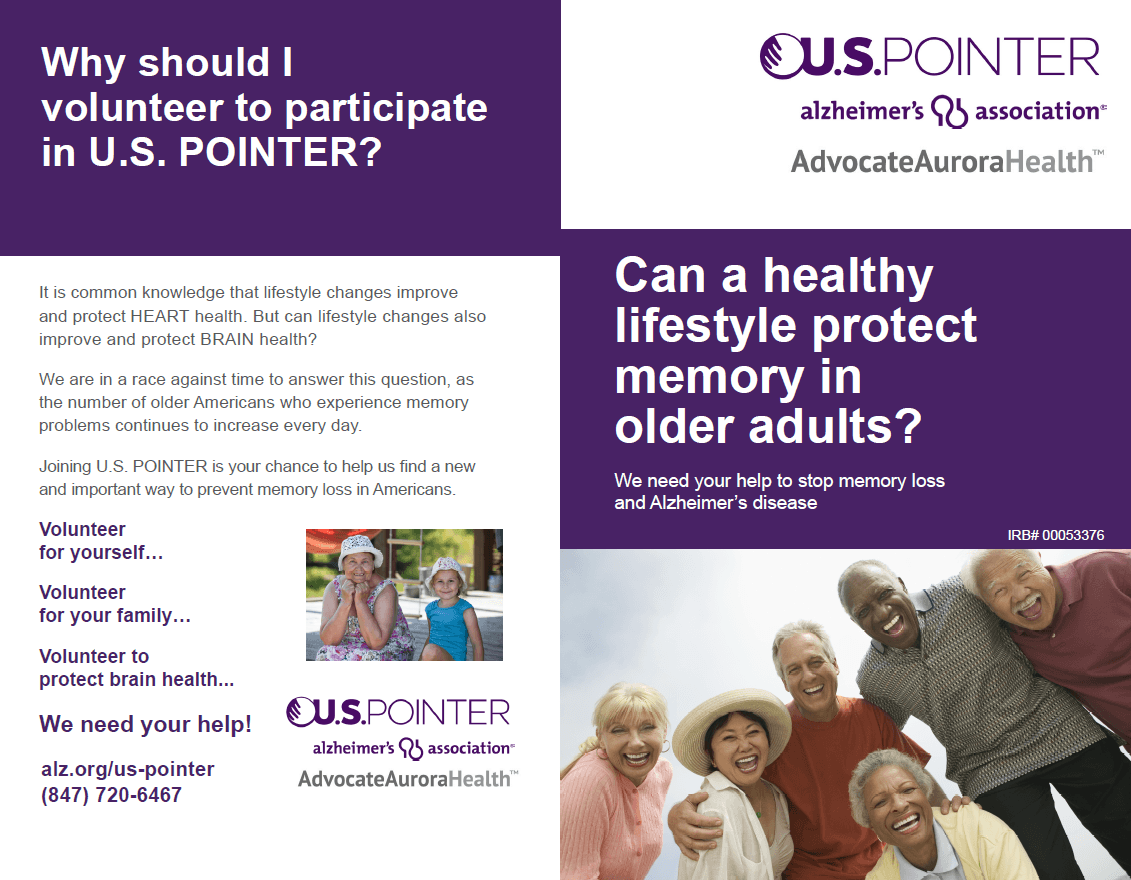
Recognizing the Gift of Participation

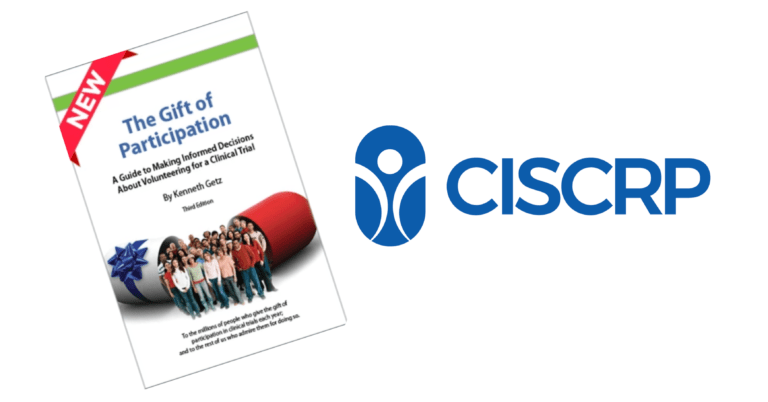
From "The Gift of Participation" by Ken Getz, Founder & Board Chair, CISCRP

Behind every medicine and treatment are people who gave the gift of participation in clinical trials. Without people to volunteer for clinical trials, the world would be a far different place. New diseases would flourish. Well-known diseases—many of which are managed today with medication and lifestyle changes—would instead cripple, disfigure or kill. Flu epidemics would rage unchecked. Many adults and children stricken with cancer would be buried or facing the end of life as opposed to fighting the disease and living longer and productive lives.

Doctors would have no scientific basis for advising patients to lower their blood pressure or cholesterol, for example. Doctors would have no knowledge helping them determine what medication, diet, or exercise plan to prescribe.

Without the gift of participation in clinical trials, medicine and public health would be reduced to folklore.

Around the world, people are living longer, healthier, and happier lives because people they never met volunteered for clinical trials. Volunteers help researchers explore a promising lead for targeting the cause of illness; for relieving the symptoms of disease; for improving the human condition. Even when researchers find that they are pursuing false leads, study participants play an important role because their experiences redirect researchers to better paths. The gift of participation helps researchers and doctors learn about what works and what doesn’t work in treating illnesses and conditions.

The impact of clinical trial participation is both immediate and ongoing as it continues long after participation has ended, and researchers and medical professionals build on the knowledge gained from that clinical trial. There are innumerous examples of the profound impact that the gift of participation contributes to public health. Here are several well-known examples that capture the enormous value of information and knowledge that comes from volunteers in clinical trials.

For more information on clinical trials and making informed decisions about volunteering for clinical research, read “The Gift of Participation” by Ken Getz, Founder and Board Chair, CISCRP.

You can find the book here.

To search for medical conditions in a specific location, visit our Search Clinical Trials page.

To stay informed about clinical trials, visit our Resources page.

Jeh Jeh Pruitt, A New Advocate for Clinical Trials: CISCRP’s AWARE for All Program Featured by CSL Behring 

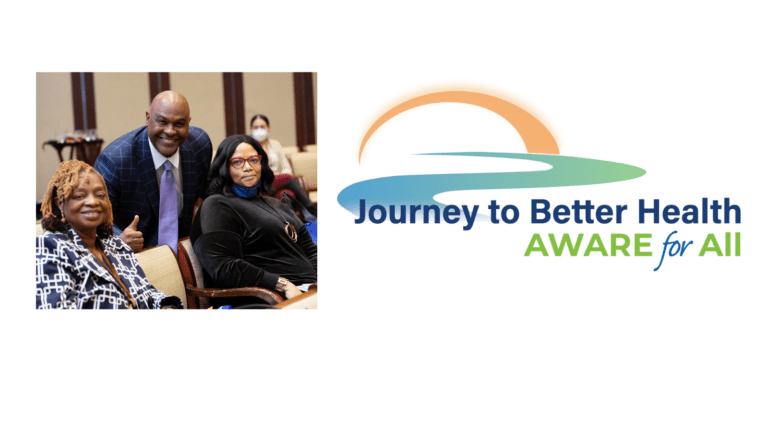
In March, CISCRP’s Journey to Better Health | AWARE for All program kicked off its 2022 series of events, with a first stop in Birmingham, Alabama. The event promoted clinical research education and shared resources with the Birmingham community, bringing together local study participants, healthcare professionals, and a combination of local and national exhibiting organizations. 

The AWARE for All – Birmingham event featured special guest Jeh Jeh Pruitt, Sports Anchor & Reporter at FOX 6 News, and co-founder of The Dannon Project, a non-profit dedicated to helping local unemployed at-risk youth and non-violent offenders reentering society.  

In a recent interview with CSL Behring, Jeh Jeh shares his experience as a kidney donor, his growing involvement in clinical trial advocacy, and his experience learning more about the importance of clinical research at the AWARE for All – Birmingham event. 


Read the full article on CSL Behring’s website here. 

Visit the 2022 AWARE for All page to learn more about this program and upcoming events. 

To search for medical conditions in a specific location, visit our Search Clinical Trials page. 

To stay informed about clinical trials, visit our Resources page. 


Press Release: From Subject to Partner Publication

CISCRP Launches New Publication Marking the 20th Anniversary of TIME Magazine’s Clinical Research Issue and Commemorating the Patient Engagement Movement

BOSTON, MA, April 25, 2022 – The Center for Information and Study on Clinical Research Participation (CISCRP), announces that it has produced and launched a special publication – ‘How Clinical Research is Engaging with Millions of us as Partners in Advancing Medicine.’ The publication marks the 20th anniversary of TIME Magazine’s article How Medical Testing has Turned Millions of Us into HUMAN GUINEA PIGS, and celebrates progress made by patient communities and the public through two decades of engagement with the clinical research community. 

The April 2002 TIME magazine issue was an inflection point denoting more rapid adoption of patientcentric practices in clinical research,” said Ken Getz, Founder of CISCRP and Executive Director and Professor at Tufts University School of Medicine. “It was also the impetus for CISCRP, a unique nonprofit education and advocacy organization whose mission is to inform and engage patients and the public around the world as partners in clinical research.” 

The main story in the commemorative publication, written by an award-winning journalist, spotlights a variety of initiatives that have been implemented to amplify patient voices and needs, educate the public, improve transparency and disclosure, enrich the clinical trial participation experience, and promote collaboration between patients and clinical research professionals. Among the initiatives spotlighted: virtual and remote technologies improving participation convenience and data collection, the return of plain language clinical trial results, and patient input panels informing protocol design. The publication also unveils a new cover graphic designed by the creative team at global agency RAPP and is intended to replace and rebrand the image of patients and the public as central and essential collaborators in the clinical research process. 

“You can’t speak for someone with a rare disease unless you’ve really been with them through it and been a part of it,” noted Julie Breneiser, who was diagnosed with Gorlin Syndrome (a rare genetic disorder) and serves as Executive Director of the Gorlin Syndrome Alliance. 

“The burden of a clinical trial has to be balanced against the patient’s experience living with a disease or condition,” explained Kim Down, National Institute for Health Research (NIHR). 

The commemorative publication is available for download free of charge at www.from-subject-to-partner.org  and print copies are available upon request. 

The Patient Journey in Clinical Research: Insights & Observations to Scale Engagement

Authored by Lindsey Elliott, Marketing & Communications Manager and Joan Chambers, Senior Director of Marketing & Outreach

Understanding the patient journey in clinical research is critical for increasing participation and diversity in clinical trials. A survey on patient perspectives on clinical trial participation was conducted by Rare Patient Voice and Informa Pharma Intelligence. Panelists discussed the findings in a February 2022 webinar, which can be accessed here.

Co-moderator Mike Wenger, Global Head of Patient Engagement at Informa Pharma Intelligence, is a software developer with over a decade of experience in clinical trials. He is also a patient, having been diagnosed with a brain tumor when he was in his 20s. “I had a very fortunate prognosis, but it is something that has opened my eyes to the importance of clinical research and moving science forward,” says Mike.

Co-moderator Wes Michael is a longtime market researcher who founded Rare Patient Voice and serves as President. “I wanted to help patients take part in surveys as well as clinical trials,” says Wes. “This survey let patients share their experiences, as well as their desires when it comes to clinical research.”

Respondents who had taken part in a clinical study presented a variety of perspectives in the survey. About half of those who took part in clinical trials were told about them by their doctors, while the other half learned about them from patient advocacy groups.

Panelist Steve Jones, President of EU-IPFF (The European Idiopathic Pulmonary Fibrosis and Related Disorders Federation), a pulmonary fibrosis patient and patient advocate, says, “The main source of information is undoubtedly physicians.” However, widespread education in the medical community is needed to assist in increasing participation in clinical trials. The process of finding a trial must be simplified.”

When it comes to physicians sharing information about clinical trials, panelist Ashley Smock, a woman living with ovarian cancer, says, “I think it comes down to patient-physician relationships. Had my own physician brought up a clinical trial as an option, I probably would have been more interested.” When Ashley sought a second opinion about her cancer diagnosis, that doctor mentioned clinical trials as an option. Ashley was less open to the information the physician shared, explaining, “He didn’t have the best bedside manner. I did not feel valued as a patient during our conversation, so I didn’t follow up. There was no relationship and there wasn’t a lot about the visit that was positive.”

There is a need to raise awareness of clinical trials, the value of participation, and provide an easier way to access clinical trials, as mentioned in the webinar discussion. Steve is part of a collaborative effort where he lives in the United Kingdom to develop a European clinical research database that is easier to use than clinicaltrials.gov. “The website [clinicaltrials.gov] is almost impossible to use for ordinary people,” says Steve. “Information needs to be made simple to understand and in plain language wherever possible, to make it easier for patients to access.” Steve cited CISCRP’s Search Clinical Trials database as a streamlined option to review.

“There have been many recent initiatives to improve the patient experience with clinicaltrials.gov,” says Mike, and despite complexities, “…it is still an important entry point for patients to learn about clinical trials.” 

Other initiatives to help with the clinical trial participant’s experience include the use of technology that offers flexibility and convenience. “I’m a big proponent of decentralized clinical trials, when they’re possible,” says Wes.

The majority of clinical trial participants questioned (80%) said their recruitment process was “great or good.” Within a week of starting the process, two-thirds said they were enrolled in a clinical trial.   Participants value communications when they are adequately explained throughout the life cycle of the clinical trial and when they are timely and relevant at each stage of the process. Conversations with the physician investigator and clinical research site staff can take place via phone calls, emails, text messages, telehealth appointments, and in-person visits.

Patients also want to know the results of clinical trials. Sixty-four percent of those who had participated in clinical trials said it was important to hear results, while 88% of those who had not participated in a clinical trial said it was important. “Simple charts and summaries of the salient points of the trial would be very helpful going in, to know that at the end of the day, I will have that information and be able to access the results,” says panelist Sarah Nechama Frisch, who lives with narcolepsy and cataplexy. “Email is probably the most practical way to disseminate information for most people.”

“The more everyone in the United States is exposed to clinical trials, particularly with what is in the headlines currently about what clinical research is, why we do it, and how it’s run, that awareness will go a long way,” notes Mike.

“As patients, we want medications to be effective, approved, and on the market, because our population has a lot of living to do and we want to be part of the development of things that are going to keep us here for a long time,” says Ashley. She advises biopharma companies conducting clinical trials to “ask us for our feedback about clinical research, because we want this to move forward.”

You can learn more by accessing the webinar recording here.

View additional companion content:

To search for medical conditions in a specific location, visit our Search Clinical Trials page.

To stay informed about clinical studies, visit our Resources page.

About Informa Pharma Intelligence

Informa Pharma Intelligence powers a full suite of analysis products—Datamonitor Healthcare™, Sitetrove™, Trialtrove™, Pharmaprojects™, Medtrack™, Biomedtracker™, Scrip™, Pink Sheet™, and In Vivo™—to deliver the data needed by the pharmaceutical and biomedical industry to make decisions and create real-world opportunities for growth. For more information visit pharmaintelligence.informa.com.

About Rare Patient Voice

Rare Patient Voice, LLC provides patients and caregivers an opportunity to participate in all types of research including market research, health economics outcomes and real-world evidence, user experience/human factors studies, and clinical trials. The RPV panel has over 100,000 patients and caregivers across more than 700 diseases, both rare and non-rare, in the United States, Canada, the United Kingdom, Germany, France, Italy, Spain, Australia, and New Zealand. Visit us at www.rarepatientvoice.com.

No “Kidding”: Using Health Literacy to Communicate Clearly About Pediatric Trials

Written by: Holly Arthur

In a recent post, CISCRP’s Health Literacy team discussed why it’s important to make information about clinical trials clear for everyone. We consider a lot of things when creating materials — like brochures or videos — depending on the audience. For example, we’ve been developing brochures for people from different racial and ethnic groups about the importance of diversity and representation in clinical trials. With these projects, we’ve looked at how language, culture, personal values, and history shape people’s decisions about participation. A main goal of these projects is to connect with people who don’t always have access to information about clinical trials that is both relatable and easy to understand.

But what if your “audience” includes almost a quarter of the population of the United States, yet doesn’t include anyone legally allowed to make all their own medical decisions? Recently, the Health Literacy Team has been expanding a key part of CISCRP’s mission — “education before participation” — to a new generation. We have been working on projects to help kids, families, and their healthcare providers navigate decisions about clinical trial participation together. We’re excited to tell you about some of these projects today, and to share a few of the challenges — and accomplishments (!) — we’ve encountered so far.


Not just short adults

It may seem funny to think of children as an underrepresented group, but among clinical trial participants, they are. Just like there isn’t enough gender, racial, or ethnic diversity among trial participants, the number of registered pediatric clinical trials doesn’t reflect the number of children who depend on trials for new, safer treatments.

As the saying goes, kids aren’t just small adults. Children’s bodies may respond differently to treatments than adults’, even if it’s the same treatment for the same condition. And too often, treatments prescribed to children have only been tested in adults. Pediatric trials help us make sure that treatments children receive are safe and effective for them.

 Of course, the differences between kids and adults aren’t just physical! As they get older, people go through changes in how they think, learn, and relate to others. Even an infant and a toddler only a year apart, for example, have different abilities, interests, and needs. So do a 10- and a 16-year-old. Creating materials for pediatric participants means thinking about all kinds of age-related differences that have a big impact on health literacy.

Children also don’t have the right to sign legal documents, in most cases. This includes documents agreeing to participate in clinical trials, also called “informed consent forms.”  A parent or guardian must give permission, called “consent,” for their child to participate. Children old enough to understand what being in a trial involves are asked to give their “assent,” or agreement. This is not a substitute for a parent or guardian’s consent, but a child can refuse to give assent after learning about a trial, so it’s important to share information in a way that is age-appropriate.

What is the Health Literacy Team Doing?


Pediatric Video Project

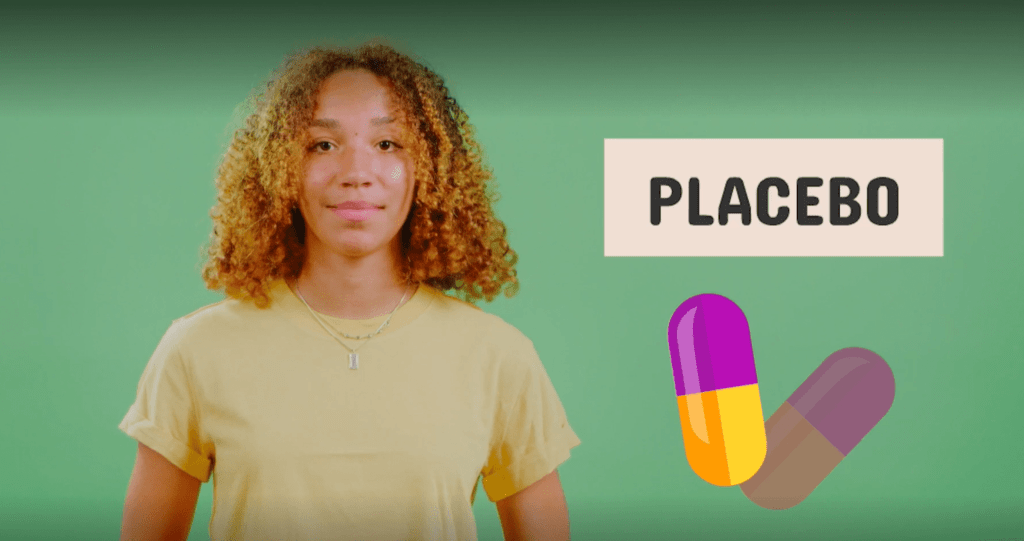
Earlier this year, we launched our 4-part Pediatric Education Video Series, created specifically for children and their caregivers. The live-action videos were developed with help from various community members — most importantly, kids — to provide an age-appropriate overview of clinical trials. As health literacy experts, explaining ideas like “informed consent” or “placebo” so the average person can understand them is our bread and butter. Still, explaining these things to kids at all different ages and stages really forced us to up our game! The actors in the videos do a great job of making new information feel safe and not (too) scary for viewers. Check out the videos on our website  or YouTube page.


Updated Brochure for Parents and Guardians

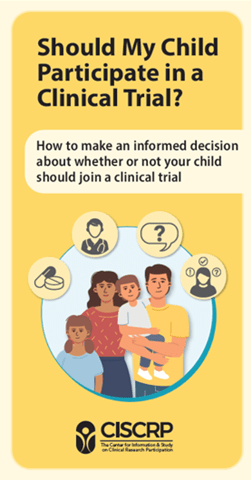
We are wrapping up a complete rewrite and redesign of our brochure on pediatric trial participation, “Should My Child Participate in a Clinical Trial?” This is one of many brochures on clinical trial participation you’ll find in CISCRP’s online education center. Like all our educational materials, the creation process was guided by insights from the CISCRP community. We listened to parents, guardians, professionals, and other experts to understand what matters most to them. What do real parents of past pediatric clinical trial participants, or potential clinical trial participants, think is most important for others to know? What information do professionals who work with pediatric participants and their families wish those families had more access to?
We heard your feedback that caring for a child with a medical condition is stressful for the whole family. Parents need empathy and support when making difficult decisions about their child’s health. We also heard your feedback that it’s important to discuss clinical trial participation with children, even though it can be a tricky subject. We used these insights to shape the content of the new brochure. Our health literacy experts worked closely with our in-house Medical Writing team to make sure this important subject hit all the right notes. The new brochure will be available soon on CISCRP’s website and for purchase in our online store. (Want more information? Contact Lucas Goren at lgoren@ciscrp.org.)


Pediatric Plain Language Summary

One of CISCRP’s signature programs is our communicating Trial Results Summaries service. All participants have the right to receive results of the study they helped make possible, written in language that makes sense to them. However, information written for and by researchers is not always clear or friendly for non-scientists. This is why CISCRP works with study sponsors to create hundreds of plain language summaries of trial results every year.

But what about pediatric trials? As it turns out, creating kid-friendly, age-appropriate plain language summaries of pediatric trial results isn’t the norm. This is partly due to lack of regulation, or unclear regulations, about sharing pediatric trial results. Because this is new territory compared to creating adult trial summaries, experts (like CISCRP) are still developing and testing best practices.

We can’t wait to share details from our first-ever pediatric plain language clinical trial results summary. It’s not ready to “go live” just yet, but we can tell you a little about what it includes. For starters, we focused on using a narrative, or story, to talk about the process of being in a pediatric clinical trial from start to finish. The summary tells the story of a character who participated in a pediatric trial as she learns about the results and reflects on being a participant. We hope this “picture-book” style helps make complicated information approachable and engaging for kids, and we’re excited to get some feedback from real-life pediatric trial participants down the road.


Consent and Assent Forms

Informed consent forms (ICFs) and assent forms can be hard to understand. But it’s very important that potential participants, and parents of participants, understand what these forms say. Knowing what a trial involves, and what the risks and benefits are, is critical for making an informed decision. 

CISCRP recently worked with a sponsor company, parents, advocates, and other experts to create clear, engaging informed consent and assent forms that support health literacy. These will be shared with potential participants in a pediatric study starting soon. This project came with some challenges and some creative solutions. For example, we decided the materials should feature an animal character. But consent and assent forms need to be balanced, not biased, about possible risks and benefits of joining a study. How do you make sure a cartoon animal looks thoughtful, but not scared? Or proud, but not boastful? How do you write about risk honestly and in a way children will understand, without causing unnecessary fear because risk is a hard thing to explain, even to adults?

The balance between information and neutrality is tricky, so we had a lot to think about! But in the end, we are thrilled with how the project came out. We hope to work on more projects like this — and other new projects for pediatric participants — soon.

Want to help us create, test, and improve new materials like these? We depend on your feedback. Learn more about volunteering and how you can sign up today.

To search for medical conditions in a specific location, visit our Search Clinical Trials page.

To stay informed about clinical trials, visit our Resources page.

Videos in Health Literacy

Written by: Scott Finger

Everyone learns differently. Though as time and technology move forward, more people are getting their information through interactive formats like video. With the rapid integration of patient engagement in clinical research, the formats the research community uses are also shifting. While printed documents remain a regulatory imperative, videos are more patient-centric and engaging, especially for younger audiences. Also, with the pandemic pushing more trial conduct towards remote models, more trial participants are interacting with clinical researchers through a computer or mobile device. The need for video-based educational tools, especially about trial participation and eConsent, is more important now than ever.

According to CISCRP’s 2021 Perceptions and Insights Study, 13% of survey respondents would be interested in getting results of their clinical trial through video, which is nearly double the number of respondents who expressed this from 2019 (7%). Also from the 2021 study, 74% of respondents said that they would be willing to participate in a trial that was completely remote, which includes video conferencing from home.

In addition to the content itself, a key aspect of health literacy is actually reaching your audience. To do so, you need to consider how to best get out your message in a way that works for as much of the audience as possible. Usually, that means communicating your content in a few different formats for different learning preferences.

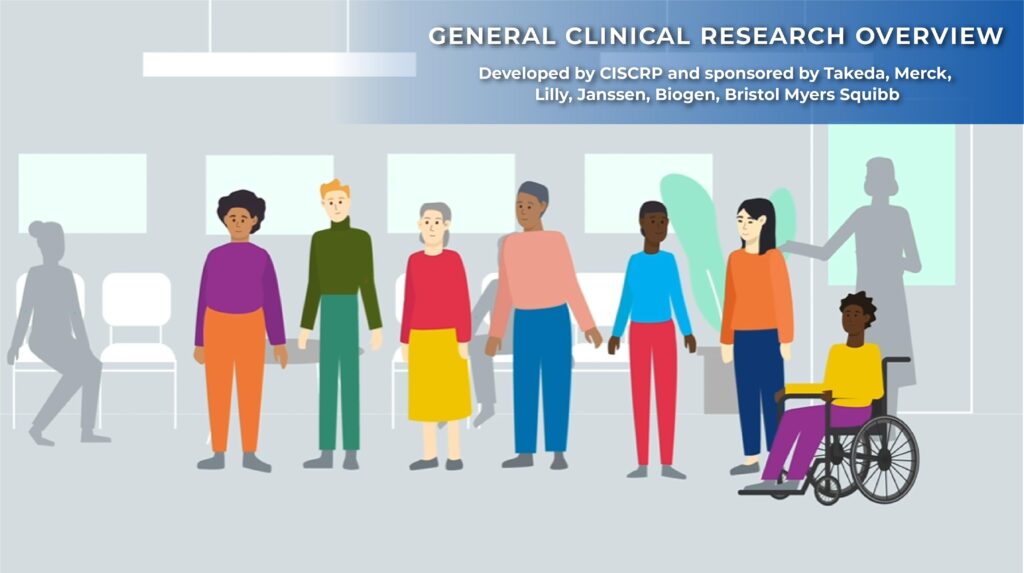
Through our research, we’ve identified a need for more videos when it comes to clinical research education, especially accessible videos that explain clinical research in a simple way. So, CISCRP has dedicated time and resources and partnered with sponsors and health professionals to create such videos. You can find a complete library of our videos on our website or on our YouTube page, but here are some examples:

Based on our experiences and expertise in health literacy in clinical research, we have developed a list of best practices for video creation. We would like to share some tips to help researchers, advocates, and anyone else looking to develop videos for patients, trial participants, or the public.


Planning your video

You’ll first need to consider: What do you want to say? You may have a clear message and an idea of how that should be communicated, but creating a video fit for clinical research education won’t be as simple as clicking the big red “record” button and adding a filter.

Always keep in mind that the video isn’t about you—it’s about the audience. So, every video creator must consider the best way to reach their target audience. Some factors include:

  • Style—should your video be flashy and attention-grabbing, or should it focus on laying out information as cleanly as possible?
  • Format—is your video going to be animated, performed by live actors, or both? Or, is your video going to feature real patients or trial participants?
  • Tone—will your video have elements of humor, or will it stick to the facts? Will any animations be more cartoon-like or abstract, or will they imitate real life?
  • Time—how long should your video be? Should it be a few seconds, a few minutes, or broken out into multiple parts?
  • Culture—are you appropriately representing the individuals from the communities you want to reach? Are you acknowledging the experiences and hardships of the individuals from those communities?
  • Language—is your audience made up of experienced clinical research professionals, or people who may have never heard of a clinical trial before? Your audience will determine what lingo you should or shouldn’t use.


Audience engagement

As we mentioned, a big part of health literacy is reaching your audience. So, what does your audience want to hear? How do they want to hear it? We cannot stress enough the importance of opening a two-way dialogue with the intended viewers.

For example, when we made the 4-part pediatric series, we spoke directly with some children who may be involved in clinical trials, and their parents. From this research, we learned that the children would prefer TikTok-style videos that featured live actors in addition to supporting animations and quick transitions, and videos that were no longer than 2 or 3 minutes each. More importantly, we learned what the children wanted to learn: the benefits and risks of participation, information about placebos, the fact that they could stop participating at any time, and more.

We also had our materials reviewed by an external review panel consisting of patient advocates, healthcare professionals, and members of the public. All of the reviewers helped us shape the video and ensure our content was appropriate, understandable, and engaging. It’s important to continually get feedback throughout the video’s development.


Developing your video

Once you’ve completed the necessary research, we recommend starting with an outline. What’s your key message? What points will support that key message? How can you arrange those points to have a naturally flowing narrative that will engage the audience? For a documentary-type video about real patients and trial participants, an outline can help determine what kind of questions you want to ask and how you want the video to flow.

Depending on the format—animated or “live-action”—you’ll need to consider the best way to actually create the video. Do you have the resources to recruit the talent and create the video, or will you need to use a third-party vendor? In either case, all members involved should be aware of the key message, purpose, and audience. You’ll also want to make sure your video cast—whether animations or live actors—is diverse and representative of the population.

One other thing to consider is making sure that your video is an appropriate communication tool. This may include getting IRB approval for both the script and the final video, especially if you plan on using the video during recruitment or consent.


Health Literacy is a living process

You may have noticed a common theme here: There are so many factors to consider in each stage of the video development process! This concept applies to all aspects of health literacy. While you may figure out the best approach for one video, for example, that exact process may not work for the next. And even if you create a nearly identical video a few years down the road, the times and culture change, so you’ll likely have to start from the beginning. Specifically, content creators should always take care to research what ever-changing pressure points are at top of mind for each community and how to best address those concerns.

Once you’ve completed a video, the work doesn’t stop. Get feedback—what worked? What didn’t work? How can you improve for the next one? As challenging and demanding as this cyclical process may be, health literacy is such an important aspect of clinical research or any health-based communication, and we should all do our part to make sure our messages are properly reaching the intended audience!

CISCRP is also developing a manuscript discussing the process and findings of our 4-part video series; stay tuned for the publication!

Are Scientists On the Verge of an Alzheimer’s Cure?

Written by: Cindy Riley

As the number of people struggling with Alzheimer’s continues to rise, researchers are working overtime in hopes of finding a cure — but they can’t do it alone.
An exciting development
“There are approximately 100 drugs currently being tested,” explains Jeffrey Cummings, M.D., the director of the Cleveland Clinic Lou Ruvo Center for Brain Health. “About a third are in the advanced phases of testing. Some are promising enough that we believe a preliminary treatment would be available within five years.”

The potential new drug aducanumab has been shown to remove the build-up of the Alzheimer’s protein amyloid in the brain and slow the decline in memory and thinking skills in patients. Additionally, the Global Alzheimer’s Platform Foundation (GAP) is working to reduce the time and cost of trials. GAP president John Dwyer explains, “The key to shortening clinical trials is recruiting people. We’re in a chronic shortage.

”Understanding the cost
By 2050, the cost of Alzheimer’s disease in the United States will be $1 trillion dollars, annually.

“No government can absorb those kinds of costs,” says Cummings. “Although research is expensive, it’s hugely less expensive than the cost of caring for all these patients.”

Malack-Ragona notes, “A person with dementia or Alzheimer’s usually costs the system three times more than any other disease process.”

Support and prevention
Caregivers, usually women, bear the major impact of Alzheimer’s. “It affects them at home, in their relationships, and at work,” says Dwyer. “The caregiver’s burden is uncharacteristically heavy and long in duration.” Alzheimer’s support groups, however, can ease the stress. Malack-Ragona reminds caregivers to “never stand alone” during the journey.

While Alzheimer’s can’t be prevented, reading, working puzzles, volunteering, and learning new things can lower risks. Proper nutrition and regular exercise are also encouraged, along with avoiding cigarettes and getting enough sleep.

A change in awareness
Cummings acknowledges, “There’s the idea that having a loved one who’s confused is a shameful thing. Many families feel the need to hide it. That’s a stigma we’d like to remove.” Adds Dwyer, “We should embrace the fact the disease exists, learn how to reduce risks, and get involved in finding a cure.”

Roughly 5.5 million Americans are battling Alzheimer’s. The number could rise to 16 million by mid-century. A first-of-its-kind smartphone app will provide information about research trials, starting in June. The first person cured of Alzheimer’s will likely be a clinical trial participant. 

Article from 2021 Clinical Trials Supplement, USA Today. View Supplement Here >

Medical Hero Spotlight: Dr. Tracy Dixon-Salazar and LGS (Lennox Gastaut Syndrome)

Dr. Tracy Dixon-Salazar Lennox Gastaut Syndrome

Written by Melissa E. Daley, CISCRP

“The best way to describe Savannah is that she lives in the now. She doesn’t really fret about the future, and she doesn’t dwell on the past. But she does have memories that come up from time to time. You can pull out pictures and she can remember those times and what was happening,” says Dr. Tracy Dixon Salazar, of her daughter, Savannah. “She recalls having to wear a helmet in school all the time and having a seizure response dog. I don’t think she globally understands the journey she’s been on.” Now in her late twenties, at age five Savannah was diagnosed with Lennox-Gastaut syndrome (LGS), a development brain disorder that frequently evolves from early-life-onset epilepsy and usually emerges between ages of three to five years old. (1) Tracy’s role in Savannah’s life is a triumvirate of mother, patient advocate and scientific researcher.

“Savannah started having seizures out of the blue and nobody could tell us why,” says Tracy. When Tracy and her husband, Ruben, sought treatment for Savannah, they were told that knowing the origin of the seizures was not necessary to stop them. However, none of the prescribed medications worked. They were advised that Savannah’s seizures would not damage her brain. “I would see the seizures taking a huge toll on her cognitive ability and her ability to learn. We were told that you can’t die from seizures, and yet we had to resuscitate Savannah a number of times,” says Tracy.

Tracy decided to address the disconnect between how medical professionals were assessing her daughter’s illness and Savannah’s lived experience by enrolling in college, ultimately attaining her PhD in Neurobiology and Neurosciences. It took twelve years, with Tracy and Ruben tag-teaming work, school, child care and health care responsibilities. Despite the grueling demands, Tracy was determined. “I wanted to understand what could cause early life seizures,” says Tracy. “What was this LGS and where did it come from?”

LGS patients can have hundreds of seizures a day that dramatically impact their physical and cognitive development. “You never knew what you were going to get,” says Tracy. “It could be a five-seizure day, or it could be a 500-seizure day.”

Tracy describes a 500-seizure day as “…absolute chaos. You’re not going anywhere. They’re not going anywhere. You’re probably not going to make it to work. She’s not going to make it to school. You’re on watch to make sure that these seizures stop on their own. You have to be counting them,” says Tracy. A cluster of seizures together over a prolonged period of time can cause brain damage. A single cluster that does not end on its own (called status epilepticus) can also become a fatal emergency.

Savannah, Tracy and friend.

“At its worst, Savannah was going into cluster seizures or status epilepticus, two to four times a week.” Tracy or Ruben had to prevent Savannah from injuring herself during a seizure, administer rescue medications, and attend to Savannah’s post-episode physical needs, which may include caring for uncontrollable bouts of urination, defecation and vomiting.

Seizures are brutal. Over the years, Savannah has endured a fractured skull, broken teeth, broken arms, injury to her eye and a severed nose bridge. With her parents searching for a way to provide relief and healing, Savannah tried 26 different treatments between the ages of two and eighteen, including medications, diets, devices and alternative therapies. Some of these were through participation in clinical trials. None of them worked.

As a post-doctoral candidate, Tracy worked in a lab, sequencing exomes, the coding part of the genome that contains information for protein synthesis (2), in children with pediatric brain disease and epilepsy. “For me, science was going to be the thing that answered these questions,” says Tracy.

Savannah was a participant in clinical research conducted by Tracy and her colleagues on the research team. In addition to sequencing Savannah’s genes, they also sequenced Tracy’s and her husband’s, as part of Tracy’s research for a precision or genomic therapy to treat LGS.

“When we sequenced Savannah’s exome, we found a group of calcium channel genes, that were telling us that she had too much calcium going into her brain cells, so we started to look at existing medications that targeted calcium channels,” says Tracy. They found medications targeting calcium that were used for high blood pressure and arrythmias, not epilepsy. After a risk/benefit analysis of the data and in coordination with Savannah’s physician, Savannah began treatment with a calcium blocking drug. Her seizure numbers dropped by 95% and her episodes of non-stop seizures completely stopped. (3)

“Unfortunately, we didn’t find it until she was 18 years old, so a lot of brain damage had already happened. But she really turned a corner after that,” says Tracy. Savannah was able to safely discontinue a number of medications she had been taking. “She started talking. She could walk. Savannah is funny and sassy. I feel like I got to meet her again when she was 18 years old.”

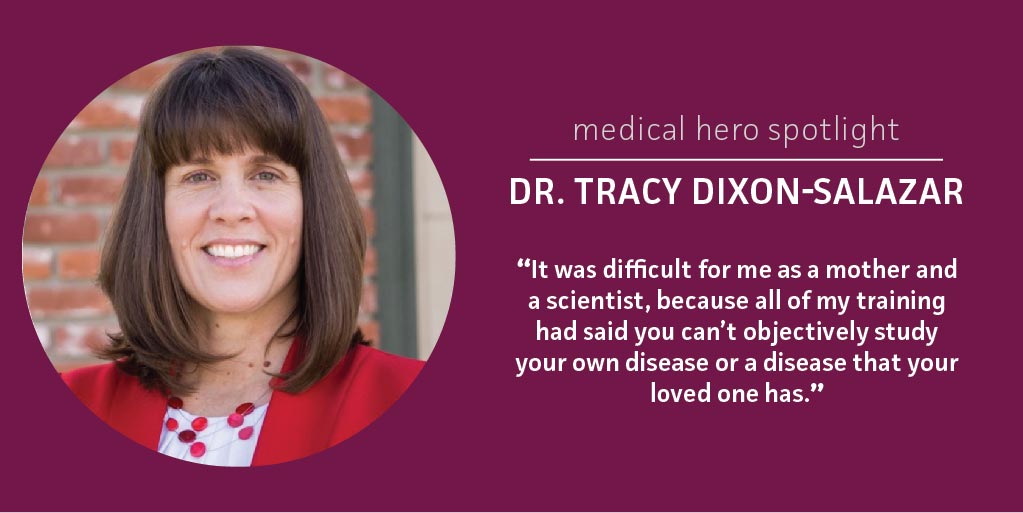
While the outcome of the research was positive, Tracy faced internal challenges about her role as a parent and a researcher during the process. “It was difficult for me as a mother and a scientist, because all of my training had said ‘you can’t objectively study your own disease or a disease that your loved one has’. Yet if you go into scientific literature, there are TONS of people who have studied their own disease or a disease of a loved one,” says Tracy. “It’s made them a better scientist, in many ways. But there’s so much more at stake if I get it wrong, with my own child. I was so conflicted during this time.”

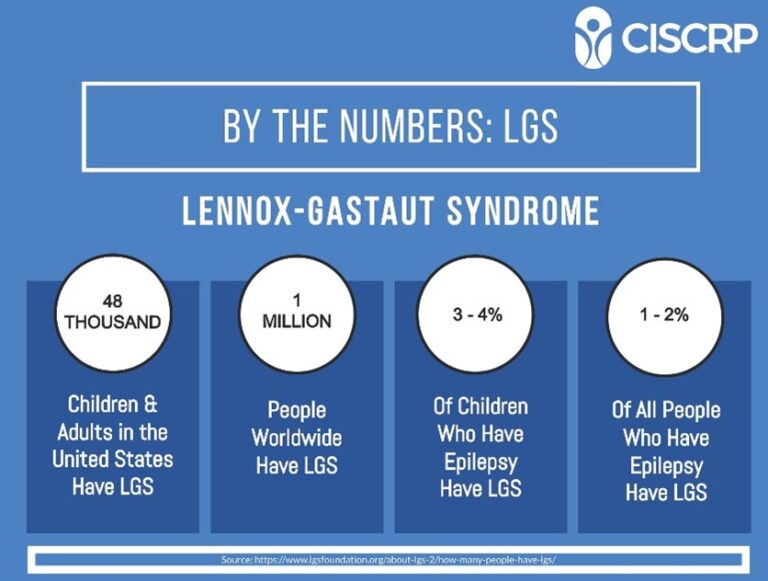
Participation in clinical research has been a big part of their lives, even before Savannah’s participation in the study conducted by her mother and the team. “It was always important for us to be part of research studies, to be a part of clinical trials, to be thinking about not only how we are going to help ourselves, but how we are going to help the next generation as well,” says Tracy. “LGS is a rare disease, but we have a community of six thousand (active in the LGS Foundation). There is a predicted forty-eight thousand thousand people with LGS in the United States and a predicted million people worldwide.”

Tracy shares there are several things to consider before participating in clinical research. “Being in a clinical trial is not without risk – but so is not being in a clinical trial. If you have exhausted every anti-seizure medication and there is an open clinical trial, and you choose not to be in that, there will be consequences for that as well. As a parent, you just make the best possible decision that you can make. There is risk on both sides. Become as informed as you possibly can to make that decision.”

Tracy is committed to providing information and resources to the LGS community by serving as Executive Director of the LGS Foundation, founded in 2008 by Christina Sanlnocencio, whose brother Michael was an adult living with LGS. Tracy says “Advocacy organizations like the LGS Foundation, or wherever your community is, are there for you so you don’t have to walk this alone. Talk with them. They have a lot of great information to share on how to navigate and understand clinical trials.  How to think about the pros and cons of participating in clinical research. Find somebody who has walked there before you and hear their story. It can help you make decisions about whether or not you or your loved one should go into a clinical trial, or how you are going to support your loved one who is in a clinical trial.”

To search for medical conditions in a specific location, visit our Search Clinical Trials page.

To stay informed about clinical trials, visit our Resources page.

Sources:

(1)  https://www.lgsfoundation.org/about-lgs-2/what-is-lennox-gastaut-syndrome/

(2)  https://www.broadinstitute.org/blog/what-exome-sequencing

(3)  https://www.lgsfoundation.org/fighting-for-a-cure-for-lgs/

How African American Men Can Beat the Odds Against Prostate Cancer

While prostate cancer is a concern for every middle aged man, African-American men should be more concerned than most.

“The incidence of prostate cancer is over 60 percent higher in African-American men compared to white men, and in terms of mortality, it’s 150 percent higher,” says Thomas Farrington, founder and president of the Prostate Health Education Network (PHEN). “For African-American men, there are issues with treatment, access to treatment and quality of treatment.”.

A voice of reason
Farrington was diagnosed with prostate cancer in 2000 and, while now cancer-free, he has dedicated himself to making sure black men learn more about this deadly disease.

“I’m a 17-year survivor, and I know that the knowledge of these factors is one of the most crucial things in reducing mortality,” says Farrington, who wrote the book “Battling the Killer Within” about his experiences.

How we test
While the prostate-specific antigen test is a non-invasive blood test, not every doctor or insurance carrier makes the test a required part of annual check-ups.

“There’s debate about when men should be tested and who should be screened, and that debate causes a lot of confusion.” Farrington notes that African-American men tend to be diagnosed earlier in life, but men between age 55 and 70 “are very much at risk.”

Volunteers needed
One factor in the high mortality rate for African-American men is likely their lack of inclusion in clinical trials. “There are a lot of trials in which African-American men are not included, or not included in numbers that would be significant,” says Farrington.“ There are two pieces,” he adds, regarding the oversight. “African-American men aren’t educated about clinical trials and their potential benefits as a treatment option, and the scientific community hasn’t approached this group as aggressively as they could.”

Looking into clinical trials after a cancer diagnosis can be overwhelming, which is one issue Farrington addresses through the PHEN website. “Many men haven’t been asked to join a clinical trial, and it
hasn’t been discussed by their doctors,” Farrington says. “We need to get the African-American medical community up to speed and engaged with clinical trials, and make sure the entire African-American community understands the need to engage.”

While the incidence of prostate cancer in African-American men is still disturbingly high, Farrington is optimistic. “The mortality rates are declining faster for black men than white men at this point,” he mentions, “and given how much higher they are, that’s a good thing.” 

Written by: Liane Bonin Starr

Article from 2021 Clinical Trials Supplement, USA Today. View Supplement Here >

Health Literacy: Making content clear, engaging, and appropriate for patients and the public

Health literacy has always been an important part of CISCRP’s work. From general educational content about clinical research to sharing information and results for specific trials, we take pride in making content that is easy-to-understand, non-biased, non-promotional, culturally sensitive, and relevant for the communities we connect with.

In late 2021, CISCRP formed our Health Literacy team to further this part of our mission. We are excited to share some insights on what our team has been up to!

In this blog, you will learn how we are expanding our library of educational content and applying principles of health communication to new and engaging types of content. Most importantly, you will also hear about how we are working more closely with individuals from the communities we hope to inform and empower.

What is health literacy?

Many people know that health literacy, on a personal level, is the degree to which individuals can find, understand, and use information and services to make health-related decisions. A common example is following instructions for using medicine. A more complex example is understanding how clinical trials work, how they might impact your life if you participate, deciding whether to participate based on that information, then actually finding and determining whether to enroll in any particular trial.

Many people might not know that there is an equal and crucially important other half to health literacy – the organizational level. This is the degree to which organizations equitably enable personal health literacy.

At CISCRP, our focus and dedication to health literacy supports both individuals and organizations, including our own. We aim to achieve a high standard for health literacy to help patients, study participants, and members of the public.

What is the Health Literacy team doing?

Our team of editors, project managers, graphic designers, and community engagement specialists have been busy! Our favorite projects have focused on the topics of diversity, equity and inclusivity, Pediatric Research, and raising awareness on the key role of health literacy among researchers involved in medicinal product development.

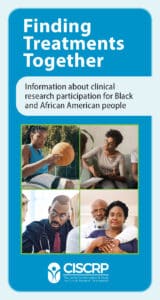
Our newly redeveloped educational brochure about clinical research for Black and African American communities was created by working together with members of these communities, as well as subject matter experts who have experience working with them. This included receiving feedback from 500 members of Black and African American communities through an anonymous survey.

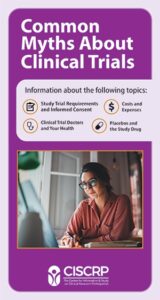
We also redeveloped our Common Myths About Clinical Trials educational brochure. The brochure, which is for all audiences, provides a fair and balanced view to addresses some challenging issues and misconceptions about clinical research.

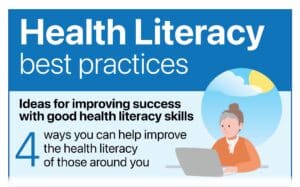
One pharmaceutical company showed a big commitment to health literacy by asking us to deliver a series of health literacy trainings for their staff. We also developed other awareness content including a crossword puzzle and an infographic about simple ways to apply health literacy in everyday life.


Community Engagement and Insights

To ensure the materials we create meet the health literacy needs of the people we hope to inform and empower, we ensure members of the target audience are involved in the development process. Most often, this means our content is reviewed by a “Review Panel” of volunteers that includes patients, health professionals, patient advocates, and members of the public.

For some projects, we hold “Feedback Forums,” which are like focus groups, user-test through interviews, or even survey 500 or more members of the target audience. This helps us make sure we really understand what the community wants to know and what they think about new materials we create. We also make sure some materials, such as brochures and videos, are reviewed by an Institutional Review Board.

Stay tuned for more blog posts about the work we do to learn how you can apply health literacy best practices in your daily life and work!

For a sneak peek, check out our 4-part Pediatric Education video series which combines live actors and animation to help kids learn about clinical research!

Written by: Behtash Bahador, Scott Finger, and Holly Arthur