Spreading Clinical Research Awareness to Diverse Communities

The Center for Information and Study on Clinical Research Participation (CISCRP) is launching a new educational campaign focusing on the importance of clinical research participation and diversity in clinical trials.  

As an extension of our ongoing semi-annual national media outreach program to recognize Medical Heroes and spread clinical research awareness in the USA Today newspaper, CISCRP has established relationships with five leading newspaper publishers serving diverse minority communities.  The new campaign will reach nearly one million people in African American and Hispanic communities in major cities throughout the United States during the month of November.  These major cities include Atlanta, Georgia (Atlanta Voice Newspaper), Chicago, Illinois (Chicago Citizen Newspaper), Detroit, Michigan (Michigan Chronicle), Los Angeles, California (Excélsior Newspaper), and New York City, New York (New York Amsterdam News). 

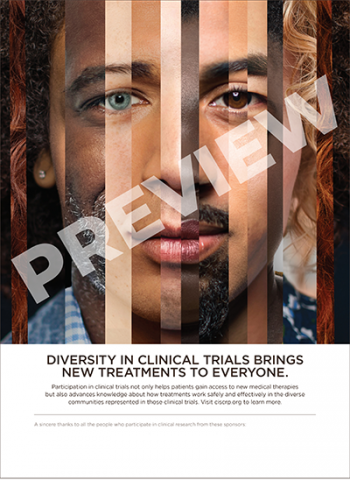
Throughout the month of November, CISCRP will place a compelling and inspiring full-page, 4-color ad with thought-provoking copy in each of the newspapers—both print and digital.  The ad will highlight the need for diverse patient participation in clinical research in order to discover new therapies that are effective for all individuals.  

Collectively, we can raise public and patient awareness and education with the full-page ad and its powerful message, “Diversity in Clinical Trials Brings New Treatments to Everyone.”  

The campaign’s goal is aimed at building trust within diverse and underserved minority communities, breaking down the barriers, informing individuals about clinical research participation and the importance of diversity in clinical trials.  

CISCRP will be receiving support from various stakeholders in the clinical research industry who share the same passion and commitment to improving clinical trials and extending opportunities to participate in studies to underrepresented communities.  This exciting campaign is just the beginning.  OvertimeCISCRP plans to increase the scope and frequency of this diversity-focused initiative.  We are hopeful that future participating sponsors of this important campaign will contribute their own educational content and utilize our media channels to share valuable information with underserved communities.    

To learn more or participate in this important initiative, please contact Kat Marriott at KMarriott@ciscrp.org. 

Written by Kat Marriott, Marketing Program Manager 

Leah Crocker: Lupus Advocate Shares Her Journey

Lupus is an autoimmune disease that causes your body’s immune system to attack your tissues and organs. Difficult to diagnose, Lupus can remain dormant in an individual’s body, only to be “woken up” by an illness or major surgery. This was the case for Leah Crocker. In 2000, Leah had just undergone carpal tunnel surgery on both hands but wasn’t healing properly. At this time, her orthopedic surgeon suggested she consult a rheumatologist. Upon seeing a rheumatologist her blood work came back positive for Lupus.

A disease with no cure, Lupus is managed through treatments that help patients control their symptoms. Soon after her diagnosis Leah began experiencing numbness in her fingers. This issue was identified as Raynaud’s phenomenon, a common symptom of Lupus. Raynaud’s is a condition that results in the discoloration of the fingers and toes in response to cold temperature or stress. During this time, Leah was prescribed an anti-malaria drug to help. However, her condition would soon grow worse when she discovered that gangrene had set into two of her fingers. At the time she had a choice between amputation or chemotherapy. Leah chose to undergo chemotherapy, which she continued for several years.

Despite undergoing treatment for Raynaud’s, because of the severity of her condition her rheumatologist strongly recommended that she relocate to a warmer climate to reduce the chances of her condition worsening. For Lupus patients in similar situations Leah advises, “Know your limitations and live within them.” So, in 2007 she made the move from her home state of New Jersey to start a new life in Georgia. After relocating to Georgia Leah connected with a new rheumatologist Sam Lim at Emory University School of Medicine.

This is when her clinical trial journey began. Leah credits Dr. Lim for encouraging her to get involved in clinical trials. The first study she joined was The Georgians Organized Against Lupus study, led by Dr. Lim at Emory University in 2013. The goal of this study is to better understand the burdens of Lupus. Leah has been involved in this study for the past several years, participating in in-person visits once a year and completing an online questionnaire twice a year. Leah also participated in another trial for Raynaud’s in 2015. This trial was studying the effects of Botox on individuals with Raynaud’s. As part of the trial she was asked to hold her hands under cold water and receive Botox injections. Despite the challenging experience, Leah is happy to have participated in this trial.

An experienced clinical trial volunteer, Leah’s advice to those thinking of participating is, “Just do it.” At the time of her diagnosis there were fewer medications available for individuals like Leah. Today, thanks to clinical trial volunteers, there is newfound hope for the Lupus community. To find trials for Lupus in your area visit CISCRP’s Search Clinical Trials page. For more information about Lupus, treatments, clinical trials, community forum and other educational information, please visit www.lupusresearch.org

Written by Leslie Perez, Marketing and Communications Coordinator

Traveling Exhibit Tour Begins: CISCRP’s Journey to Better Health

A first-of-its kind educational and recreational vehicle equipped with interactive tools, healthcare information and relevant resources, insightful study data and knowledgeable experts well versed in the clinical research industry 

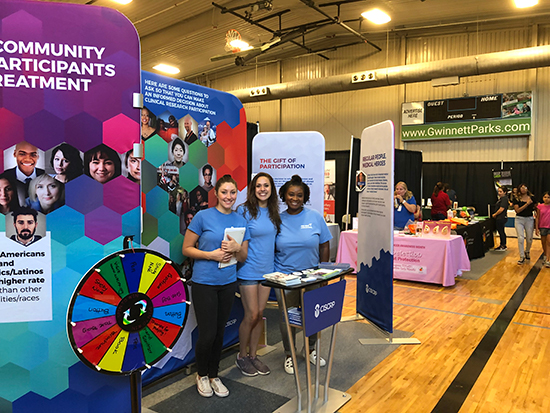
Starting this month, September, the Journey to Better Healthmobile exhibit on wheels’ is traveling to diverse communities across Atlanta, Chicago, New York, Newark and Long Island, stopping at public schools, museums, libraries, community and senior centers, places of worship and free public-health expo’s 

Community members are invited to walk through our educational exhibit and learn about the clinical research process through a variety of stations focusing on: 

  • Why diversity is important in clinical research 
  • A timeline of advancement in public health 
  • Study volunteers and their experiences 
  • Resources & take-aways for individuals interested in clinical research participation  
  • Questions about eligibility criteria and the informed consent process in order for individuals to make informed decisions about clinical research participation 
  • Potential risks and benefits 

The CISCRP team trains representatives from each host community – our clinical research navigators — to answer questions, address concerns and serve as personal guides throughout the exhibit. This vehicle continues to pick up momentum as a customize, engaging experience that not only educates but also demonstrates the value we place on the public as partners in the clinical research process. 

The program was recently recognized with SCOPE’s Participant Engagement Award and nominated with CARE’s Medidata Clinical Partnership of the Year as a new benchmark in partnering through collaborative clinical trial activity.  

We’re grateful for Janssen Research & Development, Pharmaceutical Companies of Johnson & Johnson’s continued support for expansion as we visit 15 events this fall and bring the traveling exhibit vehicle to five new cities per year over the next five years as part of our Journey to Better Health consortium. 

Over the fall season we traveled to and continue to travel educating and spreading clinical trial awareness: 

Atlanta 

Chicago 

New York 

Mark your calendars and share these dates with colleagues, friends, and families.  We look forward to seeing you. For more information on these events, please contact Ellyn Getz at ellyngetz@ciscrp.org 

Written by Ellyn Getz, Associate Director of Development & Community Engagement 

CISCRP’s 2019 Perceptions and Insights Study

It is hard to believe two years have passed since CISCRP’s last Perceptions & Insights Study. We are excited to announce the 2019 study results are in! Over 12,450 people from around the world provided their opinions on various aspects of clinical research this year revealing significant new insights on patient engagement preferences.

Since 2013, CISCRP has conducted the Perceptions & Insights study on a biannual basis in order to monitor trends and identify opportunities to better inform and engage the public and patients as partners in the clinical research enterprise. Annick Anderson, Director of Research Services, notes, “The 2019 Perceptions & Insights Study offers the most comprehensive look to date at the ideal clinical trial experience from the global public and patient perspective – allowing stakeholders to model their patient engagement strategies most effectively around these patient needs.”

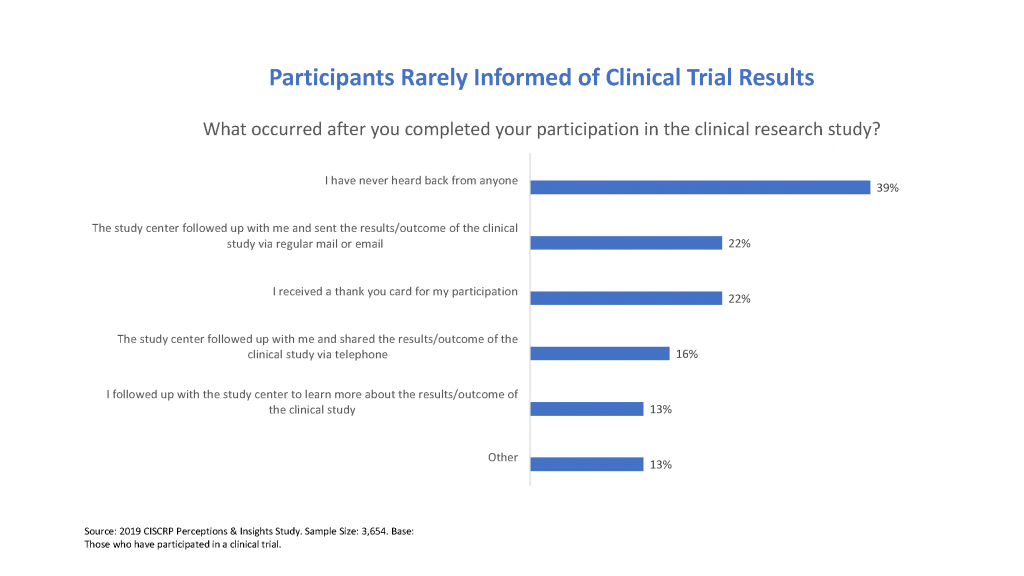
The 2019 study captured the experiences of over 3,600 study volunteers across diverse therapeutic areas, a significant jump from the 2,000 responses collected in 2017. The results continue to support that study volunteers generally have positive experiences, with 45% rating the care and attention they received during the trial as better than the care they would have otherwise received.

Did you receive any reports or updates on the results of the study 
once you completed the clinical research study?

Year Yes No
2017
36%
64%
2019
39%
61%


Sample size: 
1,828 in 2017; 3,054 in 2019.   
Base: respondents who participated in clinical trial, excludes “don’t remember” 

Similar to 2017, a significant percentage (96%) would be willing to participate in another study in the future – which is another strong indicator of overall satisfaction. However, areas of improvement remain, for example – a large proportion (39%) of study volunteers reported not ever hearing anything back from the site or the sponsor after their participation ended – demonstrating that post-participation engagement activity should be an area of focus for stakeholders. The study additionally takes an in-depth look at the burden of participation and identifying areas where attention is needed – for instance, close to 50% of clinical trial participants reported traveling at least 30 minutes or more one-way to the study clinic for their visits.

A preliminary review of specific sub-groups—such as minority populations and their motivations to participate in a clinical trial– shows that populations of African descent were significantly more likely to find it “very important” (73%) for their primary care physician or specialist to be aware of clinical research studies being conducted in their communities compared to their Caucasian counterparts (67%). This finding highlights the importance of enabling local health care providers to discuss clinical trial opportunities with their patients and driving inclusion of minority populations in clinical trials. Potential costs and reimbursements associated with clinical trial participation, as well as compensation for time-off from work were also particularly important to this patient population.

To access insights and findings from this recent study, visit CISCRP’s Perceptions and Insights webpage. The 2019 reports will be posted and available for download this Fall. These are available free of charge, however, interested parties are encouraged to provide a donation for the reports. CISCRP will also be presenting the results of the Perceptions & Insights study at industry conferences, company meetings, and other forums in the coming months.


Written by Jasmine Benger, Senior Project Manager of Research Services

CISCRP is Expanding its Patient Communication Services

As many of you know, for nearly ten years CISCRP has been helping pharmaceutical and biotechnology companies translate complex technical clinical trial results summaries into non-technical, easy-to-understand language for patients and the public.  For all trial results summaries, CISCRP turns not only to its extensive plain language writing expertise but also its unique editorial input panel comprised of patients.  

During the past 24 months, CISCRP has seen growing interest in applying its editorial input panel and plain language expertise to other health education and communication areas. CISCRP has been working on numerous “special” projects including the translation of informed consent documents; legal and regulatory documents for patients and their families; website content; abstracts for journal submission; manuscripts; and clinical trial finders among other initiatives.

Many patients and caregivers have told us how much they value and appreciate reading clinical research information prepared by CISCRP.  Plain language health communications give them greater comfort and confidence in understanding their medical condition and how investigational treatments are working, and in making informed decisions about participating in a clinical trial.

If you would like to participate on our editorial input panel, please let us know by calling 617-725-2750 or visiting our web site, https://www.ciscrp.org/services/health-communication-services/.

And if you are an organization interested in collaborating with CISCRP to prepare plain language health communication for your patients and their families, please give us a call at 617-725-2750 or email info@ciscrp.org.

Retention Strategies for Keeping Participants Engaged

The Michael J. Fox Foundation for Parkinson’s Research (MJFF) aims to speed clinical research by removing obstacles that stand in the way of drug development. In pursuit of this mission, the Foundation gathers insights from a wide range of stakeholders and uses these perspectives to enhance clinical trial processes from start to finish. In Applied Clinical Trials’ Eye on Patient Advocacy series, we will share best practices and lessons learned from the field of Parkinson’s research that can be applied to clinical trials across disease states. In our fourth column in this series, we explore retention strategies used in a landmark longitudinal Parkinson’s disease (PD) study.

To complete a study, it is critical to retain study participants. Participant attrition has the potential to interfere with the scientific validity of a study and distort data designed to measure drug efficacy and safety. According to Forte Research:1

  • Eighty-five percent of clinical trials fail to retain enough participants.
  • The average dropout rate across all clinical trials is 30%.

Patient retention is an important element of the Parkinson’s Progression Markers Initiative (PPMI), a landmark, longitudinal, observational study sponsored by The Michael J. Fox Foundation. PPMI (ppmi-info.org) aims to find reliable and consistent biomarkers for PD progression by studying cohorts of Parkinson’s patients (de novo idiopathic PD and PD-manifesting genetic mutation carriers), populations at risk for PD (non-manifesting genetic mutation carriers and subjects at risk due to REM sleep behavior disorder or hyposmia), and controls without PD.

Participants in PPMI commit to long-term participation, providing biospecimens (e.g., blood, urine, spinal fluid), and undergoing multiple neuroimaging, clinical and behavioral procedures, and assessments over a period of at least five years.

The study launched in 2010, and since then, approximately 1,500 individuals have enrolled. PPMI’s retention rate has consistently held strong, year after year, at about 86%.

To ensure steady participation and to prevent attrition, PPMI weaves together four key tenets of retention, cultivated and refined since study launch: 1) facilitate participation; 2) communicate study progress; 3) express appreciation; and 4) inform participants of study results.

Facilitate participation through travel concierge services, reimbursement, and remote visits. PPMI study leadership prioritized and simplified long-term participation in large part because individuals carrying specific PD-linked genetic mutations live across a wide geographical area. To facilitate volunteers’ continued participation, PPMI cultivated a boutique experience for them and their care partners. Prospective and enrolled PPMI participants are given the option for complimentary roundtrip transportation between their home and appointments at two “super sites” that have the capacity to handle a high volume of study volunteers.

A third-party vendor manages all logistical planning, including participants’ accommodations, meals, and travel to and from study visits. This door-to-door service reflects the value PPMI study leadership puts on participation and participants. For participants who choose not to travel to a super site, travel and hotel expenses are reimbursed through Greenphire/ClinCard. PPMI leadership is always looking for ways to reduce participant burden and is currently exploring the possibility of remote (video and enhanced phone) and home visits.

Communicate study progress through newsletters, update calls, and a centralized webpage. Reminding participants of the bigger picture is a meaningful way to engage them in the collective success of a study. According to a 2017 report by The Center for Information and Study on Clinical Research Participation,2 the number one reason individuals choose to participate in clinical research is to help advance science or the treatment of a disease or condition. Given this initial motivation, updates on study progress and contributions to the field will facilitate continued engagement. In PPMI, study progress is communicated in several ways:

  • PPMI newsletters provide high-level updates on the study (e.g., study enrollment progress, how the data and samples collected are being used for research) as well as interviews or profiles of study participants and/or study staff.
  • PPMI update calls, which are scheduled throughout the year, feature presentations and Q&A sessions with study researchers and study team members.
  • A PPMI participant webpage allows centralized access to digital versions of the participant newsletters and recordings of study update calls.
  • PPMI blog provides regular news about the study, including recent findings that have emerged from the data.

Express appreciation through a thank-you booklet. Letters from members of the Parkinson’s community, researchers, MJFF staff, statisticians, and study coordinators were published in a print and digital booklet to thank and honor volunteers for their participation. Collecting the personal reflections of the many individuals involved in or impacted by PPMI is a meaningful way to empower participants and remind them of the larger cause they are tied to.

Inform participants of study results through newsletters, update calls, and a webpage. The majority of study volunteers (90%) want to receive results from the clinical trial in which they participated.3 Because there is ongoing analysis of PPMI data and continued follow up of participants, study results are shared on a rolling basis. Using familiar channels to communicate study progress is a great way to close the loop with study participants.

Putting it all together: Host an event

PPMI staff and study leadership also show their commitment to the study’s success, and their appreciation for participants, by hosting annual study update luncheons and dinners that incorporate all the tenets of retention. Having an in-person get together gives participants the chance to meet other volunteers and share experiences of living with PD and taking part in PPMI. During these events, local site staff present study progress and provide relevant results from ongoing data analysis. Michael J. Fox Foundation staff also attend and, together, all study stakeholders thank participants for their time and commitment.

Data used in the preparation of this article were obtained from the Parkinson’s Progression Markers Initiative (PPMI) database (www.ppmi-info.org/data). For up-to-date information on the study, visit www.ppmi-info.org.

PPMI—a public-private partnership—is funded by The Michael J. Fox Foundation for Parkinson’s Research and funding partners, including AbbVie, Allergan, Avid Radiopharmaceuticals, Biogen, BioLegend, Bristol-Myers Squibb, Celgene, Denali, GE Healthcare, Genentech, GlaxoSmithKline, Lilly, Lundbeck, Merck & Co., Meso Scale Discovery, Pfizer, Piramal, Prevail Therapeutics, Roche, Sanofi Genzyme, Servier, Takeda, Teva, UCB, Verily, and Voyager Therapeutics.

References

  1. Lopienski, Kristina. “Retention in Clinical Trials – Keeping Patients on Protocols.” Forte Research. June 1, 2015. https://forteresearch.com/news/infographic/infographic-retention-in-clin…
  2. The Center for Information and Study on Clinical Research Participation (CISCRP). “2017 Perceptions & Insights Study: Public and Patient Perceptions of Clinical Research.” https://www.ciscrp.org/wp-content/uploads/2019/06/2017-CISCRP-Perception…
  3. Getz, Kenneth. “Events That Have Shaped Study Participant Protection.” The Gift of Participation: a Guide to Making Informed Decisions about Volunteering for a Clinical Trial, 2nd ed., CISCRP, Center for Information & Study On Clinical Research Participation, 2014, pp. 158–158.

James Gibaldi, MS, Associate Director; and Bernadette Siddiqi, MA, Associate Director; both with The Michael J. Fox Foundation in New York, NY. To contact the MJFF Recruitment and Retention Team, email: trialsupport@michaeljfox.org

MJFF would like to acknowledge the following individuals for their contribution to the research presented in this case study: Vanessa Arnedo, MPH, Sarah Berk, MPH, Sohini Chowdhury, MA, Tara Hastings, MA, Catherine M. Kopil, PhD, and Alyssa Reimer.

Announcing The Gift of Participation, 3rd edition, the Ultimate Guidebook on Clinical Research Participation

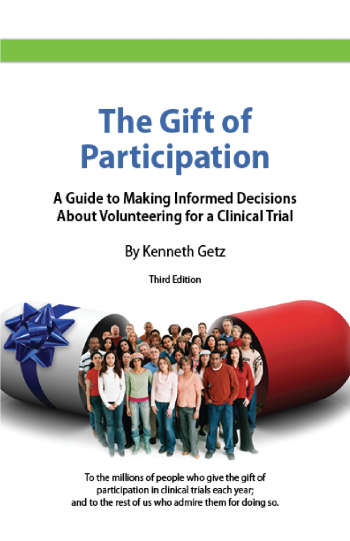
The Gift of Participation, 3rd edition, written by Ken Getz, Founder of CISCRP, is now available. The book is a comprehensive, easy-to-read guide for patients and caregivers seeking information about the clinical research process.

The Center for Information and Study on Clinical Research Participation (CISCRP) is pleased to announce the release of the third edition of The Gift of Participation. Written by CISCRP Founder, Ken Getz, the book is a comprehensive, easy-to-read guide for patients, caregivers and families to navigate the clinical research process. The new edition offers a fresh look at why participation in clinical research matters. The book features important updates on core information and new areas including the role of social and digital media in clinical research, the collection of bio-marker data and generic materials, evolving rules on clinical trial results disclosure, and more.

Clinical trials are essential to public health. Behind every medicine and treatment available are clinical trials and volunteers who sacrificed their time. Author Ken Getz notes, “For the majority of people, the idea of clinical trials is a new and unfamiliar one. Most people first learn of them at the same time they are diagnosed with a serious illness for which no medication is available or adequate. This rush to navigate the unfamiliar terrain of clinical trials is often overwhelming and confusing.”

According to CISCRP’s 2017 Perceptions and Insights Study, a majority of the public, close to 70%, has never or rarely considered clinical studies as an option when discussing treatment or medication options with their doctor. This may come as a result of common myths about clinical research. The nonprofit CISCRP strives to debunk these myths and help patients and their caregivers understand the clinical research process and what it means to be a clinical research participant.

For many patients, clinical trials can be life changing due to the access participants gain to cutting-edge research and expert medical care. Clinical trial participant Meisha Brown was involved in clinical trials from the time she was 8 years old for Burkitt lymphoma. In the book’s foreword she shares, “An opportunity to participate in a clinical trial offered me a beam of hope and gave me a fighting chance when the state of affairs was seemingly hopeless.”

To order a copy of The Gift of Participation, visit CISCRP’s online store at https://ciscrp-educational-resource-store.myshopify.com/. All proceeds are donated to CISCRP and supports the educational initiatives to assist those seeking to learn more about volunteering in clinical trials.

About CISCRP:
The Center for Information and Study on Clinical Research Participation (CISCRP) is a 501(c)(3) non-profit organization dedicated to engaging the public and patients as partners in the clinical research process. CISCRP offers free education and outreach to the general public and patient communities. Visit http://www.CISCRP.org for more information or to support CISCRP’s educational initiatives.

CISCRP Invites Atlanta Community Members to Free Health Event

On Thursday, September 26, CISCRP will host AWARE for All, a free health event, for the Atlanta community. To learn more and reserve your spot for this event visit awareforall.org or call 1-877-MED-HERO (1-877-633-4376).

The Center for Information and Study on Clinical Research Participation (CISCRP) invites the Atlanta community to attend AWARE for All, a free health event on Thursday, September 26, from 5:00 p.m. – 8:00 p.m. EST. CISCRP’s AWARE for All is a program that has been hosted in over 60 communities around the world since 2003. This unique program enables the public to learn about the clinical research process and how it plays into public health.

This will be the first AWARE for All event the nonprofit has held in Georgia. CISCRP’s Associate Director of Development & Community Engagement, Ellyn Getz, notes, “We are excited to bring our internationally-recognized program to the Atlanta community and are thankful for the support we have received from many local organizations. AWARE for All events provide a unique opportunity for the public to interact with professionals in the clinical research field and gather the information they need to make informed decisions about their health.”

CISCRP will be providing free dinner and refreshments. Attendees will have access to several free health screenings including Breast Health, Blood Pressure, Depression, Diabetes, Eating Disorder, Flu Vaccinations, HIV, Memory, Nutrition Counseling, Sickle Cell, Smoking Cessation Counseling, and Vision. Local health advocates and researchers will be in attendance to share their resources and services. There will also be an overview presentation about clinical research and a panel discussion featuring research professionals and study participants.

CISCRP is producing the event in collaboration with Biogen and National Sponsor, Lupus Research Alliance (LRA). The LRA National Director of Advocacy and Programs, Diane Gross, MPH comments, “Lupus Research Alliance is proud to continue our support for an event that aims to improve awareness about clinical research, particularly among minority and underserved communities. This is an important chance for the Atlanta community to come together to address the need for greater education and to recognize those who take part in clinical research studies.”

AWARE for All – Atlanta will be held on Thursday, September 26, 2019 from 5:00 p.m. – 8:00 p.m. EST at the Ivy Community Center, 3850 Stone Road SW Atlanta, GA 30331. Attendance is free, but please reserve your spot today by visiting http://www.awareforall.org or by calling toll free 1-877-MED-HERO (1-877-633-4376).

About CISCRP:
The Center for Information and Study on Clinical Research Participation (CISCRP) is a 501(c)(3) non-profit organization dedicated to engaging the public and patients as partners in the clinical research process. CISCRP provides free education and outreach to the general public and patient communities. Visit http://www.CISCRP.org for more information or to support CISCRP’s educational initiatives.

Editor’s Note:
Community and research collaborators include: ACRP, Alpha Kappa Alpha Society, Alzheimer’s Association, ARCH, Arthritis Foundation, Biogen, Black Nurses Rock, BrightFocus, Cancer Support Community Atlanta, Clinical Research Atlanta, Cogniciti, Emory Goizueta Alzheimer’s Disease Research Center, Georgia Ovarian Cancer Alliance, HEAL, iResearch Atlanta, the Ivy Community Foundation, the Lupus Research Alliance, Morehouse School of Medicine, Multiple Sclerosis Center of Atlanta (MSCA), and Walgreens.

CISCRP Conducts its First PAB in Asia – Best Practices for Conducting PABs Abroad

CISCRP Conducts its First PAB in Asia – Best Practices for Conducting PABs Abroad

Since 2011, CISCRP has been collaborating with sponsors on Patient Advisory Board (PAB) meetings to give patients and their caregivers the opportunity to share personal experiences and thoughts on ways to optimize clinical trial designs. While PABs have routinely been used as a patient engagement tool in the US, Canada, and Europe, PABs conducted in Asia are much less common due to various reasons – including language barriers and challenges navigating local ethics committee processes and regulations. In April 2019, EMD Serono and CISCRP held what they believe to be the first-ever Patient Advisory Board meeting in Taipei, Taiwan, and the success of this milestone exemplified CISCRP’s knowledge of the conduct of global patient engagement activities.

To plan and execute a successful global PAB, CISCRP recommends the following best practices:

  • Anticipate differences in local regulations and ethics review processes
    Each PAB CISCRP conducts undergoes an ethics review as an added layer of oversight, and in the United States, this process is generally fast and straightforward. Yet, identifying an ethics committee in other countries that will conduct a review of a patient advisory board meeting may prove to be a challenge, particularly when they may not be familiar with PABs. As such, CISCRP suggests working alongside a local non-governmental organization (NGO) to help support the submission process.
  • Have patient-facing materials translated by an organization based in the country where the PAB will be held
    As there may be nuances in the local language, having native speakers translate any patient-facing materials can help to ensure that key messaging sponsors wish to receive feedback on does not get “lost in translation.”
  • Be aware of local healthcare dynamics
    In countries where patients heavily respect doctors, and due to unfamiliarity with PABs in other regions, engaging a doctor from a local and relevant health NGO to introduce the research activity to prospective patient advisory board members can help establish trust and ensure that the purpose of the PAB is communicated effectively.
  • Find a moderator who speaks the native language and has sufficient knowledge of healthcare
    This assures that the patients can not only have a deeper conversation about how to improve clinical trials for their condition, but a moderator also helps with communication of meeting logistics with patients before the session. If the project team does not speak the local language, using a simultaneous translator and headsets can make the meeting more engaging for these individuals.

Through CISCRP’s experiences with PABs both domestically and abroad, we have learned that it is critical to not only put together PABs so that sponsors can adapt their clinical trial designs to their population of interests’ needs, but that we must also adapt our own approaches to research so that we can most effectively and conscientiously do our job in a country where we are a guest. Are academics and researchers in the country already familiar with PABs? Are there cultural considerations that we should be aware of as we embark on our mission to ensure that patient voices are heard? These questions and the above best practices can help sponsors strategize a plan to most effectively conduct a PAB in new territory.

If you are interested in conducting a PAB or would like to learn more about other services offered by CISCRP’s Research Services team, please feel free to contact Annick Anderson, our Director of Research Services. She may be reached at AnnickAnderson@ciscrp.org or by phone at 617-725-2750 x400.

Written by Nova Getz, Research Associate

CISCRP Hosts the Second Annual Plain Language Clinical Trial Summaries User Group

On May 2, 2019, CISCRP had the privilege of hosting its 2nd Annual User Group Meeting focusing on best practices, lessons learned and ongoing challenges associated with the return of plain language clinical trial results summaries.

The meeting was held at CISCRP’s Liberty Square office in Boston. Attendance in the 2nd Annual User Group Meeting increased over last year’s first meeting. Representatives from a dozen pharmaceutical and biotechnology companies participated in the group discussion including AstraZeneca, Biogen, CSL Behring, EMD Serono, Novartis, Otsuka, UCB, and Vertex Pharmaceuticals.

The User Group Meeting provides an open forum for information sharing and discussion. Meeting participants exchanged ideas and experiences and also provided CISCRP with valuable insights into opportunities to continuously improve on its plain language services.

We want to thank all of the attendees again for their time and participation in the 2nd Annual User Group Meeting. It was a pleasure for CISCRP to host and facilitate this event. CISCRP hopes to continue to see the User Group grow and offer even greater value to participating companies in the coming years.

If you would like to learn more about joining our Plain Language Clinical Trial Summaries User Group, please contact Jay Matthews at jmatthews@ciscrp.org.

Written by Jay Matthews, Business Development Executive