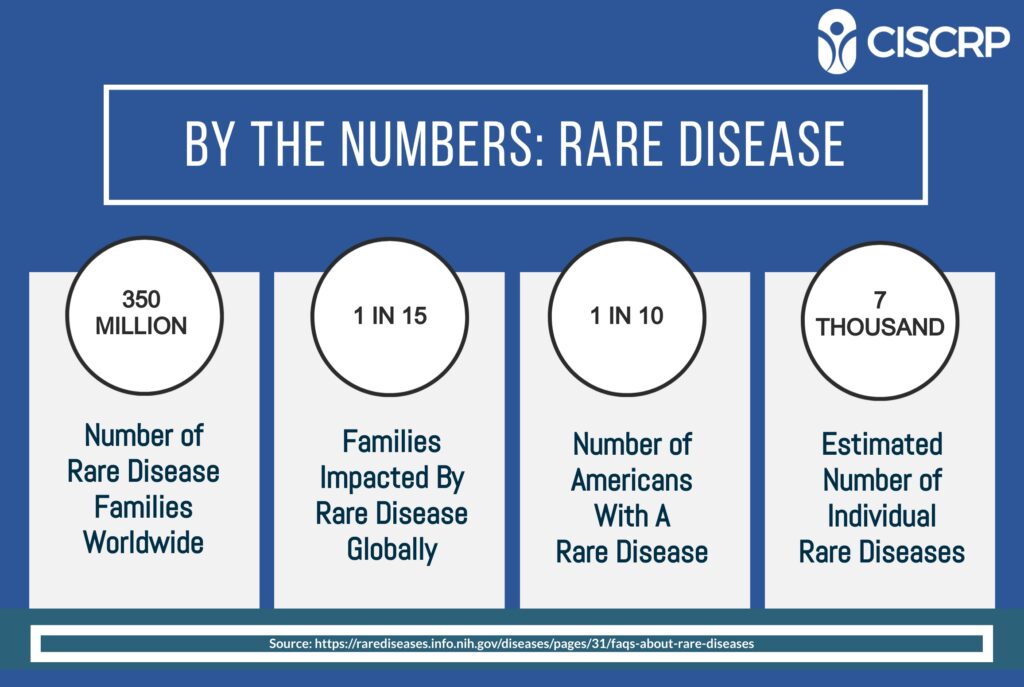
The COVID-19 pandemic has escalated the social isolation, medical uncertainty and disruptions in home/work life that rare disease patients and caregivers already experience on a daily basis. “We’re 18 months into a chronic grind of events that might not be impacting us dramatically, day to day, but there’s this cumulative, chronic, wearing-downness,” observes Scott Schliebner, former Senior Vice President, Scientific Affairs and Therapeutic Expertise Head, Center for Rare Diseases, ICON. Participants in clinical studies are surrounded by a support system of caregivers that help facilitate their participation. In the rare disease space, this often means parents. Great strides have been made in the clinical research enterprise to scale patient-centric approaches. This spectrum of support is also being extended to caregivers of participants in clinical research.
“Half the patient population in rare disease is children. The caregiver support is incredibly important. These are the individuals making decisions on behalf of their child, or their patient-adult child, it’s not all under 18 minors. Many of these patients have grown into adulthood and need ongoing support. Parents are involved in clinical trial decisions, advocacy decisions, and treatment decisions,” says Cristol Barrett O’Loughlin, Founder and CEO of Angel Aid Cares, a non-profit that provides mental health and wellness services to rare families,
particularly caregivers, with a focus on rare disease mothers. Offering assistance at different levels to caregivers is essential, particularly when it comes to emotional support.
In a study published by Health Psychology, rare disease patients were recently surveyed and interviewed about the types of support they receive, stress levels and their overall satisfaction with life. Four types of support were evaluated by the respondents:
- Emotional support where the individual feels understood and validated by others
- Informational support where individuals receive advice from others
- Tangible support which provides practical assistance to address day to day tasks
- Companionship support where individuals develop a sense of belonging by participating in leisure activities with others
Emotional and companionship support were the strongest predictors for life satisfaction, regardless of stress levels, with companionship being rated as the most significant factor. (1)
Cristol explains that these types of support can also be extended to the caregiver experience.
“Informational and tangible support are the triage list of what has to get done. What is this disease? What are the symptoms? What doctor do I go see to treat those symptoms?” says Cristol. “Are there any clinical trials? How do I get enrolled? How do I get insurance coverage for my claims? What medical devices do I need to have at home to manage this experience for my patient-child or patient-adult? Emotional support and companionship is where that caregiver or patient feels that someone understands their feelings about what’s happening to them. Someone is really, truly listening and engaged at a heart level, with what they’re experiencing.” This emotional and companionship level is enhanced further if the other person is currently undergoing or has undergone the same experience, providing a sense of relief for the patient or caregiver.
Cristol knows from personal experience the toll that stress takes on caregivers. She assisted with caring for her three older brothers who were born with a rare genetic disease and passed away at ages 12, 18 and 19 years old. “For decades I witnessed this chronic stress within the family, with caring for healthy individuals in the family and medically fragile individuals within the family,” says Cristol. “This isn’t a stressful event, as in PTSD, and now we’re recovering from it. This is ongoing, chronic stress.”
Cristol shares her insights into what she terms as CTSD, or chronic traumatic stress disorder.
“In a stressful event, your cortisol spikes and you go into a heightened awareness state and then you go into recovery (PTSD). (2) But when you are a caregiver, you elevate into this stressful state and now you’re buzzing at that higher level. You are in this for the long haul. The relief that you bring to CTSD or to a caregiver is different than trying to recover from a situational traumatic experience. That relief comes in the form of daily micro-moments of self-care,” says Cristol. This moment can be as simple as implementing slow breathing techniques to lower the heart rate. “Breathwork is the number one thing we can do,” says Cristol. Other wellness methodologies to implement include healthy eating, sleeping and exercise habits, all of which can be incredibly challenging for caregivers to navigate.
“Mothers are the primary caregiver in 82% of families in the rare disease space,” says Cristol. “We know (from support provided by Angel Aid Cares) that focusing on a mother, a grandmother, or an aunt, within a family, we can uplift a whole family. It’s never an exclusion of any other member of the family, rare fathers included.” Cristol also makes note that there is much to be learned from the mature caregiving models of the veterans, military, senior and dementia care spaces.
“If you want patients to enroll in a clinical trial, we need to make things easier for them, and part of this, is, of course, just extending this concept of patients to caregivers. What else can we do with that care circle to help that whole family unit or care circle group participate in a clinical trial? There are a lot of practical things,” says Scott.
To learn more, watch the 15-minute Flash webinar “Supporting Caregivers in Clinical Research: Navigating the Pandemic” here.
Authored by: Melissa E. Daley, Communications & Marketing Manager, CISCRP
To search for medical conditions in a specific location, visit our Search Clinical Trials page.
To stay informed about clinical trials, visit our Resources page.
Sources:
(2) https://www.psychiatry.org/patients-families/ptsd/what-is-ptsd