Authored by Melissa E. Daley, Communications & Marketing Manager, CISCRP
CISCRP hosted a 3-part webinar series titled “Navigating Rare Disease and Clinical Research: Every Patient Matters”. This article brief is based on the first episode, “Rare Disease Clinical Trials: Being Informed”. Moderated by Christian Rubio of Global Genes, panelists included Dr. Jahannaz Dastgir of Goreyeb Children’s Hospital of Morristown, New Jersey, Melanie Havert of Rare Patient Voice, Jenn McNary, Founder of One Rare, and Stephanie Loomer, Project Manager, CISCRP. You can access the webinar recording here.
The biggest difference between common disease and rare disease clinical trials is “…probably the amount of people that can be enrolled in the trial,” says Dr. Jahannaz Dastgir, Director of Clinical Research, Applied Therapeutics and Lead Physician at Atlantic Health System’s Pediatric Neuromuscular Program. “With conditions like diabetes or heart disease, for example, you could have very large numbers of patients. In rare diseases, you would have a much smaller number, because there might be 20 cases of the condition, worldwide. You have to work out the statistics to make sure you have the right amount of data over the right amount of time to get the study to be statistically significant so that the drug can be approved.”
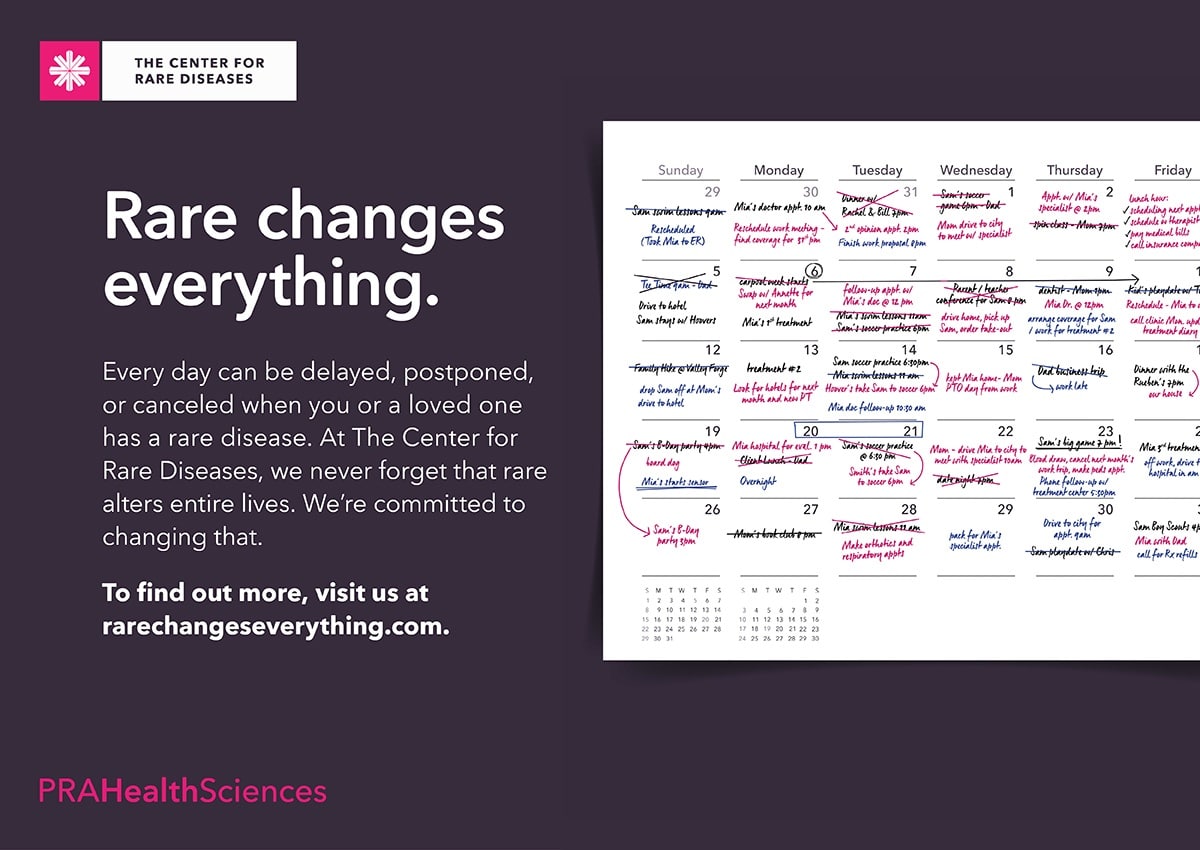
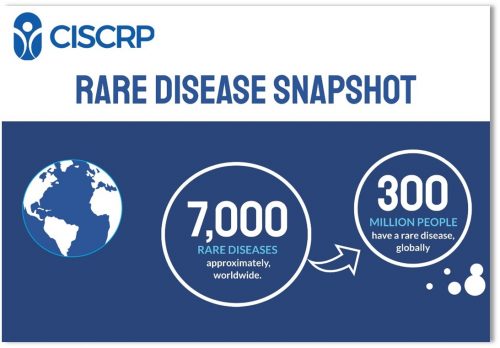
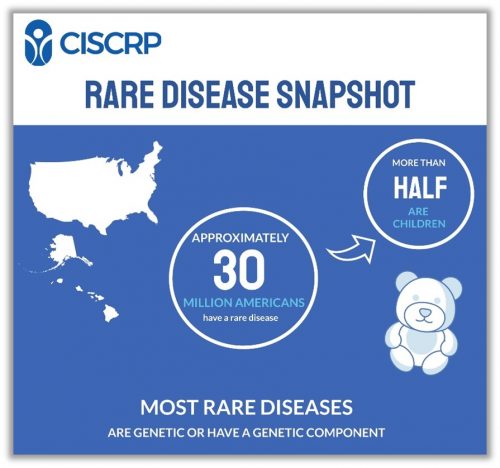
A disease or condition is classified as “rare” in the United States if it affects less than 200,000 individuals. This definition varies in other parts of the world. For example, in the European Union, a disease is defined as “rare” when less than 1 in 2,000 individuals are impacted. While there is no exact count, it’s estimated that there are approximately 7,000 rare disease effecting 25 to 30 million Americans (1) and over 300 million children and adults globally, roughly 3.5% to 5.9% of the population (2). Conducting clinical studies in the rare disease space to find safe and effective solutions is a collaborative effort by stakeholders in the clinical research enterprise including patients, patient advocates, product developers and medical research professionals.
“Our clinical trial journey really started with me having no knowledge of clinical trials,” recalls Jennifer McNary, a mother of four, rare disease patient advocate, educator and founder of One Rare, a nonprofit organization whose mission is to improve experiences for the rare disease community through education, mentoring and peer support. Jennifer’s connection to the rare disease community is particularly poignant.
“My three sons all live with rare diseases. My first two sons, are now 22 and 19, are living with Duchenne Muscular Dystrophy. I also have a third son living with 2 rare diseases, primary immune deficiency and congenital cholesteatoma. He is 13 years old. And I have a daughter who is healthy,” says Jennifer. When her two older sons were diagnosed as children, Jennifer was advised that “…there were no treatments, no therapies, there was nothing I could do and in fact, there were no clinical trials that we could think about enrolling in.” Jennifer took matters into her own hands and shares “I spent a lot of years raising money and funds for science and going to advocacy meetings.”
Jennifer also pursued clinical research as a healthcare option for her two older sons in hopes of changing the trajectory of their disease progression.
“Thankfully, when Max was 9 years old, and his brother, Austin was 12, we were allowed to participate in our first clinical trial. It was a lot of work to get to this point,” she recalls. Through personal connections, Jennifer learned about a clinical trial in Columbus, Ohio, at Nationwide Children’s Hospital. The clinical study was specific to a certain mutation in Duchenne Muscular Dystrophy.
“I dug out my kids’ genetic report and I realized that my kids actually had this genetic mutation and could qualify for the study. When I called the (clinical research) site and asked them if my sons could be part of the study, they told me that there were a few things we had to do. The first thing was that we had to answer a few questions about the kids’ mobility and ability to walk. Unfortunately, because Austin was 12 and had lost the ability to walk at age 10, he was not able to enter the study or even be considered. But Max was the right age, has the right genetic mutation, and he was functionally the right kind of kid that they were looking for to bring into this 12-person study. And so, I packed up Max, and my newborn daughter at the time, Nora, and I left my three-year-old son and my 12-year-old non-ambulant son with some family and friends and we flew to Columbus, Ohio to meet with the doctors running the study,” says Jennifer.
At the time, Jennifer and her family lived in Vermont. Weekly travel to the clinical research center was required. “I didn’t have a lot of money and a lot of patients do not have the money to fly weekly, stay in hotels, get rental cars, so I wanted to make sure that this was all going to be reimbursed and that patients were not going to have to pay for their time in a study,” says Jennifer.
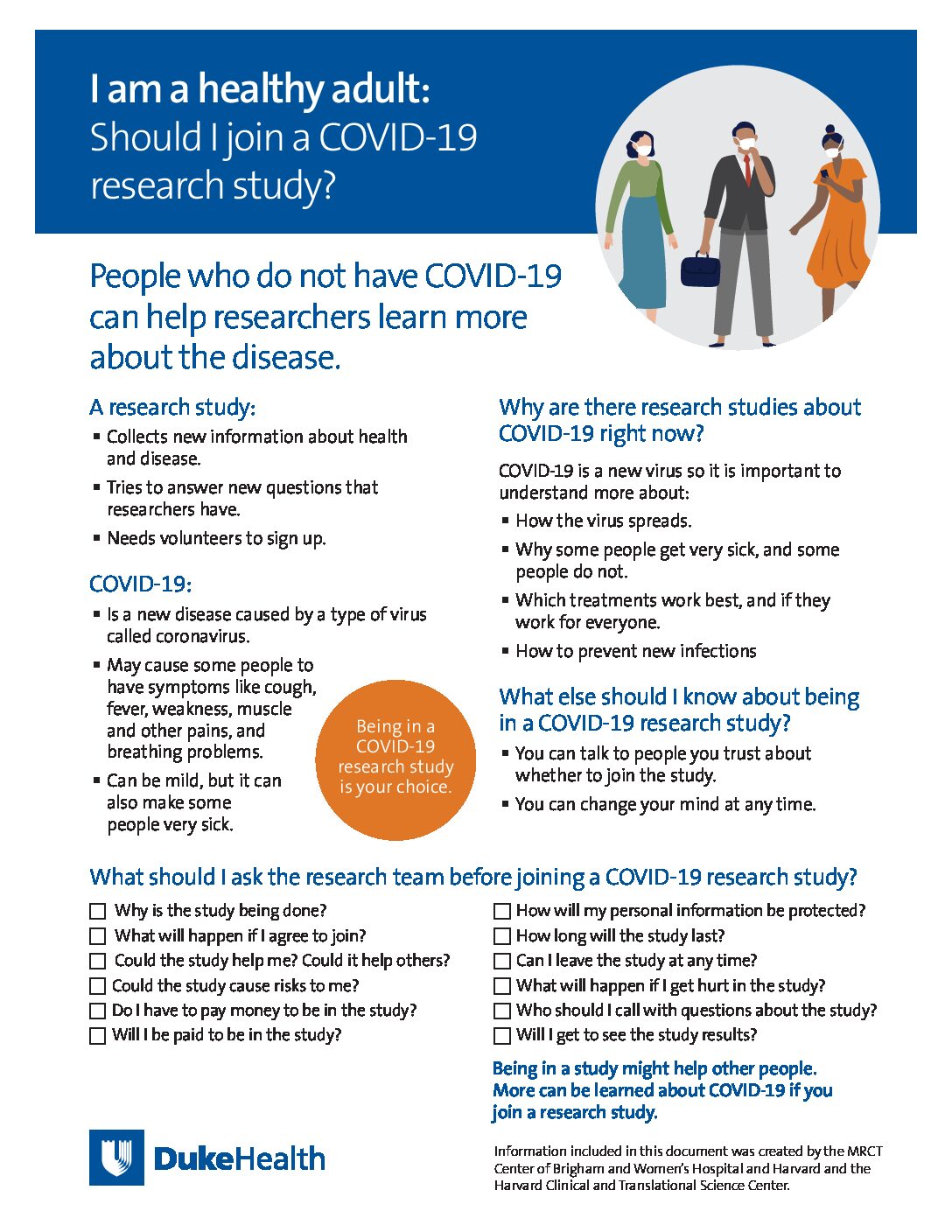
It’s important to ask questions about all aspects of the clinical study, so that you have a complete understanding of what it entails for both the participants and caregivers. Equally important, is that you feel comfortable and confident in asking questions to the research center staff- study coordinators and/or the Principal Investigator.
“One of the questions I asked when we were evaluating this study was what happens at the end of the study, if my child didn’t get the drug, do they continue to receive the study drug, (when the study is completed)? This is called an extension study. I always ask at the beginning of a clinical trial, is there an extension planned, and will all of these patients receive the active drug, if it works?” says Jennifer.
Melanie Havert is a patient advocate and project manager at Rare Patient Voice, which provides patients and caregivers with rare diseases an opportunity to voice their opinions through surveys and interviews to improve medical products and services. When she is discussing details with clinical research staff “A question I always like to ask is have any other people had this drug yet or are we going to be the first ones to try this? Of course, it’s tested extensively before it gets to people, but I like to know where we’re at, at that phase.”
“My instinct is to ask questions about the data that exists around this and why do they (clinical research staff) think it’s going to work. What do you know about this therapy that leads you to believe that it’s going to do something?” says Jennifer. She also advises that participants or caregivers need to ask about any lasting implications from participating in the study. “Ask that question because you don’t want to end up eliminating yourself from future clinical trials and from having flexibility to choose what therapies you want to take. Once you’re in a clinical trial, you often can’t change your current treatments.”
A common question that participants and caregivers ask is what the first day of a clinical trial is like.
“The first day can be pretty intense,” says Melanie. “In my experience, you get a stack of papers, and someone sits down with you and you spend a couple hours going over these papers, and they make sure that you completely understand what you’re about to do to participate in the clinical trial. They really walk you through the process.” (This is called Informed Consent and you can learn more about it here). There may also be blood draws and urine samples taken, along with other initial benchmark testing. “It really depends on the specific drug and how they are handling it that day. It’s pretty intense but it’s worth it.”
Dr. Dastgir adds “You will get additional testing that is part of the trial. And the results of these you may or may not be privy to. It’s really important to maintain the standard of care locally.” Dr. Dastgir says the care that a participant receives during a clinical study is “…an enhancement of care, better access to experts but not a substitution for the standard of care that you get back home with your local provider.”
Melanie observes that “Something that I’ve noticed is that when you go see your regular doctor, you can ask them questions and they have answers for you. When you’re in a clinical trial, it’s the doctors that are asking you questions, and you’re giving them the answers.” Participants can ask questions in a clinical trial, as well.
In the era of social media, patients and caregivers have unprecedented access to information sharing platforms. Dr. Dastgir says “Social media is the Wild Wild West in terms of what kind of information you’re receiving, and whether it’s correct or not. When people sign the consent form, there’s some level of discretion and confidentiality that exists, and whether or not that gets implemented is primarily good faith.”
Both common disease and rare disease clinical trials for children and adults are monitored by the FDA (Food and Drug Administration) the NIH (National Institute of Health) and IRBs (Institutional Review Boards). You can learn more about safety protocols in clinical research here.
“I do have a lot of faith in the safety of this system,” says Jennifer. “There are a lot of safety nets to capture adverse events and to protect children in studies. I am happy to report that this was a positive example of being in a clinical trial, because this therapy was approved based on the study that Max was in. We’re still on the hunt for the next best therapy, and we’re hoping to be accepted into another trial. I would give this experience a 10 out of 10.”
“Most rare diseases are genetic or have a genetic component and 75% of rare diseases are without a single FDA-approved treatment. On average, it takes an average of 7.3 years to receive an accurate diagnosis of a rare disease,” says Christian Rubio of Global Genes. Clinical research is essential to addressing these disease states and indications in order to find treatments, therapies and cures.
You can view part-two of the series, “Rare Disease Clinical Trials: How to Prepare for When the Clinical Trial Ends” here and part-three, “Rare Disease Clinical Trials: After Participation, Paying It Forward” here.
To search for medical conditions in a specific location, visit our Search Clinical Trials page.
Access the companion infographics:
- Clinical Research Participation Roadmap | Part-one here.
- A Garden of Questions to Ask Before the Clinical Trial Ends | Part-two here.
- Paying it Forward in Clinical Research | Part-three here.
To stay informed about clinical trials, visit our Resources page.
Sources
(1) https://rarediseases.info.nih.gov/diseases/pages/31/faqs-about-rare-diseases
(2) https://www.rarediseaseday.org/article/what-is-a-rare-disease
###