Medical Heroes Appreci-a-thon: Learn About the Importance of Clinical Research

With the New Year underway, many of us are setting new fitness resolutions, heading back to the gym, or looking for new ways to stay active with family and friends. As we make our new year’s resolutions, this season also serves as an ideal time to recognize and honor those who have volunteered, provided care, and helped make new treatments and vaccines possible. CISCRP, a nonprofit organization dedicated to educating and engaging the public in clinical research, invites you to register for the 5th annual Medical Heroes Appreci-a-thon event.

At CISCRP, Medical Heroes are clinical trial study volunteers, healthcare professionals, researchers, and those on the front lines treating and caring for the public. During the 2023 Medical Heroes Appreci-a-thon, we honor these heroes by sharing their stories and raising awareness about participation in clinical research.

“Recognizing and honoring all the medical heroes who make our work possible is immensely important to us, and the ability to do so while encouraging healthy living and a little company and industry-wide friendly competition. It just felt like a perfect fit.” – Jennifer Byrne, CEO of Javara.

The Medical Heroes Appreci-a-thon is the perfect opportunity to stay active with family and friends while supporting those who help make new treatments possible. This is a fun team-building event in a virtual fitness challenge style. Throughout the month of February, participants can log any physical activity they complete through our race portal. The logging activity will move racers along this year’s French Riviera virtual course. Racers can see Google street views of their location and track themselves, their team, and other racers along the map.

Along the way, racers will see mile marker pop-ups along the course, receive emails that spotlight different Medical Heroes, and share educational facts and resources about clinical trials. Weekly challenges will be throughout the month to keep things exciting, promote fun competitions, and allow dedicated racers to win prizes.

The event is open to everyone — you don’t have to be an athlete to participate! Racers can log their workouts, sports, or any intentional activities done throughout the day, such as dog walking, grocery shopping, or household chores.

Appreci-a-thon racers and sponsoring organizations have shared the following:

“Appreci-a-thon is a fun way to give back, learn about clinical research, and honor Medical Heroes.” – Racer

“This challenge is a great way to stay connected with friends, family, and colleagues!” – Racer

“As someone in their late twenties, clinical research was not really on my radar until working at CISCRP. The importance of research, and all the medical heroes who help make new treatments possible, affects everyone every day without us even realizing it. I think this event is a way to reach a demographic of people who may not be joining educational webinars, reading articles related to clinical research, or attending seminars or things like that. It meets people where they are in an exciting and engaging way while also exposing them to important information and inspiring stories.” – Justine Holleran, Senior Coordinator, Community Events & Programs, CISCRP

The Medical Heroes Appreci-a-thon begins February 1st, so invite your friends, family members, and colleagues to participate in this exciting challenge. Participants can learn more information and register here.

Article published by USA Wire here.

To search for medical conditions in a specific location, visit our Search Clinical Trials page.

To stay informed about clinical trials, visit our Resources page.

Volunteer opportunities with CISCRP, visit our Volunteer page

Black Women’s Expo Provides Transformational Experience

The much-anticipated premier event for Black Women in cities around the country just made it’s Atlanta and Southeast regional stop at the Georgia International Convention center near Atlanta’s Hartsfield airport on Dec. 17 and 18.

Pitch Black and JP Morgan Chase joined the two-day event which brought out scores of industry leaders and game changers such as Keke Wyatt, Yandy Smith-Harris, Lisa Nicole Cloud and “Married to Medicine’s” Dr. Contessa.

Powerful exchanges between women in a range of fields and stations in life dominated the 2022 Black Women’s expo and participants were privy to an impressive series of panel discussions to underscore challenges to the wellbeing of Black women and their families, along with strategies for reducing the impact of health disparities and improving access to quality care.

CISCRP panel experts included (right to left): Ashley Nealy, COVID-19 Clinical Trial Participant; Melissa Hardman, Founder and CEO, Faces of Research, LLC; Dr. Lisa Lake, Executive Director of Telic Empowerment; Dr. Frita McRae Fisher, Founder and President of Midtown Atlanta Nephrology, P.C.

Pitch Black and JP Morgan Chase joined forces and collaboratively sponsored an important and comprehensive discussion of women’s health issues, disparities in health care and the importance of people of color participating in clinical trials. The expo also hosted a number of other powerful panel discussions between women in a range of fields who are making a difference in their professions and their communities.

Pitch Black media in concert with CISCRP provided a highly informative discussion panel of some of the region’s top leaders in health and medicine for Black people, emphasizing the disparities in health care and the need for Black people and other people of color to participate in clinical trials which are vital to developing new or improved treatments to eliminate or decrease infection and death rates along with quality-of-life issues for Black People.

The Center for Information and Study on Clinical Research Participation’s (CISCRP) core mission is to provide accessible, relevant, useful, high quality educational resources, programs, and services that increase awareness and understanding of the clinical research process is a vital organization for enhancing and enriching the participation experience for patients and their families; and promote engagement and partnership between clinical research professionals, patients, and the public.

Dr. Frita Fisher author of Under Pressure – A Guide to Controlling High Blood Pressure lead the health care panel discussion at Black Women’s Expo on Saturday, Dec. 17.

Dr. Frita, as she is affectionately known by patients and peers, lent her considerable expertise and commentary to Black Women’s Expo patrons and participants Saturday’s, CISCRP at the Georgia International Convention Center in Atlanta. This compelling and comprehensive discussion featured leading medical experts and health advocates to address health concerns and spotlight disparities in diagnosis, treatment and outcomes for women of color and Black women in particular.

Written by Roz Edward, Atlanta Daily World 

To search for medical conditions in a specific location, visit our Search Clinical Trials page.

To stay informed about clinical trials, visit our Resources page.

Volunteer opportunities with CISCRP, visit our Volunteer page

Medical Hero Spotlight: Kim Zukerberg, Ovarian Cancer Clinical Trial Participant

Ovarian Cancer Diagnosis

In the spring of 2013, Kim Zukerberg visited her primary care physician and her gynecologist for routine physicals, leaving with a clean bill of health. Shortly after those appointments, Kim found herself experiencing what she thought might be symptoms of menopause, including painful stomach aches. Her doctors didn’t believe the symptoms were urgent, so Kim waited several weeks for an appointment. When she was finally examined, her doctor ordered a vaginal ultrasound, and the scans came back with a mass. Rather than waiting for a CAT scan scheduled a week later, Kim made the decision to go to the ER, where she knew they would see her immediately.

“They scheduled me for explorative surgery to find out what was happening on a Saturday. When I woke up on Sunday, I was told I had an advanced stage of Ovarian Cancer 3C,” Kim recalls.
Beginning Chemotherapy Treatment

After her diagnosis, doctors rushed to stop the cancer from spreading further. Kim had a bowel resection, hysterectomy, and both ovaries removed. While recovering in the hospital from surgery, Kim began to prepare for chemotherapy treatment with a port installation in her stomach. While most cancer patients receive chemo as a standard treatment, Kim’s case was a bit unusual. Only about 5% of those who have such an advanced stage of ovarian cancer receive this type of treatment since it is so physically grueling on the body. “My surgeon would only give this chemo to patients who she thought could withstand the medicine. I was 52, about 10 years younger than the average patient at the time, and physically fit, so they decided I was a good candidate,” Kim explains.

Kim received chemotherapy in her stomach and chest over the course of six months. “It was the hardest thing I’ve ever had to go through,” she recalls. Her treatment involved spending several days inpatient at the hospital for stomach chemotherapy, going home for a couple of days to recover, and then receiving outpatient chemotherapy treatment in her chest. 

It was a demanding schedule, but Kim has an incredible circle of friends who helped her during this time. “Someone always picked me up and brought me to my appointments and sat with me. They created a schedule to make sure someone was always there with me, which I wasn’t even aware of until after,” Kim remembers.

When her treatment concluded, Kim remained cancer free for about a year before having a recurrence in 2015. She then began her second round of chemo treatment. “With my recurrence, came ascites, which is when extra fluid builds up inside of the abdomen. Having ascites can cause a lot of additional uncomfortable symptoms like stomach pain, nausea, and bloating,” Kim explains. To treat this, Kim’s doctors had to drain the ascites fluid and eventually the chemotherapy kicked in and kept the symptoms from returning.

“Around this time, my oncologist told me that once a patient’s cancer recurs like mine had, they will continue to recur twice as fast. She told me I should start getting my affairs in order and that my life expectancy would not be long.”
Clinical Trial Opportunities

Several months after her cancer recurrence, Kim’s doctor let her know there was an opening in a clinical trial she was eligible for. Knowing nothing about clinical research, Kim decided to trust her oncologist and give it a try. 

“I was nervous but also excited about joining the trial. I figured nothing could be worse than what I’d already gone through, after having major surgery and getting beat up by chemo,” Kim says. All the studies at the time indicated that the trial drug would only extend Kim’s life expectancy by 7 months.

“I joined the clinical trial in December 2015, unsure if I was actually on the trial drug or a placebo,” Kim notes. Every two weeks, Kim had lab work so her oncologists could review her cancer antigen test to gauge how she was responding to the treatment. At first, there was a worry Kim might have a recurrence with cancer for the third time. But by March, Kim’s lab results showed a drastic decrease, a sign that the medication was working to keep the cancer away. Since then, Kim has been able to live a cancer-free life.

Life After Cancer

The clinical trial Kim was a part of concluded in 2021 and the drug is now FDA approved. Kim remains on the medication, now provided by her regular pharmacy.

 “For me, my cancer feels like a lifetime ago. I was so incredibly sick, to the point that my family members and I believed I would die within a year. Now I’m back to working full time and I just took out a 30-year mortgage,” she reflects.
kim

Kim and her granddaughter, Emma

Kim attributes beating cancer and the many new medications that exist today to clinical research. In 2013 when she was diagnosed, there were far less treatment options and the life expectancy for someone with ovarian cancer was very low. Now, there are more treatments available and women like herself can go on to live for decades after their diagnosis. One barrier to treatment that remains for ovarian cancer patients is the timeframe in which they are diagnosed. “Unfortunately, most people with ovarian cancer find out in a later stage of the disease because the symptoms they experience so similar to daily pains women have for most of their lives,” Kim says.

Advocacy Work

Once she started feeling healthier, Kim started looking for advocacy groups and community organizations online. This eventually led her to the National Ovarian Cancer Coalition (NOCC) where she has since served as a patient advocate and mentor to others with ovarian cancer. 

“When I was in the hospital, I found so much information online for breast cancer, and it left me wondering, where are all the ovarian cancer advocates? I realized that this community is smaller because fewer women survive this disease. As a survivor, it’s my obligation to be vocal and spread awareness when I can,” Kim says.

Through mentor programs with the NOCC and OCRA, Kim has had the chance to connect with other ovarian cancer patients, give them encouragement, and share advice. “Most women I’ve spoken with have had to look up trials online by themselves. I can’t even imagine having that additional burden when you’re already sick and fighting for your life,” Kim says.

One of the hardest conversations Kim has had through the mentoring program was with a cancer patient living in Canada. Living 2 hours away from a hospital, she hadn’t even received a port for medicine in her chest, which is crucial for cancer patients because arm veins can’t withstand constant use. “This patient was only in her 40s and was told she would only have about 5 years by her doctor and there was nothing she could do. Unlike me, she didn’t have the option to travel or try out different hospitals because of how Canada’s healthcare system functions. She’s had to research clinical trials on her own and it breaks my heart,” Kim shares.

Advice for Others

Kim is a very vocal advocate for clinical research awareness, education, and participation. She shares that if her current medication stopped working tomorrow and a new trial was available, she would join in a heartbeat. “As someone who has been through a trial that saved my life, I remind friends and family that clinical research is a viable healthcare option they should always consider,” Kim notes.

“I think most ovarian cancer patients who say no to joining a trial are tired of spending time in the hospital and want to move on with their lives. I always say to them, ‘You’ve done the hard part already. Clinical trials are just the icing on the cake and could ensure you become or remain cancer free. Don’t quit before you finish.’”

Additional Resources:

https://ovarian.org/

https://ocrahope.org/

To search for medical conditions in a specific location, visit our Search Clinical Trials page.

To stay informed about clinical trials, visit our Resources page.

Volunteer opportunities with CISCRP, visit our Volunteer page.

Written by Lindsey Elliott, Marketing & Communications Manager, CISCRP | lelliott@ciscrp.org

Boosting Clinical Trial Appeal in Patient Communities Part 2: Rare Patient Voice FLASH Webinar Overview

Clinical research is critical to progress towards new treatments and cures for all diseases. However, engaging patients in clinical trial participation is often an uphill battle. In September, Rare Patient Voice (RPV) surveyed 1,989 patients and caregivers in the U.S. about their preferences regarding clinical trials. This 15-minute Flash Webinar, the second in a two-part series, was led by Rare Patient Voice President Wes Michael, and Amy Gietzen, a Scleroderma patient advocate, columnist, and public speaker. They shared and discussed highlights from the RPV survey results, including what factors may help encourage patient participation in trials.

In part one of this series, preferences regarding location, compensation, and reimbursement were discussed by Pam Cusick and Grace Charrier.

Another factor highlighted as important by patients when considering enrollment in a clinical trial was communication.

Wes noted, “For patients enrolling in a clinical trial, this can often be the start of a long-term commitment and a long-term relationship they build with their research team. The key to a successful relationship is communication.”

When surveyed, 96% of patients said that receiving information on the goals of the trial prior to beginning was moderately to extremely appealing.

“We’re always looking to understand what’s going on with our bodies and what treatments are best for us,” Amy shared. In her own trial experience, Amy found that information about the study was not accessible to patients and was not easy to understand once received. Often, the documents that patients do receive about their treatment contain complex medical terminology, which can prevent them from fully understanding the scope and commitment of the study they’ve signed up for. For a better trial experience, patients are looking for clear communication regarding the goal of the study, how their participation plays a part in this, and what their participation will involve.

Additionally, 96% of patients also said that they found receiving results after trial completion important.

Beyond the need for research teams to disseminate study information to participants, there is a second important aspect to improving patient communication: health literacy. Receiving information about their study is only beneficial if patients can easily understand the information. “I think a key part of improving patients’ understanding of clinical trial results is including patients in the process of creating the educational materials that share findings,” Amy explained. “In the beginning when I was diagnosed with Scleroderma, I couldn’t understand any of the information shared with me for clinical trials. Over the years, I’ve learned the language and what to look for. However, communication like this needs to be accessible to all patients, whether you’re two years into your diagnosis or twenty.”

Wes shared his agreement with Amy, citing the growing trend in the healthcare industry among pharmaceutical companies who are working on creating trials and bringing patients into the process. “It’s important to have their feedback regarding what they would like to see, what would be helpful, and how their needs can be met,” Wes said.

Within her own network of patient advocates, Amy has found that the more researchers can help patients understand a study’s goal and what this process involves, the more likely patients are to share their positive clinical trial experiences with other people and encourage their community to participate.

Patients also shared feedback regarding improvements in communication they thought could be beneficial during clinical trial participation, Some responses included:

  • Getting an understanding of the treatment under development
  • Being fully informed about the trial before the start of the screening
  • Having a full understanding of what the trial hopes to discover
  • A 24/7 contact for emergencies or concerns relating to the trial
  • Access to a communication app or platform to use during the trial
  • The ability to be in contact with other people in the trial

Inevitably, side effects and concerns from medications don’t stay within a 9-5-time range. “I have never experienced 24/7 contact availability with my own clinical trial participation, but I think that’s a great idea,” Amy said. “For many patients, this experience is so new. Having someone available to answer your questions or discuss your symptoms would be great.”

Ultimately, no one wants to feel alone during their clinical trial experience. To increase the appeal of participation, researchers should make transparency and clear communication with patients a top priority.

Learn more about clinical trial participation preferences by accessing the webinar recording hereView CISCRP’s library of webinars and podcasts here.

To search for medical conditions in a specific location, visit our Search Clinical Trials page.

To stay informed about clinical trials, visit our Resources page.

Volunteer opportunities with CISCRP, visit our Volunteer page.

To join Rare Patient Voice to take part in research studies, sign up here.

Boosting Clinical Trial Appeal in Patient Communities Part 1: Rare Patient Voice FLASH Webinar Overview

Clinical research is critical to progress towards new treatments and cures for all diseases. However, engaging patients in clinical trial participation is often an uphill battle. In September, Rare Patient Voice surveyed 1989 patients and caregivers in the U.S. about their preferences regarding clinical trials. This 15-minute Flash Webinar, the first in a two-part series, was led by Rare Patient Voice Senior Vice President Pam Cusick, and Grace Charrier, cancer patient advocate and host of Cancer Convos with Grace B. They shared and discussed highlights from the RPV survey results, including what factors may help encourage patient participation in trials.

Two factors that were highlighted as important by patients when considering enrolling in a clinical trial were compensation/support and trial location.

The survey found that 95% of patients surveyed were interested in being compensated for participating in a trial.

Within her own network of patient advocates, Grace shares that compensation factors highly into decision-making. For many, the offer of compensation can be the catalyst that led them to ultimately participate in a trial they were considering. “There are a lot of costs associated with healthcare and many patients who are struggling financially would welcome this assistance,” Grace explains. “For me, compensation is a reward for the risk involved in participation.”

The survey also revealed that 93% of patients would like a point of contact to help arrange travel to research sites.

Although clinical trials can be located at a local hospital, it is not uncommon for studies to be conducted in other cities, states, or even internationally. Navigating travel logistics like airfare, hotels, language barriers, and finding the research site can add complexity for patients. For these reasons, having a guide who can help coordinate these pieces was viewed as important to many patients.

“When joining a clinical trial, the time required to arrange travel to and from the study site is an added burden for patients, especially when already dealing with their own health conditions,” Grace notes. Travel logistics can be considered a barrier to participation if assistance is not on the table. “Ultimately, the patient’s convenience and well-being should be prioritized,” Grace says.

Beyond general compensation for participating, 97% of patients surveyed also said that being reimbursed for meals and travel would appeal to them.

As Pam notes, parking and eating at the hospitals where studies are held can be quite expensive, and for patients spending multiple days on-site to complete a study, this can be a big out-of-pocket expense. For many patients considering participating in a clinical trial, there are often questions regarding the difference between compensation vs. reimbursement and what expenses are covered. Compensation refers to payment to patients based on their participation in a research study. Reimbursement refers to money that is given to the patient to offset their expenses like parking and meals.

“Within my community, I know several patients who have received reimbursement, but I’ve also spoken with others who said that it was not on the table,” Grace shares. “I think the most important part of reimbursement is that prior to participation, what costs will be covered should be reviewed with patients because so many of them do not know.”

The survey also examined preference for on-site vs. decentralized clinical trials. Results showed that 95% of surveyed patients were interested in decentralized clinical trials.

The top reasons for preferring a decentralized clinical trial shared by patients included:

  • Comfort and convenience of remaining at home
  • Patients have children and pets to care for
  • Minimizes disruption of job and daily life schedule
  • Travel can be costly and difficult
  •  Less exposure to others if immunocompromised

Although decentralized trials have been growing in popularity in recent years, there are still patients who prefer on-site clinical trial participation.

The top reasons for preferring an on-site clinical trial shared by patients included:

  • Access to professionals and medical equipment
  • Greater ability to ask questions
  • Less room for patient error
  • Opportunity to get out of the home

“For me, on-site clinical trials offer more human connection,” Grace explains. “I feel more comfortable asking questions, getting feedback, and I know that I’m in a controlled environment with professionals.”

Learn more about clinical trial participation preferences by accessing the webinar recording hereView CISCRP’s library of webinars and podcasts here.

To search for medical conditions in a specific location, visit our Search Clinical Trials page.

To stay informed about clinical trials, visit our Resources page.

Volunteer opportunities with CISCRP, visit our Volunteer page.

To join Rare Patient Voice to take part in research studies, sign up here.

Why Participate in Clinical Research? Hear From Those Who Already Have

At the heart of all medical treatment, advancement, and the development of cures for devastating diseases is research. Before a new drug can be put on pharmacy shelves, it must first undergo the clinical research process. Every year, thousands of individuals make the decision to become a part of this research process by participating in a study. If you have never considered or participated in a clinical trial, you may wonder why someone would choose to participate. There are many reasons why someone may choose clinical research to meet their healthcare needs.

  • They are a parent or caregiver to a loved one who would benefit.

For Jenn McNary, a mother of two children with Duchenne Muscular Dystrophy, a genetic degenerative disorder, enrolling her boys in clinical trials was a decision she made as a mother to ensure a better quality of life for her sons. “I decided Austin and Max were going to be in any clinical trial they were eligible for when they were five and two years old. It was never a question in my mind because I was told my sons would not live into adulthood. There were no care options,” Jenn shares.

  • Clinical studies can offer access to new treatments unavailable through standard care options.

This was the case for Marc Yale, who lives with a skin condition called Mucous Membrane Pemphigoid. When Marc was diagnosed in 2007, there were very few treatment options for his condition, and he had become resistant to the medication he had been prescribed. “A specialist in Boston recommended I join a trial happening for a new off-label drug. I was finally able to treat my condition and finally went into remission,” Marc says.

  • Clinical studies provide a higher level of medical monitoring and an attentive care team.

Desiree DeLuca-Johnson, a breast cancer clinical trial participant, struggled with constant anxiety before joining a clinical trial. She reflects, “Every single day, my first thought was, ‘how will I know if my cancer has returned?’ Now I wake up and feel free. I felt safer in a clinical trial because I had a better relationship with my research oncologist and oncology nurse in Boston, and they constantly monitored my cancer.”

  • Participating in a clinical study provides valuable information that can help patient communities and advance treatments.

Trishna Bharadia, a clinical trial participant with Multiple Sclerosis, wanted not only to improve her health, but to further researchers’ understanding of MS to help others in her community. “If I can help in some way, then I will. I want to provide a better future for those of us who are living with these conditions and for the people who are yet to be diagnosed,” she shares.

  • Clinical studies can provide life-saving medical treatment and a better quality of life for patients with rare or advanced stage conditions.

This is the case for Melvin Mann, a clinical trial participant who is now the world’s longest living Chronic Myelogenous Leukemia survivor. When the treatment Melvin was initially prescribed stopped working, he took a chance on a clinical trial in the hopes that it would save his life. “Taking Imatinib was a game-changer for me. Just nine months after starting the trial, I was healthy enough to run a marathon,” Melvin recalls.

Participating in clinical research may not be the right choice for everyone, but it is lifesaving for many. CISCRP offers educational services and resources that increase awareness and understanding of the clinical research process, including a Medical Hero library of articles sharing experiences and insights from clinical trial participants like Jenn, Marc, Desiree, Trishna, and Melvin.

To search for medical conditions in a specific location, visit our Search Clinical Trials page.

To stay informed about clinical trials, visit our Resources page.

Volunteer opportunities with CISCRP, visit our Volunteer page.

Medical Hero Spotlight: Fred Neubauer, Cholangiocarcinoma Patient Advocate

Cholangiocarcinoma Diagnosis

In 2019, Fred Neubauer was seen by his doctors for a kidney stone, a somewhat regular problem he had every few years. When the stone passed, Fred noticed abnormal effects, including an excess amount of blood in his urine. As a precaution, his doctor ordered an MRI scan and coincidentally found a large mass on his liver. Fred was immediately referred to a hepatologist who diagnosed him with Stage IV Intrahepatic Cholangiocarcinoma, a rare form of cancer that forms in the bile duct of the liver.

“This was news to me. I had no symptoms at all of cancer, although this is common for people with cholangiocarcinoma,” Fred recalls. By the time it was discovered, Fred’s cancer had metastasized to his vertebrae, ribs, and one side of his hips. His doctors began treatment by installing a port and beginning chemotherapy, which Fred remained on for a year. However, the chemo took a toll on Fred physically, causing his platelet count to drop significantly so he could no longer withstand treatment. 

“The chemo was keeping my cancer from growing, but it wasn’t shrinking the masses at all. It was too much to keep up with,” Fred recalls.
Treating Cholangiocarcinoma

As with every type of cancer, there are many treatment options available for patients, depending on their health and how advanced their cancer is when diagnosed. For Stage I and Stage II Cholangiocarcinoma patients, the cancer is confined to the liver. If the tumor is not near the hepatic vein, doctors can cut out that portion of the liver in a process called a hepatectomy or perform a liver transplant. For more advanced stages of Cholangiocarcinoma, transplants and hepatectomies are not possible.


After his initial round of chemotherapy, Fred realized he needed a more specialized care team to help treat his cancer. He transferred his records to MD Anderson where he was advised to recover from chemo for a couple of months. After this, he began three weeks of radiation, focusing on destroying the large tumor in his liver, while preserving the rest of the organ. “Early on in my treatment I had a biopsy done which was sent off for bio-marker testing to determine which cancer mutation I have and what medications I would be eligible to take,” Fred shares. After radiation, Fred started taking a targeted therapy medication approved by the FDA that wipes out only cancerous cells. The combined treatment has been largely successful. However, Fred’s care team is considering taking him off the medication, since they worry his cancer could eventually mutate to render the drug ineffective if used for too long.

The Cholangiocarcinoma Foundation (CCF)

Fred found the Cholangiocarcinoma Foundation (CCF) first as a patient looking for resources about his cancer and for a community of other patients to connect with. Since then, he’s joined CholangioConnect, a mentor program that allows for peer-to-peer connection among Cholangiocarcinoma patients. “This program is unique because it matches mentors with patients not only based on their cancer but based on their interests and preferences so a more personal connection can be made, and hopefully a friendship,” Fred shares. “They surveyed me when I applied to learn about me and the type of support I can provide and do the same with other patients.”

 
Through the CCF, Fred has taken on the role of a research advocate, attending conferences to become educated about Cholangiocarcinoma and the new drugs available to treat this cancer. Recently, Fred has begun to apply for several clinical trials he’s found through CCF as his next treatment option.

Clinical Trial Enrollment
“There’s only 5,000 to 8,000 Cholangiocarcinoma patients diagnosed each year in the United States. The prognosis of a Stage IV diagnosis has been estimated as 4 months survival. I’ve been living with this cancer for 3 years, which tells you a lot about the advances in treatment and improvements in quality of life for patients,” Fred notes. “For such a small group, we are light years ahead in terms of clinical trial participation, which I am lucky for.”

Through CCF, Fred was connected to ciitizen.com, a free service that provides medical storage of all his imaging, bloodwork, and other documentation digitally. As a patient, Fred can easily allow access of his records to family members, new doctors, and even research teams of trials he is applying to join. Additionally, Ciitizen stores genetic testing from blood samples and biopsies submitted by Cholangiocarcinoma patients. When new clinical trials are available that Fred would be eligible for, her is sent a message through the platform, streamlining the process.

Fred shared that he is fortunate to have only experienced minor side effects from his treatment, allowing him to continue leading an active lifestyle. For many cancer patients, this is not the case, as extreme fatigue is common when treatment takes a physical toll on those battling Cholangiocarcinoma. “Physically I have the energy and mentally I’m prepared to participate in a study,” Fred says. However, to be eligible for clinical studies, Fred’s kidney function, liver function, and blood chemistry testing will have to meet a certain threshold. Fred is awaiting results from several studies he’s applied to, hopeful that he has qualified.

“This type of cancer is very aggressive, it’s scary. Anything I can do while I’m still able to expand and improve treatment like clinical trials, I’m all for,” Fred shares.

Although battling Cholangiocarcinoma has been challenging, Fred’s family, friends, and church community have been incredibly supportive of his journey as a patient advocate and his decision to enroll in clinical trials. “My wife is 100% on board and even works with the CCF foundation now. If I’m selected for a study, I know she’ll support me,” Fred says.

Fred’s desire to enroll in a clinical trial stems not only from the need for a new treatment option, but is also rooted in his hope to help the Cholangiocarcinoma community and contribute to medical advancement.

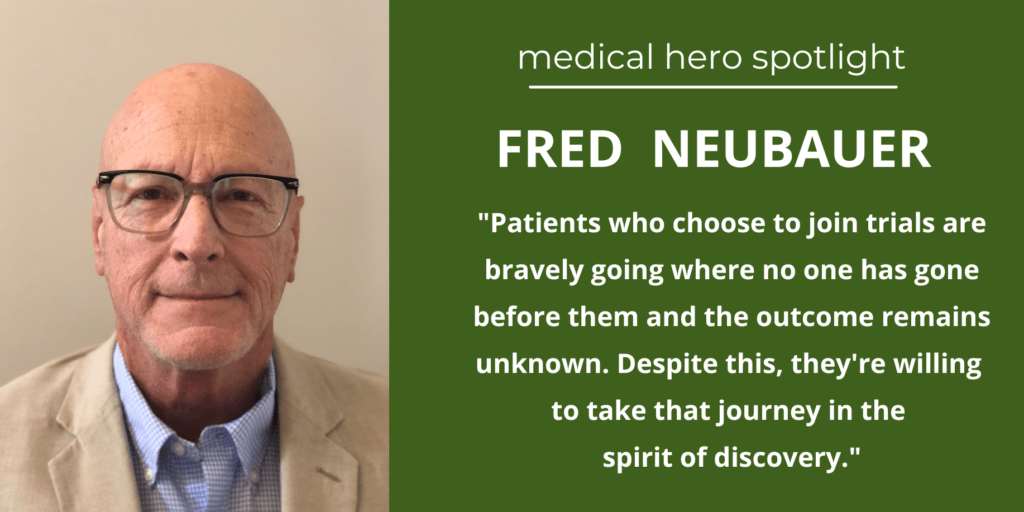
“I compare this process to being an astronaut. There’s a lot of brilliant people who could be astronauts, but you’re selected based on your commitment and bravery. Patients who choose to join trials are bravely going where no one has gone before them and the outcome remains unknown. Despite this, they’re willing to take that journey in the spirit of discovery,” Fred says.

To those considering enrolling in a clinical trial, Fred advises patients to educate themselves, review all their options, and get a second opinion if they’re not sure. He also encourages patients to assess themselves physically and mentally first, before speaking with a doctor. “Meeting certain medical criteria is important, but research teams need to look beyond blood work and assess individuals as a whole. If you’re thinking of joining a clinical trial, consider other factors such as your passion, mental fortitude, and the time commitment you are willing to give to a study,” Fred advises. “Make sure you are fully aware of all the risks, benefits, and what the process involves.”

Additional Resources:

https://cholangiocarcinoma.org/

https://www.ciitizen.com/

To search for medical conditions in a specific location, visit our Search Clinical Trials page.

To stay informed about clinical trials, visit our Resources page.

Volunteer opportunities with CISCRP, visit our Volunteer page.

Written by Lindsey Elliott, Marketing & Communications Manager, CISCRP | lelliott@ciscrp.org

Press Release: CISCRP Receives Innovation Award from FDA’s Office of Minority Health and Health Equity for Research Project on Pilot Mobile Community Engagement Initiative

Initiative Aims to Bring Clinical Research Education and Resources to Medically Underserved Communities

BOSTON, MA — The Center for Information and Study on Clinical Research Participation (CISCRP), a nonprofit organization dedicated to educating and informing the public about the clinical research process, has received a new award from the Food and Drug Administration’s Office of Minority Health and Health Equity (FDA OMHHE).  The OMHHE innovation award will fund a grassroots pilot research project titled “Evaluating Impact of Mobile Community Education Engagement Initiative on Perceptions and Behaviors Related to Clinical Research Among Underserved Populations,”  designed to offer and integrate educational programming and resources about clinical research into the heart of select underserved communities nationwide.

“We are excited to collaborate with CISCRP on this important pilot research project that meets communities where they are, so that everyone has an opportunity to learn and become more informed about clinical research,” said RDML Richardae Araojo, FDA Associate Commissioner for Minority Health and OMHHE Director.

Empirical research in peer-reviewed literature indicates that there has been underrepresentation of racial and ethnic minority populations in clinical trials conducted during the past two decades. Research also shows that low levels of awareness, lack of trust, and poor access to clinical trials are among the top causes of these disparities.

The research project hopes to identify practices that address these issues of underrepresentation through a coordinated, grassroots mobile community education and engagement campaign. CISCRP – in partnership with patient communities and health literacy experts – will develop an educational exhibit within a mobile RV, train local community liaisons and educators, and visit health and cultural activities in select urban centers in the U.S. Throughout the initiative, CISCRP will assess and report on the program’s impact and lessons learned.

“Our mission is to educate and engage with the public and patient communities where they live and learn, and to do so in collaboration with key individuals who reflect the communities,” said Ken Getz, CISCRP Founder and Board Chair. “We are very excited about this pilot project and, at its conclusion, hope to expand its scope nationwide.”

CISCRP has 20 years of experience developing and bringing award-winning grassroots clinical research education through the Journey to Better Health | AWARE for All program, and provides accessible, high-quality education and advocacy to the public and to patient communities.

About CISCRP

The Center for Information and Study on Clinical Research Participation (CISCRP) is a 501(c)(3) nonprofit organization dedicated to educating and engaging the public and patients as partners in the clinical research process. CISCRP provides free education, resources, and advocacy services to patients and the public. Visit www.ciscrp.org for more information. For additional questions about the mobile community engagement initiative, please contact Joan Chambers, jchambers@ciscrp.org, or Lindsey Elliott, lelliott@ciscrp.org.


To search for medical conditions in a specific location, visit our Search Clinical Trials page.

To stay informed about clinical trials, visit our Resources page.

Volunteer opportunities with CISCRP, visit our Volunteer page

Medical Hero Spotlight: Nia Grant, Type 1 Diabetes Clinical Trial Participant

Type 1 Diabetes Diagnosis

In 2007, Nia Grant was a senior at Spelman College, anxiously awaiting spring break so she could go on a trip to visit family in Florida. In the weeks leading up to the trip, Nia found herself struggling to sleep through the night and making frequent bathroom trips, which she attributed to the stress of midterms season as a college student.

 
On the 6-hour drive to Orlando, Nia’s symptoms only increased. “The longer we were in Florida, the worse I felt. We visited Disney, and I had to go to the bathroom constantly,” Nia recalls. It was in the middle of the night when Nia became nauseous and sick, and she and her family began to worry. The next morning, Nia’s sister drove her to the Emergency Room to be checked. “The nurse handed me a clipboard with intake forms to fill out and it was then that I realized I couldn’t see well enough to read the page,” Nia notes.

Assuming she had perhaps contracted food poisoning or another virus, Nia was tested and awaited results with her sister and friends. Eventually, Nia’s doctor visited her room and asked, “How long have you been diabetic?”

“That’s how I found out I had Type 1 Diabetes,” Nia explains. “I was so shocked. I called my mom on the phone and had the doctor tell her my diagnosis because I knew she wouldn’t believe me. She flew down to Orlando the next day.”

 
Nia remained in the ICU for a week recovering. There, she learned how to use insulin by first practicing on an orange before trying her own body. When she was released, she flew back to Atlanta to finish her senior year and began the journey of living with diabetes.

Finding Treatment

While the standard treatment for Type 1 Diabetes (T1D) is insulin, this is only one aspect of how Nia manages her condition. Food, exercise, and lifestyle choices are also important components that people living with Type 1 Diabetes must consider. “I’m lucky that I have such a strong support system and people in my life who have educated themselves about diabetes or who have it themselves. When I say, ‘I’m low’, I don’t have to explain to my friends what that means, which is nice,” Nia reflects. As with many chronic conditions, there are no days off from T1D and individuals living with the disease must be vigilant and make important choices to maintain their health. “I think it’s critical to remember the people behind the disease,” Nia advises. When Nia was first diagnosed, she sought out resources and support online, looking to existing diabetes advocacy and support groups. There, she made close friends and found a community that understood her condition and offered support and advice.

Getting Involved in Clinical Trials

Nia has been in several clinical trials, the first for an insulin pump four years ago. “I love clinical trials,” Nia gushed. “They are an opportunity for the average person to be involved in complex medicine.” Nia is a proponent of participating in clinical trials because of the need for diverse representation in these studies.

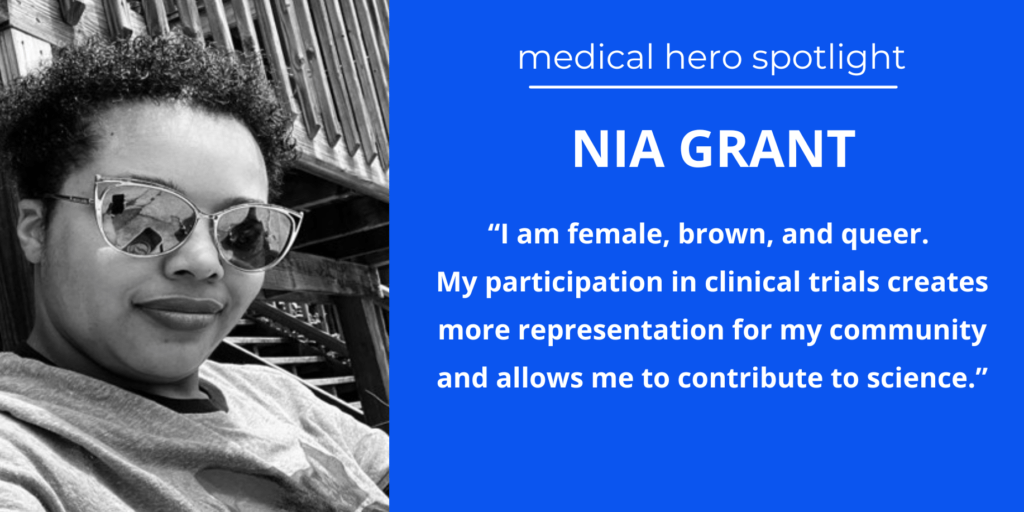
“A lot of times in clinical trials, you don’t see people who look like me. There’s a well-documented history of mistreatment of African American people in medicine. I am female, brown, and queer. My participation in trials helps to make the process more transparent and creates more representation for my community,” Nia explains.

Nia shares the important reminder that the more diversity in a trial, the better data can be collected and the better chance for treatments to be developed that are effective for all communities.

Although there are many important reasons Nia recommends participating in a clinical trial, she also acknowledges some of the barriers that can make participating difficult. “I live in Baltimore with a lot of great research institutions but was assigned to a hospital site in Virginia, 3 hours away from me. If a trial requires you to have visits in-person, that can take an entire day of driving and requires transportation, time off work, and in some cases childcare,” Nia notes. Another barrier for African Americans and other members of minority communities is the lingering fear and mistrust that still exists from past medical mistreatments. Nia admits that this fear still lingered in the back of her mind, but she pushed herself to take the step to participate and is glad she did. “It’s important to know that if you’re thinking about joining a trial, you have the right to ask as many questions as you’d like, in fact it’s encouraged. Clinical trial care teams want you to understand the process and make an informed decision,” Nia explains.


For anyone considering participating in a clinical trial, Nia advises, “Do it! I know that participating can sound scary or overwhelming, but this is your chance to contribute to science. The more data researchers have, the better data it is for the development of treatments and cures for you and members of your community. How cool is that?”

To search for medical conditions in a specific location, visit our Search Clinical Trials page.

To stay informed about clinical trials, visit our Resources page.

Volunteer opportunities with CISCRP, visit our Volunteer page

Written by Lindsey Elliott, Marketing & Communications Manager, CISCRP | lelliott@ciscrp.org

Wondering How to Take Charge of Your Health? Clinical Research Can Play a Key Role

For most of us, medication is a staple in our daily lives. Whether you’re taking Ibuprofen for a headache, Zyrtec for allergies, or picking up a prescription at the pharmacy to treat a more chronic condition, you are ultimately benefiting from the clinical research that made these treatments possible.

Clinical research plays an important role in the development of new treatments and the advancement of medicine, yet its role is not widely understood. That’s why CISCRP, a nonprofit organization dedicated to informing and sharing resources with the public, created our free health and wellness program, Journey to Better Health | AWARE for All.

Traveling to communities across the country, the Journey to Better Health Program’s next stop is in San Diego, where CISCRP will be hosting a free community health event on Oct. 6. This event will be held from 5-8 p.m. at the Scottish Rite Event Center.

Here’s why San Diegans should attend this upcoming health event:

  • Meet with 20+ local exhibiting organizations.

If you’re looking for specific resources for yourself or a loved one relating to a medical condition, our exhibit hall presents the perfect opportunity to make local connections and access free resources. Our exhibitors include a variety of organizations, including Alzheimer’s Association, The Scleroderma Foundation of California, American Liver Foundation, VA San Diego Medical Center, Pacific Research Network, and many more.

  • Receive free health screenings – no health insurance needed.

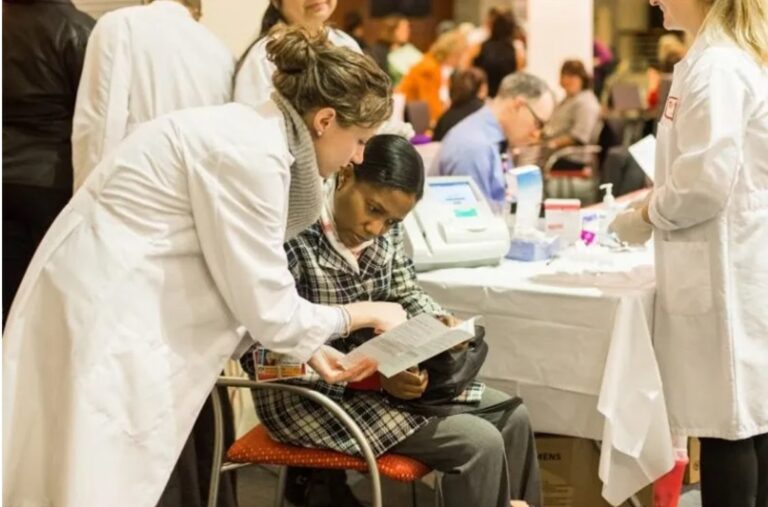
In addition to the resources offered by our exhibiting organizations, this event offers opportunities to receive free health screenings. Stop by the Sharp Research Institute’s table to learn more about their services and take a memory screening, or receive blood pressure and glucose screenings from Velocity Clinical Research. Rapid Hb1AC tests will also be available.

  • Hear what to expect when joining a clinical trial and how they are conducted.

If you’ve never been in a clinical trial, you may not know how the process works, what to expect, or even how to find a study you’d like to be a part of. Listen to an overview presentation that shares the basics of the clinical trial process, how they have been made safe for patients, the importance of diverse representation in clinical research, and how to decide if participating is right for you.

  • Listen to San Diegans share their experiences participating in clinical trials.

Without study volunteers and the healthcare professionals who oversee these studies, clinical research would not be possible. Hear from local community members who share their experiences participating in a trial in a panel discussion. Our panelists will share why participation is important to them, ways clinical research can be made more inclusive, and will take time to answer any questions attendees have.

  • Education is power.

When it comes to our health, the more knowledge we have about our options, the better choices we can make for ourselves or loved ones. Attending Journey to Better Health | AWARE for All – San Diego will provide attendees with vital informational knowledge about the health and wellness resources available to them, including clinical research participation.

Written by Lindsey Elliott | Marketing and Communications Manager, CISCRP

View this article published by Times of San Diego, here.

Learn more about CISCRP’s AWARE for All program and upcoming events here.

To search for medical conditions in a specific location, visit our Search Clinical Trials page.

To stay informed about clinical trials, visit our Resources page.

Volunteer opportunities with CISCRP, visit our Volunteer page