CISCRP Celebrates AWARE for All – London’s Inaugural Success

mills_141027-4089A crowded room of over 300 Londoners rose to applaud the final round of speakers at the Camden Centre on the evening of March 7, after the completion of CISCRP’s first-ever international AWARE for All event. A night filled with health checks, 25 informational exhibits, an engaging and informative keynote from a prominent NIHR director, and insightful panel conversations with local, redeemed clinical research professionals and study volunteers – it was a program unlike anything offered to the London public before.

Keynote speaker Simon Denegri, National Director for Public Participation and Engagement in Research, NIHR & Chair, INVOLVE, described this classic Town Hall style meeting of everyday people talking about clinical research as “open, democratic, [and] engaging.” … “It really felt like we were being encouraged to gather and talk about research whatever our perspective. Not to be lectured at,” he continued in his post-event blog post.

Local clinical researchers, university professors, and doctors engaged attendees in discussions about topics such as respiratory and mental health, Alzheimer’s and Parkinson’s diseases, and oncology, sparking numerous questions from audience-members who were eager to learn more about clinical research and how it helps shape the future of medicine. Local patients, too, shared their experiences participating in clinical trials – offering personal anecdotes about the informed consent process, risks and benefits of participation, and what it meant to them to contribute to clinical research.

Like CISCRP’s domestic AWARE for All programs in the U.S., the objective of this program was to instill some basic knowledge about the clinical research process in the minds of typical members of the London community, providing resources meant to assist with informed decision-making about clinical research participation and encouraging attendees to continue the conversation beyond just the 3-hour evening program – with family, friends, and their health providers.

Denegri touched upon this goal in his blog, writing, “if it’s sparked a conversation with their family about research over dinner or spurred them on to have a conversation with their doctor, then it will have done its job.”mills_141027-3900

This free public education program was made possible by support and community partnership from: Mecrk, ACRP, DrugDev, Synexus, EUPATI, EPF, Myeloma Patients Europe, Leukemia CARE, CML Advocates Network, Patvocates, and Langland.

CISCRP hopes to expand its international presence with the help of local collaborators and continue the conversation about clinical research with local European communities in order to build needed public awareness and general understanding of the clinical research process. In a region so rich with research activity, data shows there is little knowledge and willingness to participate among the general European public in regards to clinical trials.

What if you Could Change the Face of Clinical Trial Participation with a Great Idea?

CISCRP and INC Research will collaborate in hopes of generating new ideas from clinical research professionals on how to better engage patients and the public. In September 2016, the Ideathon will bring together industry leaders and pioneers along with advocacy groups to share new research initiatives, which aim to bring greater awareness to the importance of clinical trial participation in advancing public health.

“Without clinical trial participants, new medicines and discoveries simply wouldn’t be possible,” said CISCRP founder Ken Getz. “It is essential that we engage patients and their local health care community as partners in the drug development process. We are very excited about entering into this collaboration with INC Research to raise public awareness about clinical research, to educate the patient community and to ultimately strengthen our patient engagement.”

Clare Grace, PhD, Vice President of Site and Patient Access, INC Research, concurs with Getz’s assertion that increased patient engagement is vital to the progress of public health. “Continuing to make patients valued partners in the clinical research process is vital to accelerating the delivery of new medicines to market,” said Grace. “CISCRP has been doing great work in this area for more than a decade and INC Research is proud to support their efforts to further increase awareness of the critical role patients play in clinical research and the value that this research brings to the development of new therapies.” INC Research and CISCRP share the belief that if patients feel more connected with the clinical research community, misperceptions regarding clinical research and perceived barriers that may make a person hesitant about participating in suitable clinical trials can be better addressed.

CISCRP continues to work with a number of CROs and sponsors to raise awareness and provide education and outreach to patients and their families about the clinical research process. These collaborations, like the Ideathon, produce valuable patient engagement and patient centricity within the industry.

CISCRP Gains Meaningful Partnerships and Support for 2016 Medical Heroes Appreciation 5Ks

CISCRP’s Medical Heroes Appreciation 5K events continue to generate excitement among clinical research professionals around honoring study volunteers, and CISCRP is thankful for the growing number of partnerships as the spring event season kicks into full swing.

medhero5k_2016-14
Runners pass the start line at the Medical Heroes Appreciation 5K in Altanta

After a successful kick-off with our first Medical Heroes 5K of the year at the ACRP 2016 Meeting & Expo in Atlanta, the CISCRP events team feels fully charged for the third annual 5K in conjunction with DIA 2016 in Philadelphia.

“We’ve been pleased to receive such a warm and supportive reception from the clinical research industry, garnering sponsorship from a growing number of companies to fuel CISCRP’s education and outreach initiatives with patients and the public,” says Ellyn Getz, Senior Manager of Development, Fundraising and Events. With new support this year from ClinEdge, NeoLife, and the Consortium of Diversity in Clinical Research (CDCR), it’s rewarding to see even more of our industry stakeholders participating to improve patient outcomes and experiences.

Many supporters of CISCRP’s inaugural Medical Heroes Appreciation 5K at the DIA Annual Meeting in 2014 continue to back the cause as it grows and expands. We’re delighted to partner for the third year with the following organizations: Biogen, CenterWatch, Amicus Therapeutics, PMG Research, The Greater Gift Initiative, EMD Serono, WIRB Copernicus Group, Roche, ERT, and Chesapeake IRB – some of which are the 5K initiative’s biggest supporters.

medhero5k_2016-448
5K sponsor Chiltern’s team with their exhibit table in Atlanta

Event sponsors receive a wide variety of benefits including tabletop exhibit space at the event to promote their organization, logo placement on highly visible promotional materials, complimentary registrations for team members, and more. Sponsorship opportunities are still available for the third annual 5K held in conjunction with DIA 2016 in Philadelphia on June 27. Contact ellyngetz@ciscrp.org for more details.

We hope to see even more growth and buzz around these events as the initiative expands – with hopes for larger attendance at each 5K, increased involvement from the clinical research industry and local community, and onsite media coverage.

It’s time to lace up your sneakers — early bird registration is still open until May 27 – so act fast and register your team before prices increase!

Letter from the Editor, May 2016

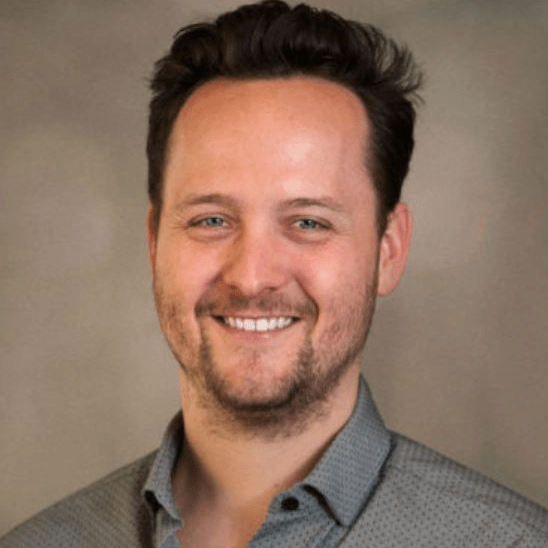
081814_danielle_47-e1435073232875Spring is finally here, and with it comes a time of growth and transition at CISCRP.

CISCRP’s Spring events season is now in full swing, after kicking off with a Medical Heroes Appreciation 5K at the ACRP 2016 Meeting & Expo which brought together clinical research professionals to walk or run in honor of study volunteers. The CISCRP Events team turns its energy now to the third annual 5K event in conjunction with DIA 2016 June 27 in Philadelphia. AWARE for All events continue to educate communities around the world, too, most recently with an international program in London and a follow-up program at Howard University in Washington, DC. The next stops for AWARE will be this Fall in Miami, New Orleans, and Irvine, CA.

CISCRP is also pleased to see growth in Patient Advisory Board Panels and the Communicating Trial Results program, garnering support across the industry from sponsors and CROs who are prioritizing patient centricity and transparency.

Additionally, a budding collaboration with INC Research has both organizations putting our heads together to host an “Ideathon” think-tank to generate new ideas for increasing public awareness and engagement in clinical research in September 2016.

In light of this time of growth at CISCRP, I’d like to close by extending a warm thank you to all of our supporters. Without your dedication and enthusiasm, our many programs and events would not be possible. I wish you all the best and hope you will keep CISCRP in your thoughts.

Until next time,

Danielle

Medical Hero Spotlight: Lee Giller

Clinical trials offer “cutting-edge treatments” and “another level of care”

Giller008For Lee Giller, participating in a clinical trial was the “best option” for his future and his children’s.


A business owner from Akron, Ohio, Lee was diagnosed with Stage II breast cancer in 2005 at the age of 48. Although Lee knew that men could get breast cancer, the diagnosis blindsided him. He’d assumed the lump on his left breast was a cyst, as he had a history of cysts. What’s more, as far as he knew, he had no family history of breast cancer.

When a dermatologist recommended he immediately see a surgeon about the lump, he remained unperturbed.  “Even the surgeon said, ‘I’m sure you are fine,’” he recalls. “Then he felt it, and I could tell from the look on his face that I wasn’t fine.”

Lee traveled to Boston where he underwent a single mastectomy. He returned to Akron for a regimen of chemotherapy and radiation and daily doses of tamoxifen.  Lee learned that his paternal grandmother had died from breast cancer and a genetic test showed he carried the BRCA1 gene mutation, as did two of his three children.

Despite the revelation, Lee responded well to his treatment and he was optimistic he could put his ordeal with cancer “in the rearview mirror.”

“Things were going along pretty well,” he says, but in late 2012 a routine scan found the cancer had come back and spread to his liver, bones and lungs.  “You get scared at that point,” he says. “You think you’re done with it and it comes back and it’s in other parts of your body. At that point I was willing to do anything.”

Lee’s wife, Kathy led the charge. She began searching for new doctors and alternative treatments. They consulted with doctors in Boston and Cleveland all of whom recommended participating in a clinical trial.

Kathy was skeptical. “My initial thought was that a clinical trial was your last line of defense,” she says. “But what we’ve really learned through all this is some of the most cutting-edge treatment is being done at the clinical-trial level.”

Lee signed up to participate in a double-blind placebo-controlled trial that involved treating participants with the BRCA1 mutation with either chemotherapy and an investigational agent called a PARP inhibitor and others with chemotherapy and a placebo.

kathy-and-lee-giller
Lee Giller and his wife, Kathy Giller.

Because Lee had recently sold his business, he and Kathy were able to travel to Pittsburgh every three weeks to participate in the trial. It was an arduous process: a two-hour drive, six hours of chemotherapy infusion, which would leave him feeling nauseous for a few days, capped by a two-hour drive home. In addition Lee took eight pills every day. Still, he says, “the care was tremendous. You seem to get another level of care when you’re participating in a trial, and you have more people watching you.”

Over the course of the next year Lee and Kathy made 16 trips to Pittsburgh. Quarterly scans showed his cancer was shrinking substantially. Unfortunately, during his 16th treatment, Lee experienced an allergic reaction to the chemotherapy.

“I started to itch all over,” he recalls. “They warn you that if that happens you have to tell them immediately because it can be life threatening.” Lee’s care team treated him with an antihistamine and he quickly recovered, but he had to withdraw from the trial as a result.

In the fall of 2015, roughly a year after he withdrew from the trial, Lee discovered his cancer had again spread, this time to his hips and bones. In early 2016 he was able to obtain the investigational PARP inhibitor on a compassionate use basis.

Looking back Lee says he’s glad he participated in the trial both for his own sake and for his children’s.
“I think it was my best option,” he says, but “I also have two children who have BRCA1 so anything I can contribute to science and to ending this disease I am happy to do.”

As for others who might be considering clinical trial participation, he offers this advice. “Talk to a wide range of doctors and feel comfortable about getting involved. Do as much research as you can. Once you feel comfortable, you should have no hesitation about getting into a clinical trial.”

To search for medical conditions in a specific location visit our Search Clinical Trials page.

To stay informed about clinical trials, visit our Resources page.

Medical Hero Story: Kaamilah Gilyard, Lupus Warrior

Talking about a health problem can be difficult, but when the problem is an autoimmune disease that causes the body to attack its own tissues it can be just as hard to keep quiet. Kaamilah Gilyard, 35, was first diagnosed with lupus at 17, but has traced back signs of the disease starting as young as 12-years-old, including the tell-tale butterfly face rash. Despite spending much of her teenage years quietly wondering what was causing her frequent ER visits and extreme fatigue – skipping classes to take naps – she’s been speaking up ever since.

“I am a living, walking example of what lupus is, what it looks like, and how it can affect someone. I want people to see me pushing through and staying positive so that if they’re suffering they keep pushing too,” she says.

It all began after her doctor recommended against going to college. Kaamilah refused to let her life’s adventures end at 18, so she applied anyway and wrote her college admissions essay about lupus. She went on to study at and graduate from Penn State, all the while making speeches and writing essays for courses about the condition’s effect on her.

“I have a big mouth, so I figured I might as well use it for good,” she says.

Kaamilah continues to share her inspiring words at a wide range of conferences and public speaking engagements, including CISCRP’s AWARE for All – New York event, the Lupus Research Institute (LRI) Lupus Trials Fair, and even in a congressional lupus caucus. She’s also heavily involved with the Alliance for Lupus Research, sharing her story in online videos and captaining teams for the organization’s annual walk for the past 7 years.

Kaamilah candidly shares her experience in clinical trials with other “lupus warriors” and those considering trial participation. “No man is an island,” she explains, saying she participates in trials not only for her potential benefit but also for her friends, family, and the millions of strangers who could benefit from her participation, too.

Her reason for getting involved in her first clinical trial, which she calls a “bright star” of her ten years living with lupus, was to help “take back the power” of her body. In her speech given at the LRI 2014 Lupus Trials Fair, she encouraged other patients to do the same, saying “we may have lupus, but lupus does not have us.”

She entered that study after one of the worst flare-ups in her life, following her doctor’s recommendation to participate and admitting that she’d “try just about anything” to feel better. For the next 3 years, she participated by taking her assigned pill and attending site visits for check-ups with a physician; including two years in the ‘open-label’ portion, during which she knew she was receiving the study drug. Even though she felt some improvement, she eventually left the trial due to the onset of lupus nephritis, or kidney inflammation.

“Everything happens for a reason though,” she says; the trial was terminated shortly after she left due to a lack of efficacy, meaning the researchers couldn’t prove that the drug was helping participants more than the standard treatments available.

Behind everything she does to advocate, Kaamilah says, is hope—for less flare-ups, for more “good” days, for the opportunity to live a “normal” (lupus-free) life, and most-of-all for researchers to learn more and someday cure the disease.

To search for medical conditions in a specific location visit our Search Clinical Trials page.

To stay informed about clinical trials, visit our Resources page.

Medical Hero Spotlight: Kaamilah Gilyard

Speaking Up and Sharing Hope for Lupus Warriors

Kaamilah 1Talking about a health problem can be difficult, but when the problem is an autoimmune disease that causes the body to attack its own tissues it can be just as hard to keep quiet. Kaamilah Gilyard, 35, was first diagnosed with lupus at 17, but has traced back signs of the disease starting as young as 12-years-old, including the tell-tale butterfly face rash. Despite spending much of her teenage years quietly wondering what was causing her frequent ER visits and extreme fatigue – skipping classes to take naps – she’s been speaking up ever since.

“I am a living, walking example of what lupus is, what it looks like, and how it can affect someone. I want people to see me pushing through and staying positive so that if they’re suffering they keep pushing too,” she says.

It all began after her doctor recommended against going to college. Kaamilah refused to let her life’s adventures end at 18, so she applied anyway and wrote her college admissions essay about lupus. She went on to study at and graduate from Penn State, all the while making speeches and writing essays for courses about the condition’s effect on her.

“I have a big mouth, so I figured I might as well use it for good,” she says.

Kaamilah continues to share her inspiring words at a wide range of conferences and public speaking engagements, including CISCRP’s AWARE for All – New York event, the Lupus Research Institute (LRI) Lupus Trials Fair, and even in a congressional lupus caucus. She’s also heavily involved with the Alliance for Lupus Research, sharing her story in online videos and captaining teams for the organization’s annual walk for the past 7 years.Kaamliah 2

Kaamilah candidly shares her experience in clinical trials with other “lupus warriors” and those considering trial participation. “No man is an island,” she explains, saying she participates in trials not only for her potential benefit but also for her friends, family, and the millions of strangers who could benefit from her participation, too.

Her reason for getting involved in her first clinical trial, which she calls a “bright star” of her ten years living with lupus, was to help “take back the power” of her body. In her speech given at the LRI 2014 Lupus Trials Fair, she encouraged other patients to do the same, saying “we may have lupus, but lupus does not have us.”

She entered that study after one of the worst flare-ups in her life, following her doctor’s recommendation to participate and admitting that she’d “try just about anything” to feel better. For the next 3 years, she participated by taking her assigned pill and attending site visits for check-ups with a physician; including two years in the ‘open-label’ portion, during which she knew she was receiving the study drug. Even though she felt some improvement, she eventually left the trial due to the onset of lupus nephritis, or kidney inflammation.

“Everything happens for a reason though,” she says; the trial was terminated shortly after she left due to a lack of efficacy, meaning the researchers couldn’t prove that the drug was helping participants more than the standard treatments available.

Behind everything she does to advocate, Kaamilah says, is hope—for less flare-ups, for more “good” days, for the opportunity to live a “normal” (lupus-free) life, and most-of-all for researchers to learn more and someday cure the disease.

To search for medical conditions in a specific location visit our Search Clinical Trials page.

To stay informed about clinical trials, visit our Resources page.

Medical Hero Story: Kyle Bryant & FA

When Kyle Bryant was diagnosed with Friedreich’s Ataxia (FA), a rare, progressive neuromuscular disorder, at age 17, he knew he had to do something, so he did the thing he knew best: he got on his bike.

He spent the first few years after his diagnosis challenging himself to achieve new personal records in cycling, both as a way of coping and proving to himself that he could still do what he put his mind to.

By the time he was 26, after riding from San Diego, CA to Memphis, TN, Kyle’s passion became so much more. That’s when the idea for rideATAXIA, a program of the Friedreich’s Ataxia Research Alliance (FARA), got wheels of its own. Kyle began organizing rides to fund FA research for his organization that now has locations in five states and plans rides across the country.

“Hearing there’s no treatment or cure was a huge blow, so cycling and fundraising became our therapy— how we dealt with the disease and continue to deal with it,” Kyle says. And even though Kyle had to trade in his standard bike for a more handicap-accessible Catrike 700 model, it hasn’t slowed him down.

The same gumption with which Kyle started rideATAXIA also led him to begin participating in clinical trials. In his early twenties, Kyle volunteered for his first trial; and while the inpatient study required him to stay in a hospital bed and get his blood drawn up to four times a day, he didn’t mind.

He references a saying in the FA community that the cure to the disorder is a “puzzle” – all of the pieces are out in the world but it’s up to the community of researchers, patients, families, and supporters to put them together. Sitting in that hospital bed giving blood, Kyle says, was his piece of the puzzle.

Kyle continues participating in trials, trying out new drug and therapy treatments. And although his personal health doesn’t always improve, he always considers his participation valuable.

“There’s a chance that these drugs could be therapeutic for me, but that’s not why I participate. I participate because I want to push the science forward. There is no way to get these trials done without participants. Even if these drugs aren’t helpful for me now, it will help find something in the future,” he says.

Participating in research gives Kyle hope, not only for himself but for future treatments and a potential cure for the disease that he’s built his life around fighting.

And he’s fighting alright— saying moderation “keeps us from reaching the extreme points of our potential.” And for someone who uses a wheel chair but still bikes cross-country and works out in a gym, he means it.

Already this year, he has biked up Mt. Evans, the highest paved road in the U.S., and says a European cycle tour could be next. As for clinical research, he will continue placing his piece in the puzzle, one rideATAXIA fundraiser and clinical trial at a time.

For more information about Friedreich’s Ataxia and rideATAXIA, please visit www.curefa.org.

To learn more about Kyle’s story, visit his website at www.kyleabryant.com.

UPDATE, January 2016: Kyle is honored and excited to be speaking at the third annual 2016 Patients As Partners conference in Philadelphia, PA this March. He will be speaking on a panel about patient networks and support programs. To hear from Kyle, along with other patients and clinical research professionals, register for the 2-day conference by visiting the Conference Forum webpage for more information.

To search for medical conditions in a specific location visit our Search Clinical Trials page.

To stay informed about clinical trials, visit our Resources page.

Medical Hero Spotlight: Kyle Bryant

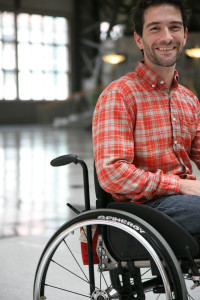
IMG_0705
Credit: Rick Guidotti

Getting the Wheels Turning for a Cure

When Kyle Bryant was diagnosed with Friedreich’s Ataxia (FA), a rare, progressive neuromuscular disorder, at age 17, he knew he had to do something, so he did the thing he knew best: he got on his bike.

He spent the first few years after his diagnosis challenging himself to achieve new personal records in cycling, both as a way of coping and proving to himself that he could still do what he put his mind to.

By the time he was 26, after riding from San Diego, CA to Memphis, TN, Kyle’s passion became so much more. That’s when the idea for rideATAXIA, a program of the Friedreich’s Ataxia Research Alliance (FARA), got wheels of its own. Kyle began organizing rides to fund FA research for his organization that now has locations in five states and plans rides across the country.

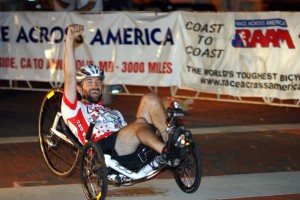
Catrike_700
Blake Andrews, SLOtography.com

“Hearing there’s no treatment or cure was a huge blow, so cycling and fundraising became our therapy— how we dealt with the disease and continue to deal with it,” Kyle says. And even though Kyle had to trade in his standard bike for a more handicap-accessible Catrike 700 model, it hasn’t slowed him down.

The same gumption with which Kyle started rideATAXIA also led him to begin participating in clinical trials. In his early twenties, Kyle volunteered for his first trial; and while the inpatient study required him to stay in a hospital bed and get his blood drawn up to four times a day, he didn’t mind.

He references a saying in the FA community that the cure to the disorder is a “puzzle” – all of the pieces are out in the world but it’s up to the community of researchers, patients, families, and supporters to put them together. Sitting in that hospital bed giving blood, Kyle says, was his piece of the puzzle.

Kyle continues participating in trials, trying out new drug and therapy treatments. And although his personal health doesn’t always improve, he always considers his participation valuable.

“There’s a chance that these drugs could be therapeutic for me, but that’s not why I participate. I participate because I want to push the science forward. There is no way to get these trials done without participants. Even if these drugs aren’t helpful for me now, it will help find something in the future,” he says.

Credit: Karen O’Brien

Participating in research gives Kyle hope, not only for himself but for future treatments and a potential cure for the disease that he’s built his life around fighting.

And he’s fighting alright— saying moderation “keeps us from reaching the extreme points of our potential.” And for someone who uses a wheel chair but still bikes cross-country and works out in a gym, he means it.

Already this year, he has biked up Mt. Evans, the highest paved road in the U.S., and says a European cycle tour could be next. As for clinical research, he will continue placing his piece in the puzzle, one rideATAXIA fundraiser and clinical trial at a time.

For more information about Friedreich’s Ataxia and rideATAXIA, please visit www.curefa.org.

To learn more about Kyle’s story, visit his website at www.kyleabryant.com.

UPDATE, January 2016: Kyle is honored and excited to be speaking at the third annual 2016 Patients As Partners conference in Philadelphia, PA this March. He will be speaking on a panel about patient networks and support programs. To hear from Kyle, along with other patients and clinical research professionals, register for the 2-day conference by visiting the Conference Forum webpage for more information.

To search for medical conditions in a specific location visit our Search Clinical Trials page.

To stay informed about clinical trials, visit our Resources page.

Read the next article >>

Medical Hero Story: Jonathan Sari & MS

Clinical research participants have myriad motivations. They seek relief from pain. They want to help future generations. They want to fight back against their diseases.

Jonathan Sari says his reason for participating in clinical research is more fundamental: it is his only hope.

Jonathan, a video game developer, first realized something was wrong on a beautiful summer day in 2003 at the age of 33. He’d taken a short hike with friends near his home in Walnut Creek, California, when his legs gave out beneath him.

“I couldn’t stand,” he recalls. “It wasn’t as if my legs were just tired or my muscles were sore. My legs wouldn’t hold me. I fell down and couldn’t stand up until I had rested. It was clear something was wrong.”

Doctors conducted numerous tests, but it was more than a year before Jonathan was diagnosed with multiple sclerosis (MS), a disease in which the immune system attacks the myelin sheath and nerve fibers of the central nervous system. Over time Jonathan’s condition steadily deteriorated despite medication. It became apparent his disease was not following the typical relapsing–remitting pattern of MS, but the far less common primary-progressive course.

Because, he says, “there are no really good mediations for progressive MS right now and the medications out there have really problematic side effects,” Jonathan was eager to participate in clinical research. Unfortunately, most MS research is directed at the relapsing-remitting variation. What’s more progressive MS is difficult to study. Because the rate of decline can differ dramatically from one individual to the next, researchers must study a large group of patients to establish whether or not an investigative treatment has slowed the disease’s progression.

Still, Jonathan has sought out trials where ever he can. He participated in a 10-year longitudinal study to identify genetic markers of the disease and in two trials studying investigative treatments.

The first trial was a placebo-controlled study investigating the effectiveness of fingolimod, a drug used to treat people with relapsing-remitting MS. For almost a year Jonathan underwent frequent MRIs, physical tests to determine his strength and coordination, and cognitive tests to assess his brain function, but he ultimately withdrew from the trial because his condition continued to deteriorate. He still doesn’t know whether he received the investigative drug or the placebo.

Roughly a year later he signed up for a Phase 1 trial that was attempting to regrow myelin, the fatty material that insulates nerves and enables them to conduct impulses between the brain and different parts of the body. Jonathan received a one-time IV infusion of a new antibody. Because he was one of the first participants to undergo the treatment, the dosage was very low and researchers monitored his reaction around the clock for 48 hours.

While participating in the earliest stage of human research might give some pause, Jonathan embraced the opportunity and hopes to participate in future research that might involve myelin regrowth. He is also on a long waiting list to participate in a stem cell trial.

For him, clinical research is life.

“I was excited and glad to participate,” he says. “It’s quite hard to find trials for progressive MS and because my disease has progressed so far, I’m not a candidate for most trials,” he says candidly.

Today, Jonathan lives in Seattle. He is confined to a wheelchair having lost functional movement in his legs and hands. If he wants to be heard he must rely on a ventilator. He knows time and his disease are working against him, and so he continues to search for clinical trials that may help him slow their relentless progression.

“I just wish we could simplify and streamline the process for getting these trials done. I only have so much time left,” he says. “For me it’s a race against the disease.”

To search for medical conditions in a specific location visit our Search Clinical Trials page.

To stay informed about clinical trials, visit our Resources page.