Behind the Scenes of Health Literacy at the Movies

In October, CISCRP’s Health Literacy team worked with a Top 25 pharmaceutical company, to create an infographic celebrating Health Literacy Month, marking the second year of this collaboration. Last year’s materials included an infographic with tips for implementing health literacy best practices and a health literacy crossword puzzle. This year’s infographic contains an exercise to help readers brush up on their health literacy knowledge and think about the importance of keeping health literacy front-of-mind.

CISCRP creates many materials designed to improve health literacy, including videos and brochures. While the general education these provide is important, it is also important to understand the concepts behind their creation. In these Health Literacy Month materials, we unpack what health literacy means, how health literacy principles can be put into practice, and who is responsible for facilitating health literacy. Stay tuned for a look behind the scenes at the concepts highlighted in this infographic.

The theme of the infographic is health literacy at the movies. Health literacy issues appear even where we may not think to look for them, like in our favorite movies. For this Health Literacy Month, we challenged readers to notice and consider how health literacy is depicted in their favorite entertainment media.

Why health literacy at the movies?

Films are a great way to engage with health literacy because of the emotional connections created through storytelling. The empathy we feel for characters allows us to engage with health literacy issues more deeply. The separation of the screen provides us with a safe environment to experience health literacy issues along with the characters, while also giving us the opportunity to step back and look at the big picture.

What is health literacy?

It’s important to remember that health literacy has two dimensions: personal and organizational.

Personal health literacy is the degree to which individuals have the ability to find, understand, and use information and services to inform health-related decisions and actions for themselves and others.

Organizational health literacy is the degree to which organizations equitably enable individuals to find, understand, and use information and services to inform health-related decisions and actions for themselves and others.  

In this infographic, we used movies to offer a bird’s-eye view of the intersection between personal and organizational health literacy in the lives of characters onscreen. This infographic focuses on a few key concepts related to health literacy: decision making, organizational health literacy, and health equity. Each of these concepts is the focus of a different part of the exercise, chosen to encourage health professionals to think about health literacy as a shared responsibility between individuals and organizations.

Let’s start the show!

For this exercise, readers are asked to pick a health literacy issue faced by a character in any movie , whether it is part of the main plot or a small moment. We encourage the audience to engage with health literacy through the entertainment that is interesting to them, whether that means identifying an issue faced by an action hero, sitcom character, or dramatic lead. We designed this exercise to work for any situation, from a character’s cancer treatment to an accidental injury or misuse of medication.

In the first part of this exercise, we highlighted the ability to use information and services to make health-related decisions. Conversations about health literacy often focus on readability and understanding, but the ability to use information and services to make decisions is just as important.

The second part of this exercise asks readers to think about whether the narrative they’ve chosen acknowledges the impact of both personal and organizational health literacy. It was especially important to spotlight organizational health literacy for industry professionals, to get them thinking about the many different stakeholders that play a part in improving personal health literacy for individuals.

In the third part of this exercise, we highlighted health equity and the social determinants of health. The concept of health equity is necessary for understanding the intersection between personal and organizational health literacy. In order for organizations to facilitate personal health literacy, there must be acknowledgement and understanding of varying needs and barriers across different communities. Efforts to improve health literacy are not benefitted by a one-size-fits-all approach but rather by strategies that improve access and opportunities to those who need it most.

Adding some movie magic
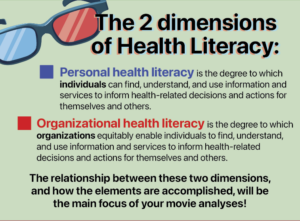
The Health Literacy team at CISCRP enjoyed thinking creatively about how to engage a professional audience in this health literacy exercise. One of the most enjoyable parts of the development process was incorporating movie theater imagery into the visual design to draw the audience in. We particularly enjoyed the creation of a health literacy superhero and the visual pun evoking 3D movie glasses that we used to introduce the two dimensions of health literacy. These elements are not just about having fun, but also about organizing content into digestible chunks, an important step for supporting health literacy.

Here’s a word from the Senior Director of the pharmaceutical company with their thoughts on Health Literacy at the Movies:

We were delighted to work with CISCRP to create materials for Health Literacy Month. We partnered with CISCRP because of their expertise in health literacy education, their creative approach, and their experience in tailoring materials to specific audiences. Our pharma company is dedicated to supporting health literacy education and awareness throughout our organization, and we look forward to continuing this partnership with future educational materials.

At CISCRP, it is always our goal to create materials that encourage education. We designed this health literacy refresher to get health professionals to think about health literacy in new ways, both by encouraging them to notice the influences of health literacy all around them and to think about the intersection of personal and organizational health literacy. In this way, the next time they’re at the movies or even catching up on their favorite show, they might think about their organization’s role in health literacy, health equity, and individuals’ agency—not only that of their favorite characters, but of people in our world, too.

Written by: Nina Treese

View Full Infographic Here

The Importance of Diversity in Clinical Trials – Video

To develop therapies and treatments for everyone, it is important that clinical trial participants come from diverse backgrounds and identities. In this video, subject matter experts, inclusive of people who have participated in trials, explain why diversity is important in clinical trials and what is being done to improve representation. In addition, the past participants share their personal trial stories and highlight potential benefits for their communities.

This video was developed with feedback from subject matter experts, patients, and community advocates involved in diversifying clinical research. They all helped to make sure the topics, language, images, and design of this video is appropriate, educational, and engaging for audiences.    

This video was also reviewed by an Institutional Review Board (IRB), which is also known as an independent ethics committee. The IRB review ensures the video follows ethical guidelines for providing information about clinical research to patients and the public.

Watch Spanish version here.

In Collaboration With:

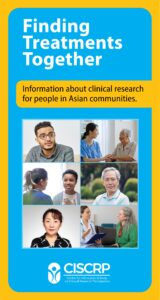
Clinical Research for People in Asian Communities

CISCRP is committed to providing clear, unbiased, and culturally appropriate educational materials to engage and inform communities that have not been well represented in clinical trials.

We developed this brochure together with members of Asian communities, as well as subject matter experts who have experience working with these communities. This included receiving feedback from 500 members of the Asian community through an anonymous survey.

They all helped make sure the topics, language, images, and design are appropriate and engaging. We also received feedback on how effective our brochure was for raising awareness about the importance of Asian participation in clinical research.

This process allowed us to confirm that we are addressing the key concerns and barriers that prevent better diversity, equity, and inclusion in clinical research. This brochure was also reviewed by an Institutional Review Board (IRB), which is also known as an independent ethics committee. The IRB review ensures the brochure follows ethical guidelines for providing information about clinical research to patients and the public. The alternative text and accessibility features in this brochure were added after IRB review.

Topics include:

  • Why are Clinical Trials Important?
  • The Need for Diverse Participants in Clinical Trials
  • Why Asian Communities Have Not Been Represented in Clinical Trials?
  • How Asian Participants are Protected
  • Things to Consider Before Volunteering
  • Different Ways to Get Involved

How CISCRP Made Tools for Informed Decision Making

Guiding Informed Decisions

It’s an all too familiar story – a patient receives a new diagnosis of a rare disorder. But now, they are told that there is a clinical trial option available. However, their lack of knowledge about clinical trials concerns them. In another case, a pediatric patient receives a new diagnosis and is offered an opportunity to participate in a clinical trial. Similarly in this case, the parents or caregivers of this child are not familiar with clinical trials. An important decision needs to be made in both scenarios.

Unlike the scenarios described above, most Americans have never faced a personal decision about whether to participate in a clinical trial. Of those who are invited, less than half choose to participate. There can be many reasons for this; the choice to participate or not is deeply personal. It means thinking about things like finances, family, current and past social injustices, and values, among other things.

Well before the need arises to access trial treatments, people should learn about the clinical research process, how to partner with researchers generally, and what it means to participate in trials. Even after learning about trials by reading brochures, and watching videos for adults or children, the process of making a decision may remain unclear. Making this kind of “informed decision” — one that looks at a complex decision from all angles — is hard under the best circumstances. When the choice involves personal health, or the health of a loved one, it can feel overwhelming. So, the team at CISCRP has developed brochures to address questions about clinical research and help guide the decisions of potential clinical trial participants. More examples of stories and articles can be found here, here, here, here, and here.

Developing the Brochures

CISCRP’s Health Literacy Team thought a lot about what goes into the decision to take part in a clinical trial — and what tools can help make the decision process easier — when we developed 2 new educational brochures on the topic.

The first brochure, titled “Should I Participate in a Clinical Trial?”, is for people weighing the pros and cons of taking part in a clinical trial. It includes questions that people may want to consider asking themselves, a healthcare professional, and trusted family and friends before making a decision. The brochure also serves as a resource for healthcare providers, community and faith leaders, family members, and anyone else helping potential trial participants navigate this process.

The second brochure, titled “Should My Child Participate in a Clinical Trial?”, is designed to help parents and caregivers of children who have been asked to join a pediatric clinical trial. As we wrote in a recent blog post, children have different healthcare needs and rights than adults, including different rights to make medical decisions. Parents and caregivers are tasked with making big decisions (like ones about trial participation) on their child’s behalf. Sometimes, a child might agree to join a clinical trial, but a parent or caregiver is still undecided. This means having to consider multiple perspectives at once.

The Importance of Empowering Patients as Health Literacy Professionals

As health literacy professionals, our goal with both projects was to improve the ability of individuals to find, understand, and use information and services to make health-related decisions. We emphasize this point because all materials we create, including these brochures, are planned with care to be non-promotional and unbiased. The brochures share user-friendly information to help participants, potential participants, and the public make the decisions that are best for them, and that benefit everyone and help improve the research process.

In these brochures, we aimed to address the unanswered questions people may have: What does it mean to be in a clinical trial? What does it mean to “weigh risks and benefits”? And how can I make sense of all the information coming my way?

Providing cognitive tools and points to consider helps guide the decision-making process, making it a more empowering and less overwhelming process. Additionally, we worked with patients, advocates, and subject matter experts (SMEs), who reviewed and provided input on both brochures. This helped us ensure the appropriate information and tools were included.

Conclusion

Our hope with these educational brochures is to not only empower patients or caregivers to make informed decisions, but also encourage providers and study teams to start open conversations with potential participants to help make decisions. And, we welcome conversations about other tools and information that could help patients during the clinical research process. How else can we empower patients and the public to make more informed decisions and partner with the research community to improve clinical trials?

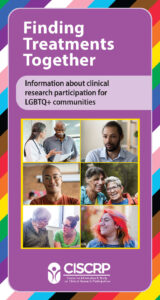
Clinical Research Participation for LGBTQ+ Communities

CISCRP is committed to providing clear, unbiased, and culturally appropriate educational materials to engage and inform communities that have not been well represented in clinical trials.

Purchase Single/Quantity Brochures at our Store

We developed this brochure together with members of the LGBTQ+ community, as well as subject matter experts who have experience working with these communities. This included receiving feedback from 500 members of the LGBTQ+ community through an anonymous survey.

They all helped make sure the topics, language, images, and design are appropriate and engaging. We also received feedback on how effective our brochure was for raising awareness about the importance of LGBTQ+ participation in clinical research.

This process allowed us to confirm that we are addressing the key concerns and barriers that prevent better diversity, equity, and inclusion in clinical research. This brochure was also reviewed by an Institutional Review Board (IRB), which is also known as an independent ethics committee. The IRB review ensures the brochure follows ethical guidelines for providing information about clinical research to patients and the public. The alternative text and accessibility features in this brochure were added after IRB review.

Topics include:

  • Why are Clinical Trials Important?
  • Why LGBTQ+ Volunteers are Needed
  • How LGBTQ+ Participants are Protected
  • Things to Consider Before Volunteering
  • Questions to Ask Before Participating in a Clinical Research Project
  • Learn More About Clinical Research

Cooking up Fresh Treatments for Food Allergy Patients

We are in the midst of a food allergy epidemic.

In the United States, an estimated 32 million have a serious, potentially life-threatening food allergy. The number of emergency claims for treating anaphylaxis to food increased by 377% from 2007 to 2016.

There are no approved treatments for food allergy. Allergists advise patients to avoid problem foods and always carry epinephrine to treat dangerous symptoms. However, according to a recent survey of food allergy patients, more than half reported mental health concerns related to anxiety because of this.

The good news is that hope is on the horizon. Prospects for food allergy treatment are at various stages of development.

Allergen immunotherapies 
Many allergy treatments involve giving patients the food proteins they’re allergic to, starting with tiny amounts, and raising the dose over time to increase tolerance. For some, immunotherapy successfully retrains their immune system — they can tolerate the food they were allergic to even after stopping treatment. Others can still tolerate allergens as long as they eat the food each day after completing oral immunotherapy. Some patients remain sensitive to their allergen and some leave treatment due to adverse reactions including hives, swelling, and vomiting.

Methods for food allergen immunotherapies can include eating the problem food, placing dissolved food protein under the tongue, and absorbing food protein from a patch on the skin. Nasal spray food protein vaccines are being studied in mice. Researchers have also safety tested a vaccine containing peanut DNA in adults. Two peanut protein immunotherapies have completed clinical trials and another is being reviewed by the U.S. Food and Drug Administration for approval.

Other developments
Researchers have made remarkable progress recently in developing anti-allergy drugs created from immune proteins called antibodies. These biologic drugs specifically block the chain of events that cause allergy symptoms. Some are already approved to treat other allergic diseases like asthma and eczema, and they are now being tested to treat food allergies, both as standalone treatments and in combination with food-allergen immunotherapies. This is a pivotal moment in food allergy research. We have never been closer to offering effective treatments, and the need for those treatments has never been greater. Investing in innovative therapies, diagnostics, and prevention will pay dividends in protecting public health.

Written by:
Thomas Casale, M.D.,
Chief Medical Advisor for Operations, Food Allergy Research & Education (FARE)

To search for medical conditions in a specific location, visit our Search Clinical Trials page.

To stay informed about clinical trials, visit our Resources page.

Volunteer opportunities with CISCRP, visit our Volunteer page.

Why Participation in Clinical Trials Is a Must for Hispanics

According to UnidosUS, the largest national Hispanic civil rights and advocacy organization in the United States, less than 1% of Latinos participate in NIH funded health research.

Without clinical trials, “we’ll never push forward,” said Gigi Lozano, Ph.D., a professor and chair of the department of genetics at The University of Texas MD Anderson Cancer Center.

Dr. Lozano spends every day in a science lab conducting tumor studies on mice. She’s confident these studies and other medical research will lead to breakthroughs in cancer.

The value in diversity

Clinical trials need ethnically diverse participants so scientists and doctors can develop a greater understanding of how diseases like cancer impact different people of different backgrounds.

“It’s critical people of all backgrounds participate in these trials because what works for one won’t work for another,” said Dr. Lozano, a longstanding member of the Stand Up to Cancer Scientific Advisory Committee, helping guide the non-profit’s science portfolio and reviewing its research grants.

The impact of genetics

Dr. Lozano knows genetics play a significant role in whether or not cancer cells develop.

“Culture and environment are two big factors that impact how tumors develop and how they grow,” she said, noting some families have an inherited predisposition to a particular disease.

“In the Mexican American population, they have some genetic predisposition… there’s a propensity for diabetes and also a propensity for liver cancer, and we don’t understand that,” she said.

Hispanic participation in clinical trials can help researchers figure out how to track, treat, and ultimately prevent these illnesses.

“[If] we can identify the drivers of the disease,” Dr. Lozano said, “then we can understand [how] to undermine their activities [in order] to kill the tumor cell.”

She says many clinical trials are now based on understanding the genetics of a tumor, picking drugs that fit those genetics, and then seeing what changes happen.

Helping Hispanics

Lack of awareness and hesitation to get involved may be barriers to Latino participation in clinical trials. Language can play a role, too, since most clinical trials are in English.

Still, Dr. Lozano encourages Hispanics to participate in clinical trials for themselves and for the next generation.

“It’s going to help your people. It’s going to help others in your situation,” she said. “It might be your neighbor or a child in your community.”

Written by Kristen Castillo

To search for medical conditions in a specific location, visit our Search Clinical Trials page.

To stay informed about clinical trials, visit our Resources page.

Volunteer opportunities with CISCRP, visit our Volunteer page.

Clinical Trial Participants’ Selfless Gift to Medicine

Each year, millions of people make the courageous decision to participate in clinical research and become partners in the process of developing new medical treatments. We call these brave individuals “medical heroes” because they have given the extraordinary gift of their participation in the ongoing battle to understand, fight, and cure disease.

Medical heroes can be found everywhere. They are parents, grandparents, siblings, children, friends, colleagues, and ordinary people who have chosen to give the extraordinary gift of participation in clinical research. Their decision to participate is a selfless act, an altruistic gift; there are always risks but no guarantee that an investigational treatment will work. Still, medical heroes help us as a society gain valuable knowledge about the nature of disease, its progression, and how — and how not — to treat it. Future generations are ultimately the direct recipients of this gift. 

Most people — particularly those in underserved communities — are not aware of, and may not have easy access to, clinical research. Most stumble upon clinical trials when faced with the sudden and often unexpected prospect of a serious and debilitating illness for which no medication is available or adequate. Typically, patients, their families, friends, and their healthcare providers must gather information quickly to make decisions about whether and where to participate. This rush to navigate the unfamiliar terrain of clinical research can be overwhelming and confusing.

Raising awareness

In 2004, the Center for Information and Study on Clinical Research Participation (CISCRP) was founded to provide outreach and education to those individuals considering participation in clinical trials. This special nonprofit organization focuses its energy and resources on raising general awareness, on educating patients and the public, and on enhancing study volunteer experiences during and after clinical trial participation. 

Ken Getz

Founder and
Chairman, CISCRP

Our many events and services are designed to improve public and patient literacy, to engender feelings of empowerment and control, to ensure more informed decision-making, to recognize and appreciate medical heroes, and to engage them as partners in the clinical research process.

 At the present time, nearly 4,000 experimental drugs and therapies are in active clinical trials, and that number continues to grow as improvements are made in detecting disease, in discovering new medical innovations, and in understanding and addressing the root causes of acute and chronic illnesses. At the very heart of all this promising activity are medical heroes to whom we owe our deepest appreciation for their profound gift of participation.

To search for medical conditions in a specific location, visit our Search Clinical Trials page.

To stay informed about clinical trials, visit our Resources page.

Volunteer opportunities with CISCRP, visit our Volunteer page.

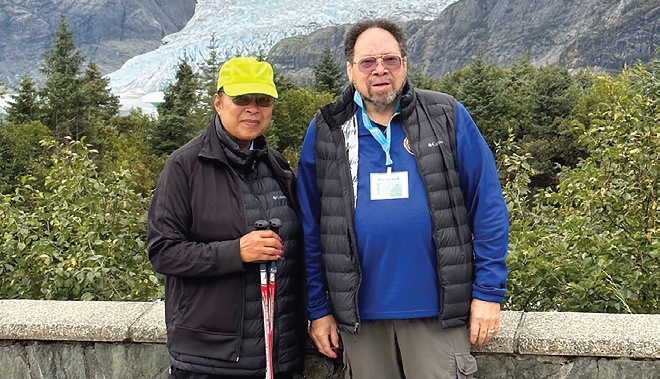
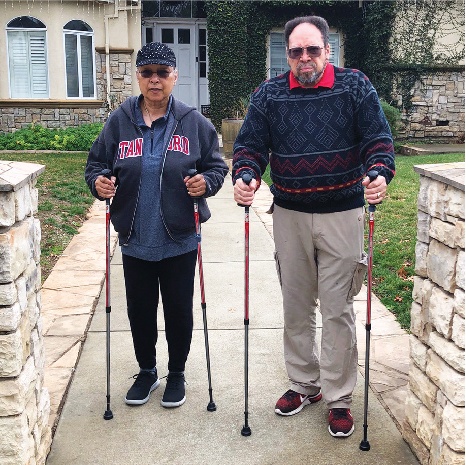
The Couple That’s Empowering Communities of Color to Participate in Parkinson’s Disease Clinical Trials

When Denise Coley started shaking one Thanksgiving, her family became concerned. What followed was a Parkinson’s disease diagnosis that spurred an empowering journey she’s still on today.

Parkinson’s disease (PD) is a chronic, progressive movement disorder that occurs when nerve cells in the brain don’t make enough dopamine, a chemical that typically helps the body to move easily and with coordination.

Denise Coley, 70 years old and a grandmother of four, was diagnosed in January 2018. She thought her life was over. She had balance issues, trouble walking, stiffness, problems with motor skills, insomnia, and fatigue. She had a “pity party” for herself but didn’t let the disease, which doesn’t have a cure, keep her down for long. Instead, after a long career in supplier diversity consulting and community outreach, she decided to commit to pro-viding education and support to others with PD.

“I just had to take everything that I had from the past — my education, my resources, my experience giving back — and become an advocate to bring awareness to this disease,” Coley said.

Cultural awareness

“Denise got the diagnosis, but the fam-ily got Parkinson’s disease,” explained Denise’s husband and care partner, Bernard. “Parkinson’s affects not just the patient, but all those around the patient, and especially the immediate family.

Denise has resources to manage her disease, as well as the support of her family, but she knows not everyone with PD is as fortunate. She and Bernard are PD research advocates, especially for Black PD patients and other people of color. They took courses from a learning institute and got empowered as PD patient, caregiver, and now, advocates. They know there are disparities in health that people of color experience, including lack of access, late diagnosis, and lack of cultural awareness in service providers.

The Parkinson’s and Movement Disorder Alliance (PMD Alliance) says Black patients have a higher risk of death from PD compared to white patients. A delayed diagnosis is a significant cause of this, with patients often being further along in disease progression. Further, PMD Alliance says more clinical trials need to report their participants’ racial composition, since current data shows that less than 2% are Black.

That’s why the Coleys, who have been married for 46 years, spent two years assisting the compiling of, “The PD Movers, We Keep Moving: Living and Thriving with Parkinson’s Disease in our Black and African American Communities,” a culturally sensitive e-book for outreach to the Black com-munity. They say the community needs to get engaged and increase awareness about PD, and stories in the e-book highlight the challenges and opportunities someone with the condition faces in a culturally sensitive way.

Clinical research

Denise, who’s participated in many clinical trials, wants to live her best life. For her, it means being able to engage with her grandchildren. She does Rock Steady Boxing and tai chi, which help improve her balance and motor symptoms.

The couple wants clinical trials to recruit more people of diverse back-grounds, and to get people of diverse backgrounds to help design and review the clinical studies as well.

“We are one diverse patient away from solutions to various medical conditions that are out there in the world,” said Bernard.

Next, the Coleys are doing a Black learning initiative with community outreach and engagement. They are sharing stories of people with Parkin-son’s disease to help engage the com-munity. They say without engaging and addressing culture, it will be difficult to recruit people from the community to participate in clinical trials. 

Their work is having an impact: “We’re putting a pebble in the water, and all those concentric circles are getting more and more people involved and educated,” says Denise.

Written by Kristen Castillo

To search for medical conditions in a specific location, visit our Search Clinical Trials page.

To stay informed about clinical trials, visit our Resources page.

Volunteer opportunities with CISCRP, visit our Volunteer page.

The Clinical Trial Challenge: Boosting Clinical Trial Appeal in Patient Communities – Part 2

Part 2 of 2 Part Series

Clinical research is critical to progress towards new treatments and cures for all diseases. But engaging patients in clinical trial participation is often an uphill battle. Rare Patient Voice President Wes Michael and patient advocate Amy Gietzen discuss the results of a new RPV survey exploring factors that could make participation of greater interest to patients and family caregivers. This webinar is part two of a two-part flash webinar series, The Patient Journey in Clinical Research.

View the webinar below.

Panelists:

Wes Michael | Panelist
President, Rare Patient Voice

Amy Gietzen | Panelist
Patient Advocate, Columnist, and Public Speaker