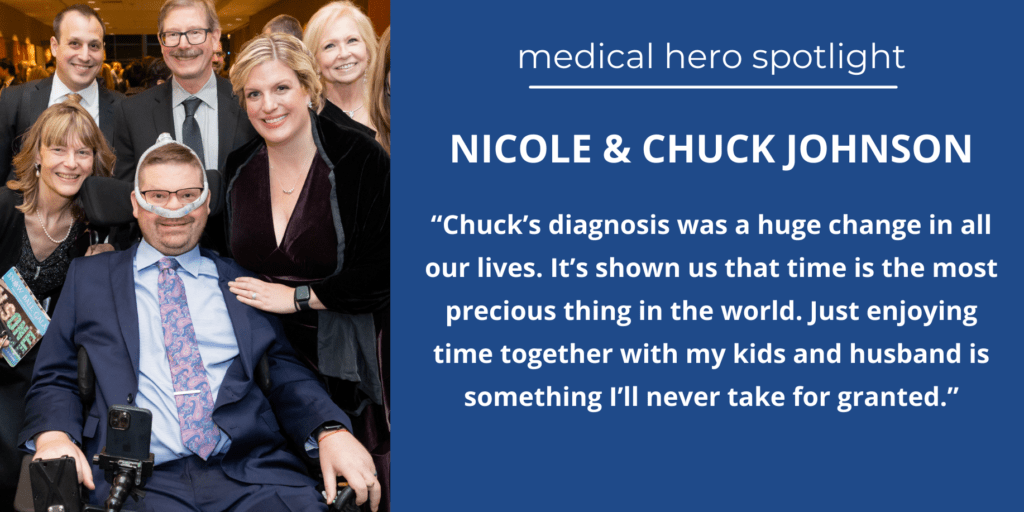
Medical Hero Spotlight: Nicole & Chuck Johnson, Navigating ALS

Chuck and Nicole Johnson were out celebrating her 37th birthday in June 2023, when Chuck mentioned his hands had been shaking during dinner. Nicole was somewhat concerned, but Chuck reassured her that it ran in his family and wasn’t anything serious.


Married for five years and parents to two toddlers, the couple was excited about expanding their family. Their hopes turned into joy when Nicole discovered she was pregnant that September. However, only a month later, Chuck began to realize that something was seriously wrong.


One morning, while singing “The Wheels on the Bus” with their two-year-old daughter, he struggled to lift her in the air—something that had never been difficult for the 6’5” former collegiate football player. This marked the beginning of a series of troubling health issues.

A Search for Answers
“I remember I had just finished a Teams call for work when he came into my office to talk,” Nicole recalled. “He told me he had lost 30 pounds since the summer without trying, felt weak, and was experiencing more frequent and noticeable muscle fasciculations.”

That moment set them on an intense diagnostic journey. Chuck couldn’t get an appointment with his primary care physician for several months, so they turned to a CVS MinuteClinic for initial bloodwork. The results showed abnormal liver enzymes. Concerned, Nicole urged Chuck to send the results to his doctor, who then found an earlier appointment for him. Further bloodwork led his doctor to suspect a liver issue, but that didn’t explain the muscle fasciculations. Eventually, the Johnsons were referred to a neurologist at Beth Israel Deaconess Medical Center in Boston. After an evaluation, the general neurologist suspected Chuck was in the early stages of ALS, though more testing was needed for confirmation.


Through the holiday season and into the new year, Chuck endured eight weeks of extensive testing to rule out other conditions with a neuromuscular specialist. On February 14, 2024, he was officially diagnosed with limb-onset, sporadic ALS.


From that moment, Chuck and Nicole’s daily lives changed drastically as they adjusted to his evolving health and treatment needs.

A Life-Altering Diagnosis

The next six months brought immense changes and challenges. In the final months of her pregnancy, Nicole juggled processing Chuck’s diagnosis, scheduling his care and treatments, acquiring necessary medical equipment, working full-time, coordinating childcare for their two kids, and preparing for their newest arrival.


“It was overwhelming,” Nicole admitted. “I barely had time to stop and process everything—there was just so much to do.”


Hope for treatment was quickly met with roadblocks. Chuck was immediately given the standard of care treatment approved for ALS, but the Johnsons had also started looking into innovative clinical trials. The HEALEY ALS Platform trial at Massachusetts General Hospital (MGH) where Chuck was receiving care, had already reached enrollment capacity. Other local trials were unavailable due to Chuck’s elevated liver enzymes. The couple considered traveling for other trial opportunities, but with Nicole’s pregnancy, it wasn’t a feasible option.


In May, they welcomed their youngest daughter, Jenna, into the family. By that time, Chuck was using a motorized chair, and his health continued to decline. His breathing difficulties eventually led to a stay in the ICU at the end of the summer, and his lung capacity dropped below the threshold for any clinical trial eligibility.

“Unfortunately, this situation is common for those with a fast-progressing disease,” Nicole shares. “Many people become ineligible for traditional clinical trials, and it can cause families to feel hopeless.”

However, in October 2024, Chuck was granted access to an investigational drug through the Expanded Access Program. Unlike standard clinical trials where participants may receive a placebo, this program ensured he received the actual treatment. Though not a cure, the oral medication is helping to slow the decline of his ability to speak and eat, providing more stability for the family in the short-term.

Finding Community Support

Since Chuck’s diagnosis, the Johnson family have relied on their network of friends, family, healthcare aids, and their community to provide the support needed to manage each day. The family has hired a caregiver who is with them full-time, as well as an au pair from Colombia who joined them this past year to help with any childcare needs. There’s nearly always another member of the family staying over the house as well to help with preschool drop-off/pick-up so Nicole can get some sleep.


For Nicole, coordinating the different care needed for her family involves a lot of planning.

“Sometimes I feel like a cruise director or the family CEO, with the level of project management that goes into planning our lives,” she laughs. “Luckily, organization is one of my strong suits.”

The Johnsons have also found community and support from local advocacy groups. Organizations like the Pete Frates Foundation, ALS One, and Compassionate Care ALS have offered grants, equipment, and emotional support. These groups have provided essential resources like a shower chair and Hoyer transfer lift, as well as opportunities for the family to participate in community events, raising awareness and funds for ALS research.


Nicole and Chuck have also become actively involved in advocacy, sharing their story at events like the ALS One Snowball gala in March 2025.

Treasuring Every Moment

Today, Chuck remains a dedicated father to his three children, despite his challenging journey with ALS. The kids love spending quality time with their dad by riding on his wheelchair, helping to feed him Oreos (while sneaking some for themselves), finding ramps in public places for him to use, and taking fun trips in the family’s new wheelchair accessible van.

“This was a huge change in all our lives, but they’ve adapted so well. It’s really showed Chuck and I that time is the most precious thing in the world, worth more than any material things,” Nicole says. “Just enjoying time together with my kids and husband is something I’ll never take for granted.”

To keep up with updates from the Johnson family, visit their website: https://makewayforchucklings.com/

To search for medical conditions in a specific location, visit our Search Clinical Trials page.

To stay informed about clinical trials, visit our Resources page.

Written by Lindsey Elliott, Marketing & Communications Manager, CISCRP | lelliott@ciscrp.org

Women in Clinical Trials

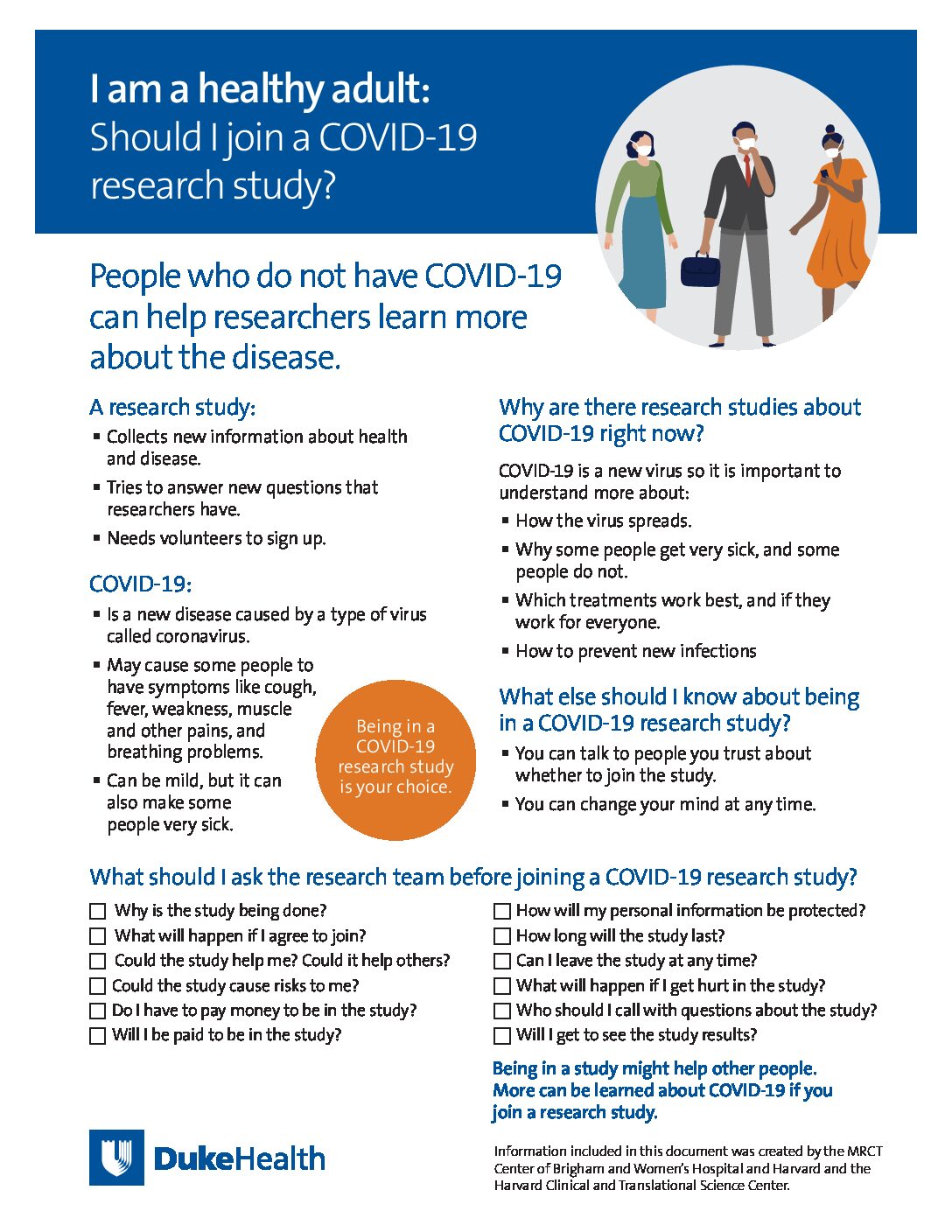
We developed this infographic to highlight the importance of women participating in clinical trials.

This infographic was reviewed by an Institutional Review Board (IRB), which is also known as an independent ethics committee. The IRB ensures the brochure follows ethical guidelines for providing information about clinical research to patients and the public.

Input Needed On Using AI To Create Lay Summaries Of Trial Results

Lay summaries (LS) of clinical trial results play a critical role in improving transparency and accessibility in medical research by transforming complex scientific information into understandable content for the public and patients. Under the European Clinical Trial Regulation (EU CTR) 536/2014, clinical trial sponsors must publicly provide an LS within one year of a trial’s completion (within six months for pediatric trials). With the EU CTR now in effect, there is increased demand to create LS as efficiently as possible.

AI has emerged as a promising tool to increase the efficiency of LS creation and reduce resourcing, particularly through the use of large language models (LLMs). However, the application of AI in LS requires careful oversight and thoughtful integration to ensure that patient-facing content remains accurate, unbiased, and culturally sensitive.

Background And Development Of The Considerations Document

AI offers a range of opportunities for improving LS development:

  • Efficiency: AI can reduce the time required to draft summaries, allowing organizations to deliver clear, patient-friendly content more quickly.
  • Consistency: Automated processes can help ensure uniformity in tone and structure across summaries.
  • Accessibility: AI models trained in plain language principles can support health literacy.

Despite these benefits, the challenges of using AI in LS cannot be overlooked:

  • Accuracy: AI may misinterpret complex clinical data or introduce factual errors (e.g., AI hallucinations). Proper human oversight is necessary.
  • Bias: AI systems can replicate and amplify biases present in their training data.
  • Transparency: Undisclosed AI involvement in creating LS could erode public trust.
  • Ethics and Compliance: Ensuring compliance with privacy regulations and ethical standards is essential when deploying AI in patient-facing communications.

To address these challenges, the considerations document emphasizes a balanced approach: AI should complement, not replace, human expertise. Every AI-generated LS should undergo thorough review and validation by qualified professionals to ensure accuracy and relevance.

The considerations document outlines six key points to guide responsible AI use in LS development:

  1. Humans Must Be in the Loop: AI should augment, not replace, standard LS processes. Human involvement is crucial in areas such as model development, review and revision, and health literacy refinement. Existing personnel roles remain vital, with AI experts playing a newly integrated role.
  2. Researcher Involvement: Collaborating with researchers ensures accurate interpretation and plain language communication of results. While AI can expedite LS creation, expert oversight mitigates risks of misinformation or misinterpretation.
  3. Data Privacy: AI tools must respect data privacy by using aggregated rather than individual data, adhering to established reporting standards.
  4. Disclosure of AI Use: Transparency about AI involvement is essential to maintain public trust. Clear guidelines outline where, when, and how AI use should be disclosed.
  5. Trust: Ensuring accuracy, consistency, and the absence of bias is critical to maintaining credibility. Misinformation or biased outputs can harm public confidence.
  6. Technology Considerations: AI systems evolve rapidly, necessitating governance through internal standards, testing, monitoring, and continuous improvement to align with ethical and regulatory standards.
Public Comment Period: An Opportunity To Shape Best Practices

The public comment period is a vital step in refining the considerations document. Your feedback as clinical research professionals, medical writers, patient advocates, or technology experts is crucial to ensuring that the recommendations are comprehensive, actionable, and applicable across diverse contexts.

Comments are invited from a wide range of stakeholders, including research professionals, patients, and advocacy groups. Reviewers can provide input via an online survey hosted on the CISCRP website. The survey allows for detailed comments on specific sections of the document as well as general feedback. Respondents are also encouraged to identify their stakeholder group(s) to provide valuable context for their input.

How To Participate

The public comment period runs until February 18.

  1. Review the Document: The draft document is available on the CISCRP website for download.
  2. Provide Feedback: Use the online survey to submit your comments. The survey includes fields for line-specific feedback, proposed revisions, and general observations.
  3. Share the Opportunity: Spread the word within your networks to ensure broad participation from diverse perspectives.
Following the close of this period, all feedback will be reviewed and adjudicated by the working group. Insights from the comments will inform revisions, and the final document will be publicly released as a resource for the clinical research community.
Looking Forward

AI holds significant promise for advancing the development of lay summaries, but its use must be guided by principles of accuracy, transparency, and ethical responsibility. The considerations document represents a collaborative effort to establish a framework for responsible AI integration in LS processes. Your input is invaluable to ensuring this resource meets the needs of all stakeholders and supports the ultimate goal of improving patient and public understanding of clinical research results.

We encourage you to participate in this public comment period and contribute your expertise to this important initiative. Together, we can ensure that the use of AI in lay summary creation is both innovative and responsible, fostering greater trust and transparency in clinical research.

Note: Generative AI was used to assist with the creation of the first draft of this article.

Acknowledgements:

The authors are members of the working group developing the “Considerations for the Use of Artificial Intelligence in the Creation of Lay Summaries of Clinical Trial Results.” This article represents the current thinking of the group and the outcomes of the group’s work. The authors thank and acknowledge the respective contributions of all work group members. 

About the Authors

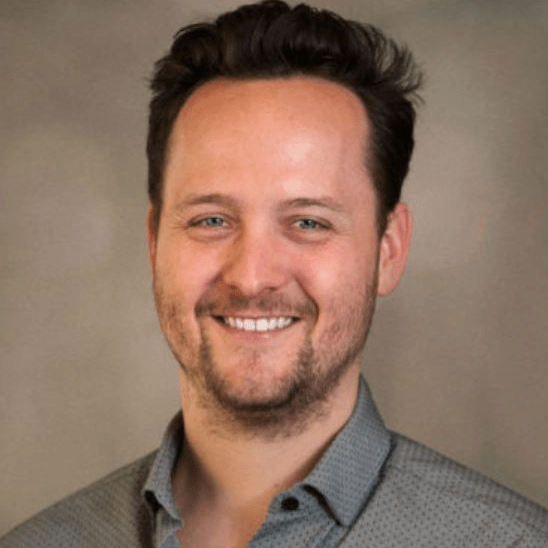
Behtash Bahador, MS is the director of health literacy at the nonprofit organization CISCRP and holds a Master of Science in health communication from the Tufts University School of Medicine. Since 2014, he has collaborated with a range of stakeholder groups to establish and implement patient- and community-centric initiatives across the life cycle of clinical research.

Behtash Bahador

Kim Edwards, Ph.D. is the senior director of health communication services at CISCRP, where she oversees the creation of easy-to-understand trial resources for patients, participants, and the public. Kim earned her BS in neuroscience from Trinity College and her Ph.D. in developmental and brain sciences from the University of Massachusetts Boston.

View Editorial on Clinical Leader.com here.

Public Discussion on Considerations for Use of AI in Lay Summary Creation

Hear from representatives of a multi-stakeholder working group that has drafted a good practice considerations document on the responsible use of Artificial Intelligence (AI) in creating plain language trial results summaries (PLS), also known as lay summaries (LS).

The considerations document covers key areas of concern, and recommended practices in the procedural use of AI and governance elements to ensure appropriate human involvement. Technical aspects of AI development and management are not covered.

In this webinar, speakers share the background of this initiative, discuss the purpose and goal of the public comment period, and raise some of the key considerations in the document.

Featured Speakers

Ken Getz

Moderator, CISCRP

Sudipta Chakraborty

Clinical Trial Transparency Lead, Biogen


A Guide to Oncology Clinical Trials

If you or someone you know is considering taking part in an oncology clinical trial, this brochure is for you. It is intended to help you understand what oncology trials are, and what you can expect should you or a loved one enroll.

Purchase Single/Quantity Brochures at our Store

We developed this brochure together with subject matter experts, patient advocates, and members of the public, to make sure the topics, language, images, and design are appropriate and engaging.

This brochure was also reviewed by an Institutional Review Board (IRB), which is also known as an independent ethics committee. The IRB review ensures the brochure follows ethical guidelines for providing information about clinical research to patients and the public.

Topics Include:

  • Introduction to oncology clinical trials
  • What kind of questions do researchers want to answer?
  • What types of treatments are being researched?
  • What happens in oncology trials?
  • What are the possible risks and benefits?

Medical Hero Spotlight: Kimberly Dorris, Graves’ Disease Patient Advocate

Diagnosed with Graves’ Disease

In 2007, during a routine checkup, Kimberly Dorris received abnormal bloodwork results indicating lower-than-average levels of thyroid stimulating hormone (TSH). She was referred to an endocrinologist who, after conducting further tests including an ultrasound and radioactive iodine uptake and scan, diagnosed her with Graves’ disease.

“At the time, the diagnosis was surprising,” Kimberly recalls. “But looking back, I realize I had many of the classic symptoms but attributed them to other causes.”

At the time, Kimberly had been struggling with insomnia and tremors, which she chalked up to stress from her fast-paced job and too much caffeine consumption. She also experienced muscle weakness and weight loss but had not thought they were caused by an underlying illness.

Later, Kimberly would learn that this is a common experience for people living with undiagnosed Graves’ disease. Many mistake the symptoms for stress, menopause, or other illnesses – while others are misdiagnosed with depression or anxiety.

Choosing a Treatment Plan

Graves’ disease is an autoimmune condition where the immune system mistakenly attacks the thyroid’s TSH receptors. This causes an overproduction of the TSH hormones, resulting in hyperthyroidism and its associated symptoms.

Treatment options for hyperthyroidism caused by Graves’ disease include medication to regulate thyroid hormones, surgical removal of the thyroid, or radioactive iodine treatment to destroy thyroid tissue. At the time of Kimberly’s diagnosis, antithyroid medication and radioactive iodine were the two primary treatments. “Nobody was talking about thyroidectomy as a front-line treatment option back then.”

“Neither option sounded great,” Kimberly says. “The antithyroid medication came with potential side effects. My doctors made radioactive iodine sound easy: ‘destroy your thyroid, so you’ll have hypothyroidism instead, and then take another pill to balance out your levels.’ However, the reality is more complex for patients. The connection between RAI and thyroid eye disease wasn’t widely known back in 2007.”

When it came time to choose between medication and radioactive iodine treatment, an unlikely factor influenced the decision: Kimberly was about to leave on a vacation. Before scheduling an RAIU test or radioactive iodine treatment, Kimberly’s doctor required a low-iodine diet (LID) for two weeks. This diet is standard for differentiated thyroid cancer patients prior to treatment with RAI, but is not as commonly recommended for Graves’. The diet deprives the thyroid of iodine so that it is more receptive to treatment when it begins. For two weeks prior to the RAIU test, Kimberly prepared all her meals from scratch to ensure minimal iodine consumption. Kimberly told the doctor that she wouldn’t be able to start the LID until she returned home. She was given a prescription for a generic antithyroid medication for the duration of the trip to stabilize her levels, which gave her time to consider long-term treatment options.

“The methimazole started as a temporary treatment, but it turned out to be a really good thing,” Kimberly recalls. “The medication got me to a place where I felt better and could think more clearly about my treatment. I was doing very well on the medication, so I chose to continue with it after coming home and stayed on the drug for seven years.”

By 2014, Kimberly was successfully weaned off treatment, achieving normal thyroid levels. However, this stability only lasted for two years before she began experiencing symptoms of hypothyroidism.

“I have been having a long, slow slide into hypothyroidism for the last several years, which happens to about 15% of patients,” Kimberly explains. “Managing Graves’ disease becomes a balancing act where we are constantly being monitored to ensure we stay between hyperthyroidism and hypothyroidism without sliding into either.”
Becoming A Full-Time Advocate

About a year after her diagnosis, Kimberly attended a large patient advocacy conference from the National Graves’ Disease Foundation (now the Graves’ Disease & Thyroid Foundation) to learn more about Graves’ disease and connect with others in the community. From there, she became an active member of an online message board, sparking her interest in deeper involvement. She eventually became a support group leader for the GDATF and established a local group in her home state of Arizona.

In 2010, Kimberly took on an opportunity to do contract work for the foundation and later transitioned into the full-time role. Today, she serves as the Executive Director & CEO of the GDATF.

“The foundation has really grown since its start in 1990, now serving as a supportive community for newly diagnosed patients and as a credible resource of information,” Kimberly says. “Many people who find out they have Graves’ disease or thyroid eye disease will immediately turn to Google for answers, but wading through so much information can be overwhelming – and in many cases, can be dangerously inaccurate. GDATF ensures all the information shared with patients is vetted and recommended by doctors.”

Exciting projects are underway at the GDATF, including the completion of a 24-page print newsletter, intended to share with community members and distribute at conferences. Kimberly recently co-hosted a two-part webinar with the foundation’s founder, Nancy Hord Patterson, focusing on patient survey results about thyroid eye disease. Funded by Amgen (formerly Horizon Therapeutics), the survey explored patient experiences with various treatment options and the emotional impact of the disease.

“The survey findings shed light on the emotional challenges faced by thyroid eye disease patients, which is something physicians must acknowledge and address,” Kimberly notes. “For many, the physical changes caused by the disease can make social interactions stressful and exacerbate mental health issues like anxiety and depression.”

Advice for Patients

Drawing from her personal experiences navigating the healthcare system and her ongoing work supporting the Graves’ disease and thyroid community, Kimberly offers valuable advice to patients:

Know your family history.

“After my diagnosis, I learned my grandmother had a thyroid issue earlier in her life,” Kimberly shares. “I also had a cousin diagnosed with thyroid cancer. Patients struggling to receive a diagnosis should share as much information as they can about family history, even if it seems unrelated. I didn’t know then, but Graves’ disease and other autoimmune disorders tend to cluster in families, so if there is a history of different autoimmune disorders like rheumatoid arthritis, multiple sclerosis, and lupus among your family members, that is important to tell doctors.”

Understand your treatment options, including the risk and benefits of each option.

“Make sure your doctor is thoroughly explaining all treatment options, including their risks and benefits,” Kimberly advises. “Patients who educate themselves early on about their condition and treatment options are better equipped to understand their doctors’ recommendations and to make the decision that is right for them.”

Ensure your information comes from a credible source.

“With countless opinions and alternative treatments promoted online, newly diagnosed patients should consult their doctor or reputable organizations like the GDATF or the American Thyroid Association for reliable information,” Kimberly recommends.

Don’t be afraid to seek help for mental health issues.

“A Graves’ diagnosis can be emotionally challenging. Symptoms often mimic anxiety, depression, or panic disorder,” Kimberly acknowledges. “It’s essential for individuals living with Graves’ disease to seek mental health support if needed, rather than attributing all symptoms to their thyroid. Whether through an experienced counselor or participation in support groups, patients should not hesitate to seek help.”

Resources:

https://gdatf.org/ 

To search for medical conditions in a specific location, visit our Search Clinical Trials page.

To stay informed about clinical trials, visit our Resources page.

For volunteer opportunities with CISCRP, visit our Volunteer page.

Written by Lindsey Elliott, Marketing & Communications Manager, CISCRP | lelliott@ciscrp.org

Journey to Better Health Mobile Exhibit 2023

Journey to Better Health is a mobile exhibit that showcases clinical research information to local communities in a fun, interactive way. In Fall 2023, the exhibit traveled to Philadelphia, PA and Baltimore, MD advocating for the importance of participation in clinical research and the critical need for more diverse representation.

Medical Hero Spotlight: Noa Greenwood, Canavan Disease Clinical Trial Participant

Canavan Disease Diagnosis

Lee and Lori Greenwood welcomed their daughter Noa in August 2020. Born full-term and seemingly healthy, Noa’s first weeks of life passed without issue. However, at around 8 weeks old, Noa began crying much more than the average baby. Concerned she might have colic or a reflux problem, the Greenwoods took her to the pediatrician. Noa’s doctor determined she did not have colic but couldn’t identify the underlying issue.

Soon after, Lee and Lori noticed that Noa wasn’t responding to lights or movements and worried she had vision loss. “She wasn’t looking at us — she was almost looking through us,” Lee recalls. Around the same time, Noa stopped gaining weight and dropped from the 89th percentile to the 26th percentile in her age group.

Referred to an ophthalmologist, they again found no clear answer to Noa’s symptoms, and she continued to miss developmental milestones.

When she began struggling to swallow, the Greenwoods pushed for a consultation with a neurologist, initially meeting via Zoom. “Noa’s neurologist was wonderful,” Lori says. “She originally suspected hydrocephalus and recommended we bring her into the office. However, I could tell from her reaction to Noa that something else was going on.”

Noa was then scheduled for an MRI, which unfortunately took several months of waiting due to the pandemic. In the meantime, she received early intervention care via Zoom calls with different specialists.

In August 2021, a few weeks before her first birthday, Noa’s MRI appointment revealed that she had Canavan disease, a progressive, fatal, genetic disorder affecting the central nervous system.

“We received the news on Zoom,” Lee recalls. “Lori and I joined a video call having no idea that doctors were about to tell us our beautiful little daughter had a fatal disease with a life expectancy of around 10 years.”
Finding Community Support

After Noa was diagnosed, Lee and Lori began researching the disease, seeking information and support online. They found a patient advocacy organization based in Boston that supports children with Canavan and related diseases. This organization helped connect them to relevant Facebook groups and the Canavan community.

“Everyone has been incredibly supportive. They have all experienced the same diagnosis and understand what it’s like. Being involved in this community and patient advocacy has been immensely helpful for us,” Lori says.
Clinical Trial Referral

For most patients, clinical trial participation is only mentioned by doctors after standard treatment options are exhausted. However, there is currently no cure for Canavan disease and the only treatment is palliative care. For such an ultra-rare disease affecting only 1,000 children across the U.S. and the EU, research studies are hard to come by.

The day Noa was diagnosed with Canavan, a new clinical trial became available at Massachusetts General Hospital in Boston, only 30 minutes from the Greenwood’s home. Noa was immediately referred by her neurologist, and within weeks the family was in contact with the trial coordinator.

“Everything came together in a serendipitous way. The timing was right, the location was so close to us, and Noa met all the eligibility criteria to qualify for the trial, which many kids don’t,” Lee says. “It’s funny to think of yourself as fortunate when facing a disease like Canavan, but we really are.”

Since clinical research was one of the only ways Noa might be successfully treated for Canavan disease, Lee and Lori decided that joining a trial for gene therapy was the best choice for their family.

Starting Gene Therapy

Gene therapy corrects genetic information that causes illness by replacing a faulty or missing gene with a genetically engineered ‘vector’. In recent years, gene therapy has been transformative across many diseases.

Before starting treatment, Noa and her family spent a lot of time at doctors’ appointments and in the hospital for the screening process. Noa had multiple MRIs under anesthesia to ensure she would be suitable to receive this type of treatment.

In June of 2022, when Noa was almost 2 years old, she received treatment in the Canavan trial using gene therapy. Noa spent about a week in the hospital afterward and then took steroids for about six months. She continues to be monitored and has regular check-ins with her care team.

Patient Advocacy Work

Before Noa began the trial treatment for Canavan disease, Lee and Lori already understood the complexities of navigating clinical trials and the healthcare system through research and their backgrounds.

“Clinical trials can be complicated and intimidating for patients and their families, especially when there’s a power dynamic between patients and doctors that can make asking questions difficult. Many people, particularly in underserved communities, face additional barriers like language and cultural differences that we don’t,” Lori explains.

Since Noa’s participation in clinical research began, the Greenwoods have made it their mission to raise awareness for Canavan disease and empower other patients to ask questions and advocate for themselves.

“By sharing our experiences, we hope to help others feel more confident in navigating the medical system. We’re fortunate to have a supportive care team and feel a responsibility to share our journey to benefit others, not just Canavan families but anyone involved in the medical field. By sharing our story, we aim to remind those working in research of the real people they are helping,” Lee says.

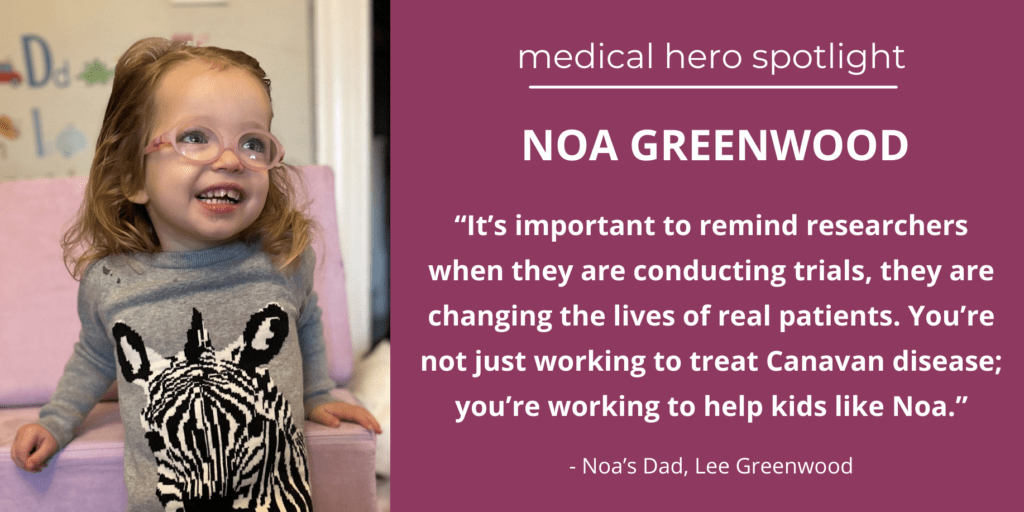
“It’s important to remind researchers that when they are conducting trials, they are changing the lives of real patients. You’re not just working to treat Canavan disease; you’re working to help kids like Noa.”
Life Today for Noa & Her Family

Today, Noa is currently in the second year of the five-year clinical trial, and for the Greenwood family, the results have been incredible.

“When we found out Noa had Canavan, we never imagined that her life could be the way it is now,” Lori says. “We are so proud of her!”

Today, Noa’s parents describe her as a sweet and affectionate toddler who can walk independently, is learning her ABCs and how to count, and goes to public school every day with other children her age. Just two years ago, Canavan disease would have made these milestones unreachable for Noa.

The Greenwoods share that they are proud of Noa’s participation in the research that may one day cure Canavan’s disease, even if her treatment today is only the first step.

“We have had an amazing experience in the clinical trial with Noa so far, but we understand the nature of this disease. There is so much uncertainty   her progress could reverse unexpectedly at any time,” Lee notes.
“But through this experience, we have gotten so much better at learning to embrace the current moment as parents. Regardless of what happens in the future, no one can take away the joy I’ve had seeing Noa grow and thrive the last  two years, which wouldn’t have been possible without the trial.”

Additional Resources:

https://www.umassmed.edu/news/news-archives/2023/07/family-connects-with-researchers-behind-canavan-gene-therapy/

https://www.canavan.org/

To search for medical conditions in a specific location, visit our Search Clinical Trials page.

To stay informed about clinical trials, visit our Resources page.

For volunteer opportunities with CISCRP, visit our Volunteer page.

Written by Lindsey Elliott, Marketing & Communications Manager, CISCRP | lelliott@ciscrp.org

Medical Hero Spotlight: Michael Herman, Multiple Myeloma Clinical Trial Participant & Patient Advocate

Abruptly Diagnosed: Facing Multiple Myeloma

In the Fall of 2012, Mike Herman and his wife Angela were taking their daily walk with their dogs through the neighborhood. When Mike dropped his glasses and bent down to pick them up, he felt a sharp pain, much like walking into the corner of a counter. He assumed it may have been a pulled muscle, and tentatively moved on until it happened again a couple weeks later. This time, Mike was at work and had gone to pick some files up off the floor when the same pain started again. Although he didn’t know it at the time, the pain was caused by multiple micro-fractures.

At the doctor’s office, Mike was referred to a hematologist who believed he had a vitamin B12 deficiency and recommended he go home and take some supplements. “I was so lucky that day to have my wife with me who is a nurse and has a lot of experience navigating the healthcare system,” Mike recalls. “Angela insisted it was not a B12 deficiency and said we would not be leaving with that diagnosis, which was what finally pushed them to order a bone survey. That same afternoon, I was X-rayed from head to toe, which is how the microfractures were found.”

About a week later, Mike noticed an email in his medical portal with test results. He assumed this was good news about his health issues and never imagined he would receive a diagnosis without a phone call.

“I opened the message and must have read it ten times. I thought I must have been missing something, so I called my wife and read it to her,” Mike says. “When she hesitated, I realized that this was real and that I had cancer.”
Finding the Right Doctor

After receiving his diagnosis for multiple myeloma, Mike’s doctors started him on the standard treatment of chemotherapy.

“At that time, the only thought in my head was the fear of dying. I had been told that the life expectancy with this cancer was four years, and only three months prior my first granddaughter had been born. I was devastated that I wouldn’t be there to see her grow up,” Mike says. “Other options for treatment or clinical trials weren’t brought up by my doctors, so I didn’t know it was even possible for me.”

During the early days of treatment, Mike had the opportunity to change health insurance providers, which gave him much more flexibility in finding specialists for his cancer. Through research, the couple found Dr. Bart Barlogie, who had founded the UAMS Myeloma Center in Arkansas. Mike made the difficult decision to temporarily move to Arkansas and receive treatment at the center.

“I was down there for nine months and during that time I had two stem cell transplants and tried a couple different treatments,” Mike says. “My cancer wasn’t going into remission yet, but I was starting to feel a lot better, which is when I started becoming close with my doctor and appreciating his way of treating patients.”

Mike’s doctor believed in an individualized treatment approach, something that had been missing from his care when he was first diagnosed. “I highly value his feedback and we developed a great friendship. He welcomed me to ask questions and get second opinions from other doctors, which is so important when you are dealing with cancer. Any doctor who discourages you from getting another opinion does not have your best interest in mind,” Mike says.

Mike and Dr. Barlogie discussed his treatment, and Dr. Barlogie encouraged Mike to consider clinical trial participation. After Dr. Barlogie retired, Mike, having tried nearly every publicly available myeloma drug, sought new options, and opted for clinical research.

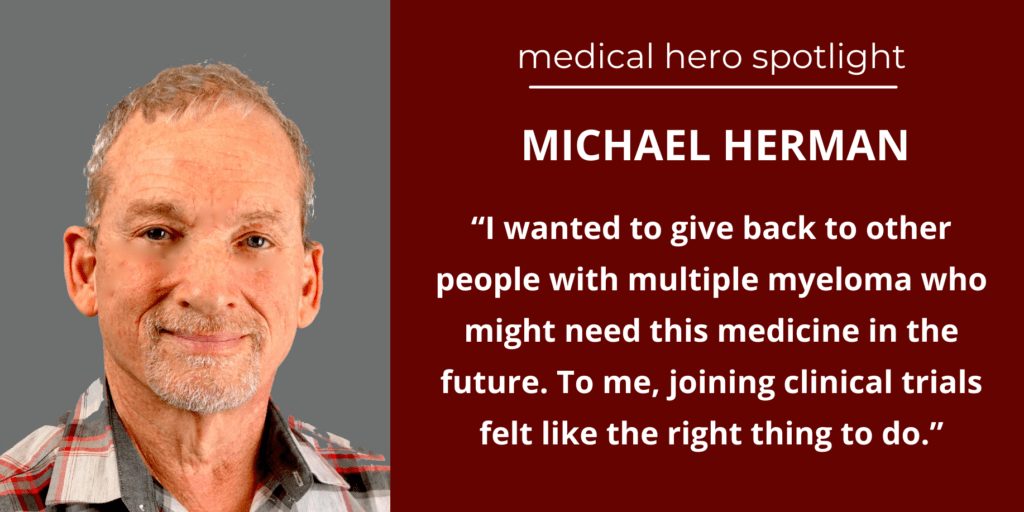
I knew from my wife’s work in clinical research that these studies are essential to developing new medicines. If I could, I wanted give back to other people with myeloma who might need this medicine in the future. For me, clinical trials felt like the right thing to do.”
Clinical Trial Participation & Success

Mike has been in two clinical trials at the University of Pennsylvania, both with incredible results. The first study was in 2020 for a treatment called Teclistamab, sponsored by Johnson & Johnson Innovative Medicine. The trial tested two different ways of administering the treatment, and Mike received his subcutaneously, as a shot into his stomach.

“My doctors said results may take a bit longer this way, so I wasn’t expecting anything immediate. It was only the first mini dose,” Mike explains. However, within 48 hours, Mike was in excruciating pain to the point where he could barely speak. During this, he received a phone call from his doctor who let him know that his cancer levels had dropped 99%. The pain Mike had been in was caused by something called cytokine release syndrome, and while difficult to endure, meant that the drug was effective for him.

“I wish I had known about it before. Maybe anticipating the pain would have made it easier to get through,” Mike reflects.

After finishing up with Teclistamab, Mike’s cancer was undetectable for 18 months. However, because there is currently no cure for multiple myeloma, the cancer tends to have a recurrence. In 2022 when his cancer returned, Mike signed up for another clinical trial run by Genentech for a treatment called Cevostamab. Within two weeks of starting the trial, Mike’s cancer was in total remission and has remained undetectable since.

Patient Advocacy Work

Recently, the drug Teclistamab was approved by the FDA and is now available to multiple myeloma patients as Tecvayli. “It’s incredible knowing that my participation in a study contributed to a new treatment for cancer,” Mike notes. “My experience has driven me to become more involved with patient advocacy, so I can share my story with others and be the impetus for significant change in our broken healthcare system.”

Over the last decade, Mike has spoken at various events and conferences about his experience and the importance of clinical research participation.

In your lifetime, you will likely either be diagnosed with cancer, or have a loved one who is diagnosed. I don’t want people to feel frozen by fear when it happens like I did at first. Having the resources and knowledge you need ahead of time can change that experience and outcome entirely,” Mike says. 

Together, Mike and Angela founded Speaking on Cancer Patient Advocacy (SoCPA), a non-profit with a mission to empower cancer patients and improve their treatment outcomes. The website includes helpful resources for individuals who have just been diagnosed, including guides to reading lab results, and education about different types of cancer.

Looking ahead, Mike is excited about some upcoming projects SoCPA has planned to help promote cancer awareness and education in larger companies and health care systems. His aim is to encourage companies to invest more in employee health and education, ultimately creating an environment where colleagues are comfortable navigating a cancer diagnosis in the workplace and know what their treatment options are.

“Being involved in patient advocacy and meeting such wonderful people has kept me motivated to work even harder.”

Additional Resources:

https://www.socpanow.com/index

https://themmrf.org/multiple-myeloma/

https.myeloma.org  


To search for medical conditions in a specific location, visit our Search Clinical Trials page.

To stay informed about clinical trials, visit our Resources page.

For volunteer opportunities with CISCRP, visit our Volunteer page.

Written by Lindsey Elliott, Marketing & Communications Manager, CISCRP | lelliott@ciscrp.org

Meeting UK IRB/EC Expectations for Patient review of Research Participant Information
From December 1st 2023, applications to conduct clinical research in the United Kingdom must meet the Health Research Authority’s (HRA) Quality Standards and Design and Review Principles to receive a favorable opinion. Research Ethics Committees (RECs) will check whether the standards have been achieved, including implementation of a sufficient patient review process to ensure that participant information is relevant and understandable for the intended audience.

This webinar reviews key elements of these expectations and provides logistical and practical considerations for meeting them. Speakers include experts in patient engagement and involvement of patient communities in the development of clinical trial related documentation and participant communications, as well as perspectives from stakeholders who have experience in the roles that must fulfil the new requirement.

Featured Speakers

Behtash Bahador

Behtash Bahador

Director, Health Literacy, CISCR

Thomas Rhode Jørgensen

Chief Operating Officer (COO), James Lind Care