Letter from the Editor, May 2016

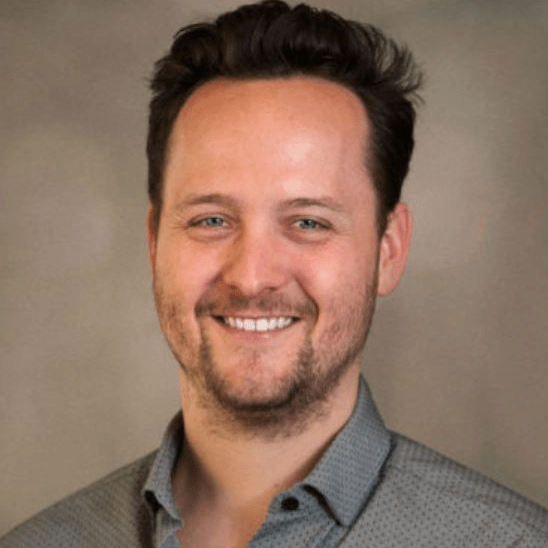
081814_danielle_47-e1435073232875Spring is finally here, and with it comes a time of growth and transition at CISCRP.

CISCRP’s Spring events season is now in full swing, after kicking off with a Medical Heroes Appreciation 5K at the ACRP 2016 Meeting & Expo which brought together clinical research professionals to walk or run in honor of study volunteers. The CISCRP Events team turns its energy now to the third annual 5K event in conjunction with DIA 2016 June 27 in Philadelphia. AWARE for All events continue to educate communities around the world, too, most recently with an international program in London and a follow-up program at Howard University in Washington, DC. The next stops for AWARE will be this Fall in Miami, New Orleans, and Irvine, CA.

CISCRP is also pleased to see growth in Patient Advisory Board Panels and the Communicating Trial Results program, garnering support across the industry from sponsors and CROs who are prioritizing patient centricity and transparency.

Additionally, a budding collaboration with INC Research has both organizations putting our heads together to host an “Ideathon” think-tank to generate new ideas for increasing public awareness and engagement in clinical research in September 2016.

In light of this time of growth at CISCRP, I’d like to close by extending a warm thank you to all of our supporters. Without your dedication and enthusiasm, our many programs and events would not be possible. I wish you all the best and hope you will keep CISCRP in your thoughts.

Until next time,

Danielle

Medical Hero Spotlight: Lee Giller

Clinical trials offer “cutting-edge treatments” and “another level of care”

Giller008For Lee Giller, participating in a clinical trial was the “best option” for his future and his children’s.

A business owner from Akron, Ohio, Lee was diagnosed with Stage II breast cancer in 2005 at the age of 48. Although Lee knew that men could get breast cancer, the diagnosis blindsided him. He’d assumed the lump on his left breast was a cyst, as he had a history of cysts. What’s more, as far as he knew, he had no family history of breast cancer.

When a dermatologist recommended he immediately see a surgeon about the lump, he remained unperturbed.  “Even the surgeon said, ‘I’m sure you are fine,’” he recalls. “Then he felt it, and I could tell from the look on his face that I wasn’t fine.”

Lee traveled to Boston where he underwent a single mastectomy. He returned to Akron for a regimen of chemotherapy and radiation and daily doses of tamoxifen.  Lee learned that his paternal grandmother had died from breast cancer and a genetic test showed he carried the BRCA1 gene mutation, as did two of his three children.

Despite the revelation, Lee responded well to his treatment and he was optimistic he could put his ordeal with cancer “in the rearview mirror.”

“Things were going along pretty well,” he says, but in late 2012 a routine scan found the cancer had come back and spread to his liver, bones and lungs.  “You get scared at that point,” he says. “You think you’re done with it and it comes back and it’s in other parts of your body. At that point I was willing to do anything.”

Lee’s wife, Kathy led the charge. She began searching for new doctors and alternative treatments. They consulted with doctors in Boston and Cleveland all of whom recommended participating in a clinical trial.

Kathy was skeptical. “My initial thought was that a clinical trial was your last line of defense,” she says. “But what we’ve really learned through all this is some of the most cutting-edge treatment is being done at the clinical-trial level.”

Lee signed up to participate in a double-blind placebo-controlled trial that involved treating participants with the BRCA1 mutation with either chemotherapy and an investigational agent called a PARP inhibitor and others with chemotherapy and a placebo.

kathy-and-lee-giller
Lee Giller and his wife, Kathy Giller.

Because Lee had recently sold his business, he and Kathy were able to travel to Pittsburgh every three weeks to participate in the trial. It was an arduous process: a two-hour drive, six hours of chemotherapy infusion, which would leave him feeling nauseous for a few days, capped by a two-hour drive home. In addition Lee took eight pills every day. Still, he says, “the care was tremendous. You seem to get another level of care when you’re participating in a trial, and you have more people watching you.”

Over the course of the next year Lee and Kathy made 16 trips to Pittsburgh. Quarterly scans showed his cancer was shrinking substantially. Unfortunately, during his 16th treatment, Lee experienced an allergic reaction to the chemotherapy.

“I started to itch all over,” he recalls. “They warn you that if that happens you have to tell them immediately because it can be life threatening.” Lee’s care team treated him with an antihistamine and he quickly recovered, but he had to withdraw from the trial as a result.

In the fall of 2015, roughly a year after he withdrew from the trial, Lee discovered his cancer had again spread, this time to his hips and bones. In early 2016 he was able to obtain the investigational PARP inhibitor on a compassionate use basis.

Looking back Lee says he’s glad he participated in the trial both for his own sake and for his children’s.

“I think it was my best option,” he says, but “I also have two children who have BRCA1 so anything I can contribute to science and to ending this disease I am happy to do.”

As for others who might be considering clinical trial participation, he offers this advice. “Talk to a wide range of doctors and feel comfortable about getting involved. Do as much research as you can. Once you feel comfortable, you should have no hesitation about getting into a clinical trial.”

To search for medical conditions in a specific location visit our Search Clinical Trials page.

To stay informed about clinical trials, visit our Resources page.

Medical Hero Spotlight: Jonathan Sari

Searching for hope on the horizon

Clinical research participants have myriad motivations. They seek relief from pain. They want to help future generations. They want to fight back against their diseases.

Jonathan Sari says his reason for participating in clinical research is more fundamental: it is his only hope.

Jonathan, a video game developer, first realized something was wrong on a beautiful summer day in 2003 at the age of 33. He’d taken a short hike with friends near his home in Walnut Creek, California, when his legs gave out beneath him.

“I couldn’t stand,” he recalls. “It wasn’t as if my legs were just tired or my muscles were sore. My legs wouldn’t hold me. I fell down and couldn’t stand up until I had rested. It was clear something was wrong.”

Doctors conducted numerous tests, but it was more than a year before Jonathan was diagnosed with multiple sclerosis (MS), a disease in which the immune system attacks the myelin sheath and nerve fibers of the central nervous system. Over time Jonathan’s condition steadily deteriorated despite medication. It became apparent his disease was not following the typical relapsing–remitting pattern of MS, but the far less common primary-progressive course.

Because, he says, “there are no really good mediations for progressive MS right now and the medications out there have really problematic side effects,” Jonathan was eager to participate in clinical research. Unfortunately, most MS research is directed at the relapsing-remitting variation. What’s more progressive MS is difficult to study. Because the rate of decline can differ dramatically from one individual to the next, researchers must study a large group of patients to establish whether or not an investigative treatment has slowed the disease’s progression.

Still, Jonathan has sought out trials where ever he can. He participated in a 10-year longitudinal study to identify genetic markers of the disease and in two trials studying investigative treatments.

The first trial was a placebo-controlled study investigating the effectiveness of fingolimod, a drug used to treat people with relapsing-remitting MS. For almost a year Jonathan underwent frequent MRIs, physical tests to determine his strength and coordination, and cognitive tests to assess his brain function, but he ultimately withdrew from the trial because his condition continued to deteriorate. He still doesn’t know whether he received the investigative drug or the placebo.

Roughly a year later he signed up for a Phase 1 trial that was attempting to regrow myelin, the fatty material that insulates nerves and enables them to conduct impulses between the brain and different parts of the body. Jonathan received a one-time IV infusion of a new antibody. Because he was one of the first participants to undergo the treatment, the dosage was very low and researchers monitored his reaction around the clock for 48 hours.

While participating in the earliest stage of human research might give some pause, Jonathan embraced the opportunity and hopes to participate in future research that might involve myelin regrowth. He is also on a long waiting list to participate in a stem cell trial.

For him, clinical research is life.

“I was excited and glad to participate,” he says. “It’s quite hard to find trials for progressive MS and because my disease has progressed so far, I’m not a candidate for most trials,” he says candidly.

Today, Jonathan lives in Seattle. He is confined to a wheelchair having lost functional movement in his legs and hands. If he wants to be heard he must rely on a ventilator. He knows time and his disease are working against him, and so he continues to search for clinical trials that may help him slow their relentless progression.

“I just wish we could simplify and streamline the process for getting these trials done. I only have so much time left,” he says. “For me it’s a race against the disease.”

If you are a patient interested in sharing your clinical research experience, please contact us.

To search for medical conditions in a specific location visit our Search Clinical Trials page.

To stay informed about clinical trials, visit our Resources page.

AWARE for All Enters Europe with its Inaugural Event in London

On Tuesday, June 9 CISCRP will hold the first international AWARE for All program in London, UK at the Camden Centre in collaboration with EMD Serono/Merck Serono, and the European Patients’ Academy on Therapeutic Innovation (EUPATI). This exciting announcement signals CISCRP’s expanding involvement in providing live education and outreach to patients and the public throughout the world.

“When we started CISCRP more than ten years ago, we envisioned ourselves as a global organization,” explains Founder and Board Chair, Ken Getz. “At that time however, we felt it was most feasible to begin by launching and refining our educational programs and initiatives in North America.”

During the past three years, as the patient centricity movement has picked up momentum worldwide, CISCRP has received much stronger demand to expand its presence in Europe. Until now, much of our growing presence in Europe has been associated with the dissemination of patient education materials through research centers, conducting surveys among global patient communities and the public, and the translation and distribution of lay language clinical trial results summaries to study volunteers in Europe. Merck Serono has been instrumental in spearheading the first live AWARE event in Europe.

“CISCRP’s AWARE for All program is a wonderful opportunity for patients and the wider public to get access to in depth information about the clinical development process.  It also provides an opportunity to hear first-hand the personal insights of those who have volunteered to participate in clinical trials,” said Tanja Keiper, Associate Director, Global Clinical Operations, External Innovation for Merck Serono.

“ We’re very pleased to support CISCRP in its endeavor to bring this very powerful concept which is highly respected in the US now to Europe. We strongly believe that the AWARE for All Event in London 2015 will provide an invaluable educational opportunity about the clinical trials process to those in attendance,” added Keiper.

The program will include informational exhibits from patient advocacy groups, health organizations, research centers, and hospitals. Attendees will have the opportunity to receive free health screenings. A prominent local speaker will present on “What Clinical Research Means to You,” and a panel of researchers and physicians will speak about research topics of interest to the community. A panel of study volunteers will share their actual experiences in clinical trials.

“The AWARE for All programme can help patients, their relatives and the general public to understand what clinical research is all about”, says Jan Geissler, Director of the European Patients’ Academy on Therapeutic Innovation (EUPATI). “It not only allows to dip into what is going on at the forefront of medical research, but also hear about first-hand experience from patients who participated in clinical studies.”

“This inaugural London event is only the beginning,” adds Ellyn Getz, Project Manager of AWARE for All. “With the help of incredible partnerships, we are working to improve public trust and create a global community of active and informed participants in the clinical research process.”


Registration is now open for AWARE for All– London, UK. For more information and questions, please email awareforall@ciscrp.org.

AWARE-for-All Collaborative Partners in London include:

  • Academy of Physicians in Clinical Research
  • Association of Clinical Research Professionals
  • Clinical Research Services Mannheim
  • DrugDev
  • EMD Serono/Merck Serono
  • European Patients’ Academy on Therapeutic Innovation (EUPATI).
  • European Patients Forum
  • iCAN/KIDS, Leukemia Care UK
  • Melanoma UK
  • Myeloma Patients Europe
  • National Institute for Health Research

Medical Hero Spotlight: LuAnne Bonanno

Doing her part to defeat diabetes

There’s very little a worried soon-to-be grandmother can do to safeguard the health of her expectant daughter and her unborn grandchild, but LuAnne Bonanno was determined to do what she could.

So when LuAnne’s oldest daughter was diagnosed with gestational diabetes early in her first pregnancy, LuAnne decided it was time to take action against the disease that she herself had struggled with for decades. Her plan: participating in a clinical trial.

For LuAnne, a 56-year-old farmer in Methuen, Mass., the memory of her own diagnosis with diabetes is still vivid. “I remember being diagnosed with gestational diabetes and seeing those red letters on my chart saying, ‘High-risk OB’,” she says. “At that point you’re not just worried about yourself; you’re worried about your child. When my daughter was diagnosed, I felt that way all over again.”

During each of her three pregnancies LuAnne developed gestational diabetes that required as many as five shots of insulin each day. While the disease abated after she gave birth to her first two daughters, it developed into Type 2 diabetes after her third daughter was born.

For the most part LuAnne says her diabetes has been manageable. For years she has been able to manage her condition with a single dose each day by watching her diet and staying active.

Consequently, although she helped organize charity walks to raise funds and awareness about diabetes, LuAnne says she never felt compelled to participate in a clinical trial until her daughter was diagnosed.

At that point, she says, she began searching for ways to help. “I kept asking myself, ‘Is there anything I can do to help her or make this easier for my grandchild?’ I guess this was my way of doing something.”

LuAnne was accepted into her first clinical trial, which assessed the impact of salt levels on kidney function in diabetics, in 2011. The two-month study required her to eat a special diet, which alternated between high salt and low salt, and to spend two nights in a Boston hospital. During the next two years she signed up for three more trials. One tested the impact of high- and low-salt diets on diabetics’ blood pressure. Another was designed to study sleep apnea in diabetics, but LuAnne’s participation was brief, because she did not meet the study criteria. A third trial was designed to assess the impact of a diabetes medication on blood vessel function.

All the studies required LuAnne to make a one-hour round trip drive into Boston. Sometimes she needed to eat special diets, have frequent blood draws or spend a night or two in the hospital. But participation incentives offset the inconveniences, she says. She is financially compensated for her participation, her parking in Boston is paid for, and the study sponsors provide any special foods she needs during the course of the trial.

What’s more, she says, “I get a real sense of satisfaction out of it. I’m not a scientific person but participating makes me feel more scientific and analytical, and I get the sense I am helping others. I may just be subject No. 8234, but in my mind I know I am helping.”

Today LuAnne is a proud grandmother – her daughter gave birth to a healthy baby boy soon after LuAnne completed her first trial – and she is eagerly awaiting the births of two more grandchildren. Because her two pregnant daughters have both developed gestational diabetes during their pregnancies, LuAnne says she’s eager to find another trial in which to participate.

“I like to think that I am having an impact and that I am contributing to the overall understanding of diabetes,” she says.

If you are a patient interested in sharing your clinical research experience, please contact us.

To search for medical conditions in a specific location visit our Search Clinical Trials page.

To stay informed about clinical trials, visit our Resources page.

Medical Hero Spotlight: Jameisha Brown

I heard the word ‘hope’ and knew I had a fighting chance.

Eight-year-old Jameisha Brown may not have known the clinical terms for her cancer or its treatment, but thanks to her innate curiosity and the frequent, simple explanations of her care team, she understood her adversary.

That understanding empowered her, she says. Cancer wasn’t a nameless, faceless monster. It was a disease that clinical research would help her fight.

“Meisha,” as friends and family call her, began her battle with cancer in June 1998 during the summer after second grade. She’d lost her energy and had begun vomiting.  Her mother took her to the pediatrician who felt a mass in her abdomen and immediately ordered tests. Within hours Meisha was diagnosed with Burkitt’s lymphoma, a rare, aggressive form of non-Hodgkin’s disease typically found in children.

Just three days after diagnosis, Meisha underwent emergency surgery at M.D. Anderson Cancer Center at the University of Texas. More surgeries and chemotherapy followed.

The doctors, nurses and residents caring for Meisha explained the situation to her. They described her cancer, demonstrated procedures on a teddy bear and drew pictures on a dry-erase board. “They used Clifford books and my Barney puppet to explain the various types of chemo and what the colors meant,” she says. Although her understanding was child-like, it was comprehensive. “I learned about platelets, transfusions, nutra cells and what type of blood I was getting. I think I understood everything about cancer from a child’s perspective maybe even better than my parents did.”

After three months of standard-of-care treatment, Meisha continued to struggle. Her doctor wanted to start her on a combination chemotherapy regimen that had proven successful in adults, but was not yet approved for use in children. As always, her care team took the time to explain everything to her and her parents.

“I knew it was research because it wasn’t talked about in the same way as the other drugs,” she recalls. “The doctors weren’t saying, ‘we can expect this,’ or ‘this has been proven with that.’ With this treatment they were saying, ‘We hope.’ It gave me a sense that I had a fighting chance because there was the word ‘hope’.”

For roughly seven months, Meisha endured a regimen that included rituximab, cyclophosphamide, hydroxyldaunorubicin, oncovin and prednisone (R-CHOP). Her hair and eyelashes fell out, her joints ached and she was exhausted. At one point she developed a septic infection in her chemo port that sent her to the intensive care unit. She spent several weeks on life support.

Despite the pain, Meisha fought, and in 2000 she was declared cancer free.

Today, Meisha, now 24, is working toward a master’s degree at Texas Woman’s University College of Health Sciences and works as a clinical research coordinator at Texas Children’s Hospital in Houston. She continues to participate in clinical research, but now she does so as part of a long-term study of pediatric cancer patients that is being conducted by St. Jude Children’s Research Hospital. The R-CHOP regimen she helped pioneer has become a primary and effective treatment for Burkitt’s lymphoma and a wide range of other B-cell non-Hodgkin’s lymphomas.

Meisha says she’s living proof of the power of clinical research. She credits her care team’s empathy and commitment to communication with helping her persevere throughout her battle with cancer and advises anyone thinking about participating in clinical research to “understand the risks and make sure your questions are answered.”

She also advises them to think broadly about the benefits of research. “Do not just decide to participate because of the potential that it might effectively treat your illness,” she says, “but because of the countless others that may have to fight the same fight.

If you are a patient interested in sharing your clinical research experience, please contact us.

To search for medical conditions in a specific location visit our Search Clinical Trials page.

To stay informed about clinical trials, visit our Resources page.

Return to Patients as Partners page to view all recent articles.

Medical Hero Spotlight: Pat Erickson

Pat “Pinky” Erickson calls herself a “doer.”

Dynamo is more like it.

So when Pat, 57, was diagnosed with Parkinson’s disease 12 years ago, she went into overdrive.

Determined not to let Parkinson’s define her, the mother of three and PTA president at first hid her diagnosis from friends. But as her condition progressed, hiding it became more difficult. Eventually Pat came to realize the wisdom of her husband’s insight: “If any good is going to come of this, I was going to have to start telling people.”

So on the night before a three-day charity walk, Pat shared her secret with her friend Marla. By morning the two had planned their first fundraiser – a vintage fashion show – and the seeds of Pinky’s Passion for a Parkinson’s Cure were planted. Since 2007 the not-for-profit has raised $235,000 for Parkinson’s research.

But Pat doesn’t just raise money for Parkinson’s, she’s put herself on the line in three trials to help researchers better understand the disease.  The first study required a single blood draw. In the second she had to take a two-hour cognitive function test. She’ll take another test in a few years and researchers will compare results of the two.

The third study, which required five or six clinic visits, was the most difficult, she says, because she had to stop taking her medication for several hours so researchers could measure the effectiveness of an experimental rescue drug.

Pat takes half a dozen pills every 2.5 hours. Without the medication, her limbs stiffen. “I feel like the tin woodsman from the Wizard of Oz.”

Going without the medicine was “miserable.” At the clinic Pat had to blow into a spirometer over and over again to test her lung function. The test made her feel dizzy and sick.

“At one point I told my husband I didn’t want to do it anymore. I wanted to give up. He said, ‘OK, but think about why you’re doing this in the first place.’”

Pat persevered.

“When you have a chronic illness it’s hard not to let the illness take over your life,” she says. “This is my way of fighting back. I want to make a difference so that someone else doesn’t have to have this disease, so that we can find a medication.”

While Pat’s an advocate for clinical research, she wants people to understand what’s involved. Her advice to people considering trial participation?

“REWARD,” she says simply. REWARD is Pat’s acronym for:

–          Read everything so you know what’s going on.

–          Every study is not for everybody. Wait for the one that’s right for you.

–          Wear comfortable clothing. You’ll feel more relaxed.

–          Act as your own advocate or have someone with you to be your advocate. Speak up if you have a concern.

–          Remember why you are doing this.

–          Do keep a sense of humor.

That last bit of advice helps a lot in life as well, she notes. “If you can find something funny in a situation it will help you get through it.”

If you are a patient interested in sharing your clinical research experience, please contact us.

To search for medical conditions in a specific location visit our Search Clinical Trials page.

To stay informed about clinical trials, visit our Resources page.